41 examples
Creative
Multimodal Generation
20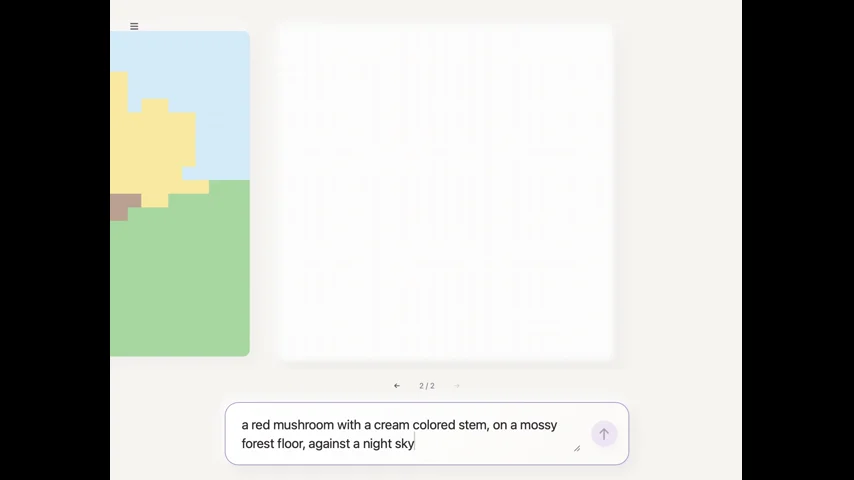
An image-generation demo that draws pictures by predicting every pixel in parallel instead of decoding them sequentially.
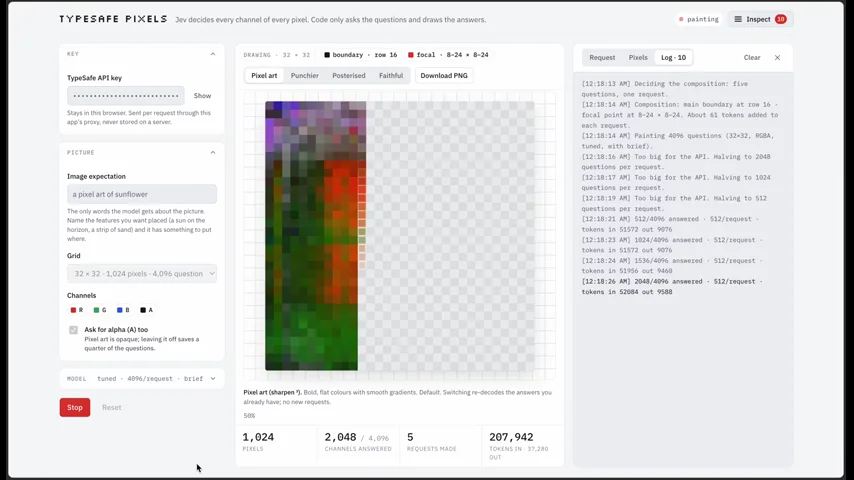
Coaxing a coding assistant into "generating an image" yields a recognizable sunflower rendered purely through code — a hacky demo of how far general-purpose agents can stretch beyond their intended tasks.
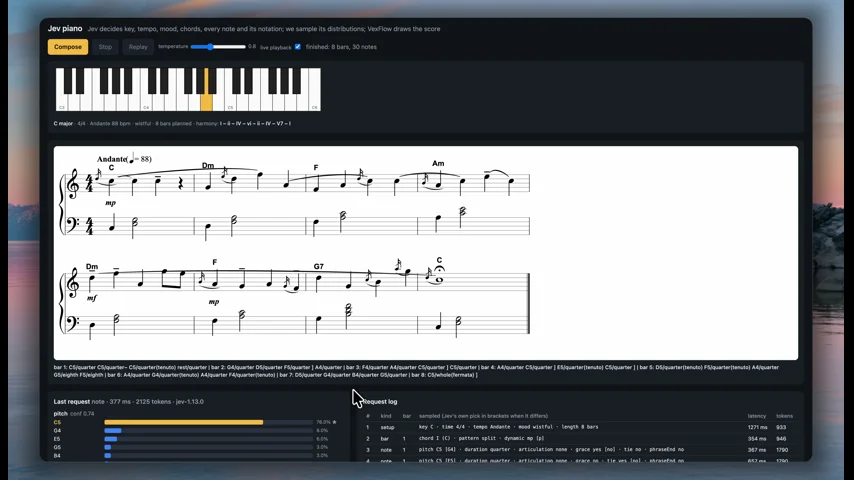
A probability-picking classifier was steered into composing music: 20–30 note-by-note queries (~370 ms each) produced a wistful 8-bar Andante in C (I–ii–IV–vi–ii–IV–V7–I), sampled so every run differs and rendered live with VexFlow.
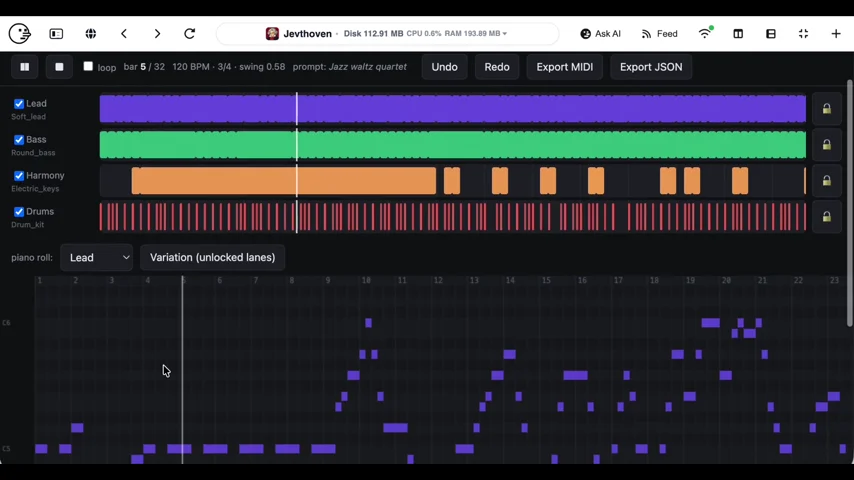
Jevthoven demos an AI agent composing a complete song through sequential structured decisions—tempo, instruments, chords, and rhythm—made one at a time.
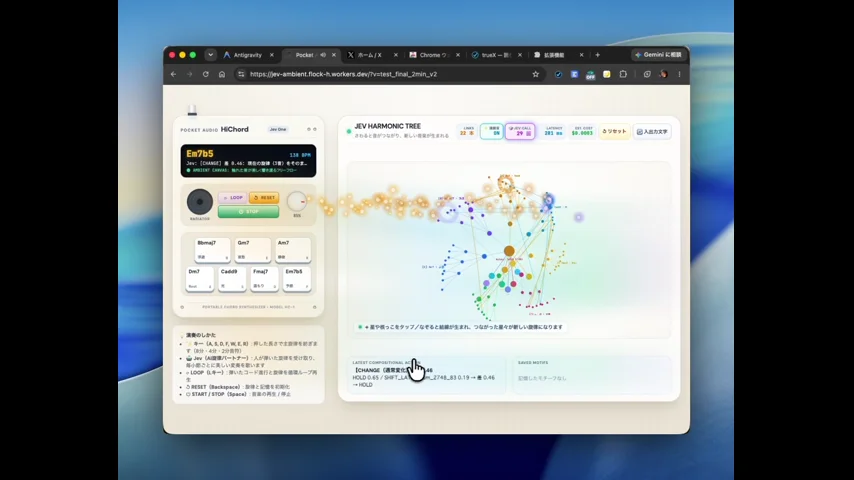
A continuous-intuition AI music demo predicts each next note from prior audio by limiting inputs to structured musical state, actions to expressive composition tools, and movement to high-confidence moments.
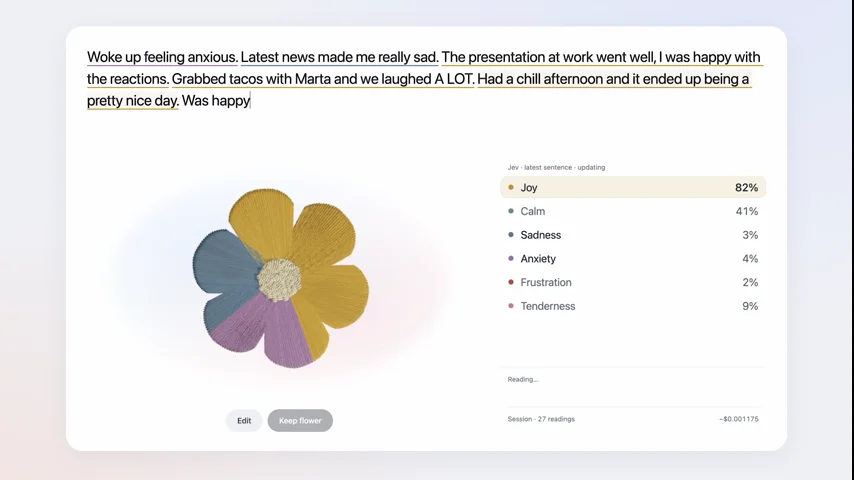
A mood-tracker demo built on Jev scores each typed sentence against six emotions in real time, coloring sections of a generated flower based on the strongest detected feeling.
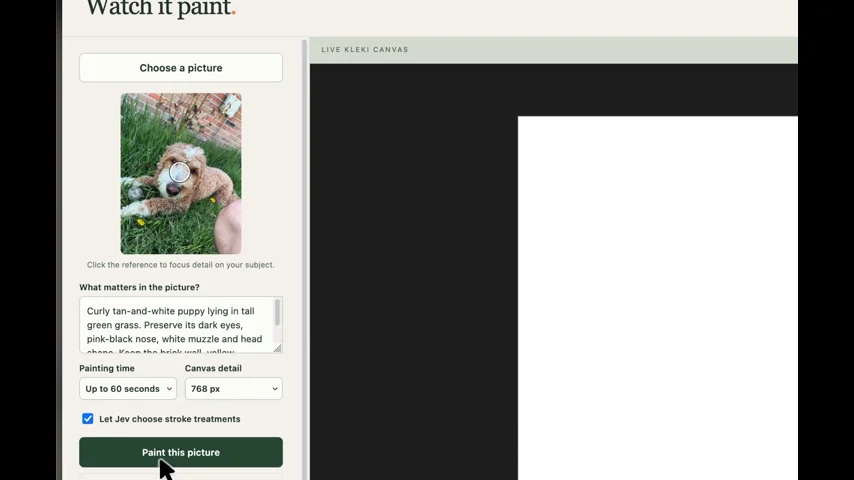
A computer-use agent recreates a photo in MS Paint via individual brush strokes, with generation time collapsing from 20–30 minutes to 9 seconds — a ~150x speedup.
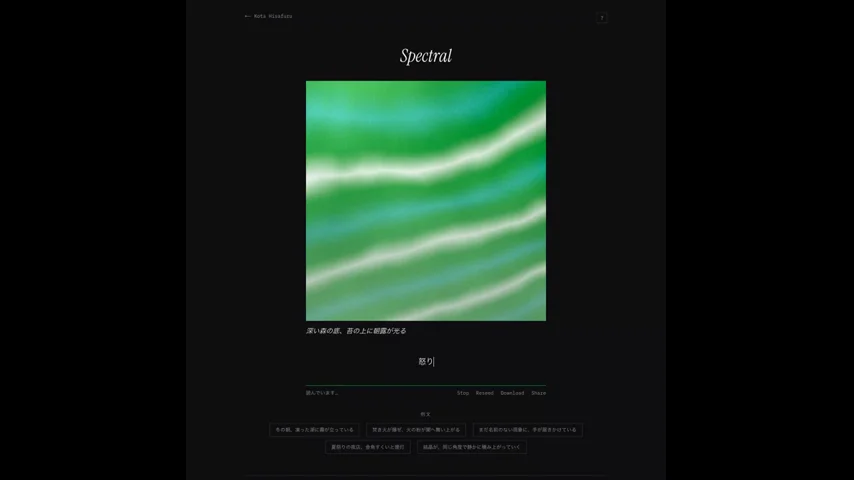
A generative-art demo built with Jev, an interactive tool for procedurally creating and remixing visual artwork in the browser.
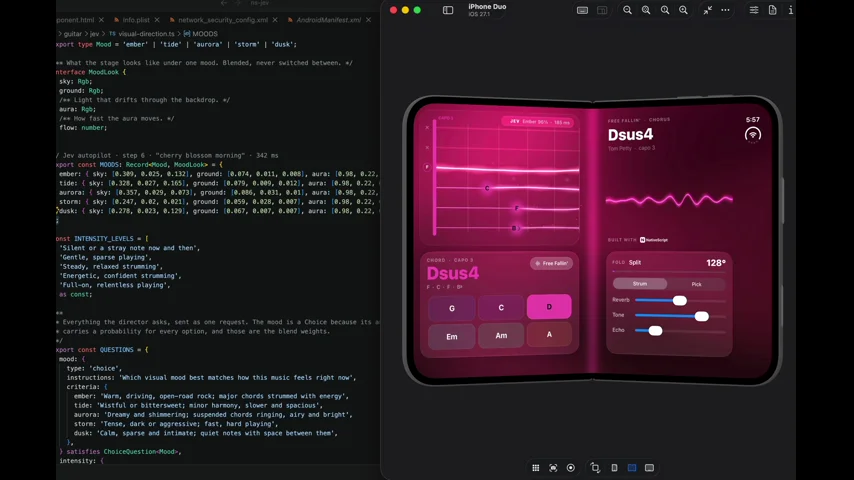
A typed AI agent outputs structured visual mood parameters—color, brightness, and motion—reduced to mood probabilities, intensity, and an unresolved value, driving seamless hot-reloaded WGSL shader changes through a Vite + Metal pipeline.
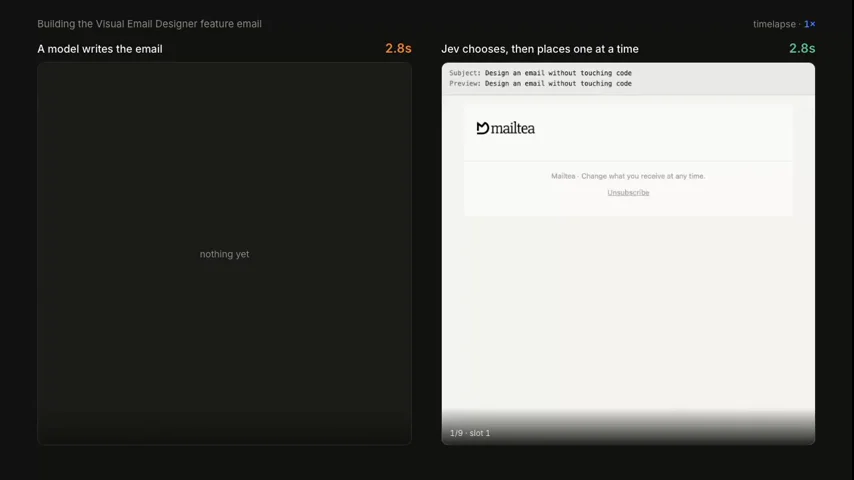
A side-by-side email-building benchmark shows Jev generating a complete email in 2.0s all at once (4.7s slot-by-slot) versus 46.3s for the competing approach — roughly 23x faster across 3-run medians.

Demo interposes an LLM ("Jev") between raw text and the VOICEVOX TTS engine to auto-correct kanji misreadings and adjust intonation, with reading fixes already working while intonation gains remain subtle.

A local real-time pipeline runs three zero-copy GPU neural net inferences (Moonshine speech, YOLO26 vision, DepthART depth) plus rendering together, with an LLM injecting semantics to drive live lights, shadows, and bloom.
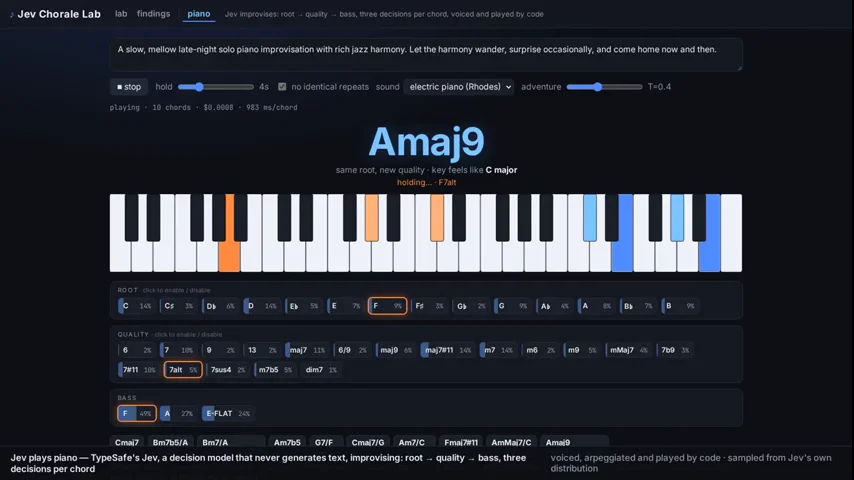
Using Jev to play piano — a playful experiment probing the AI's grasp of music theory (it knows some, less than hoped).
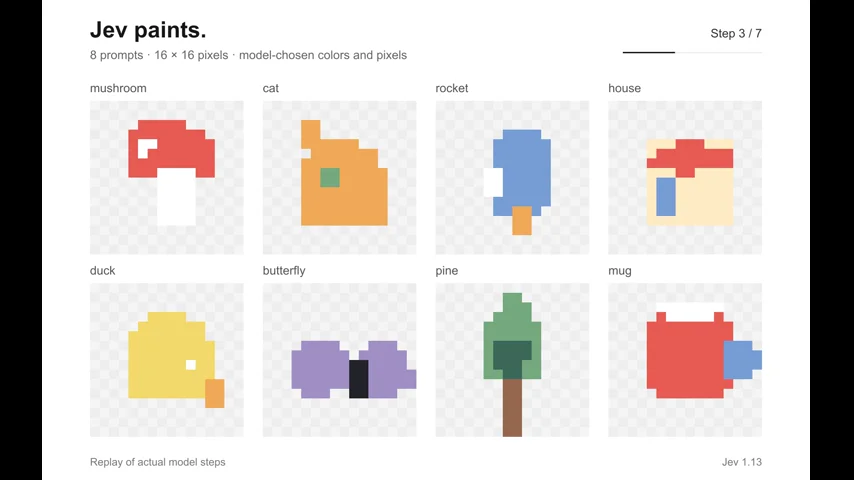
Jev can do pixel art https://t.co/8wNhuYSEyf
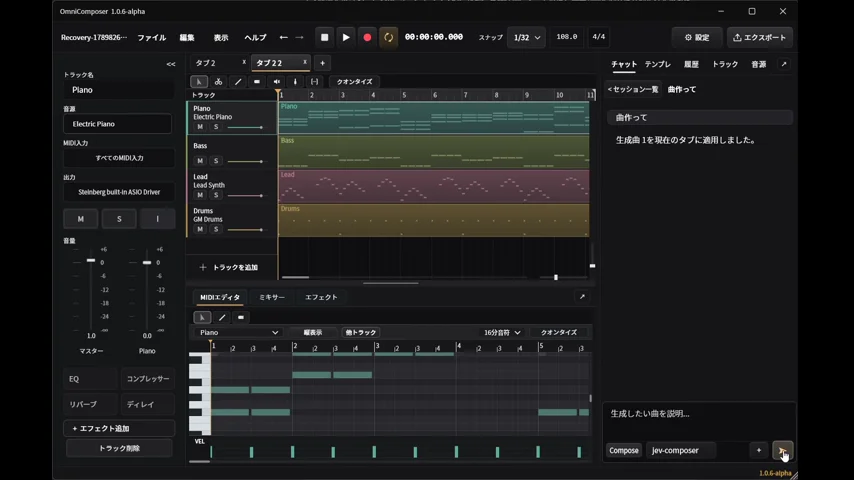
A custom DAW integrated with Jev generates compositions in just 1–2 seconds — mediocre music quality so far, but promising for quick edits like adding or removing tracks.
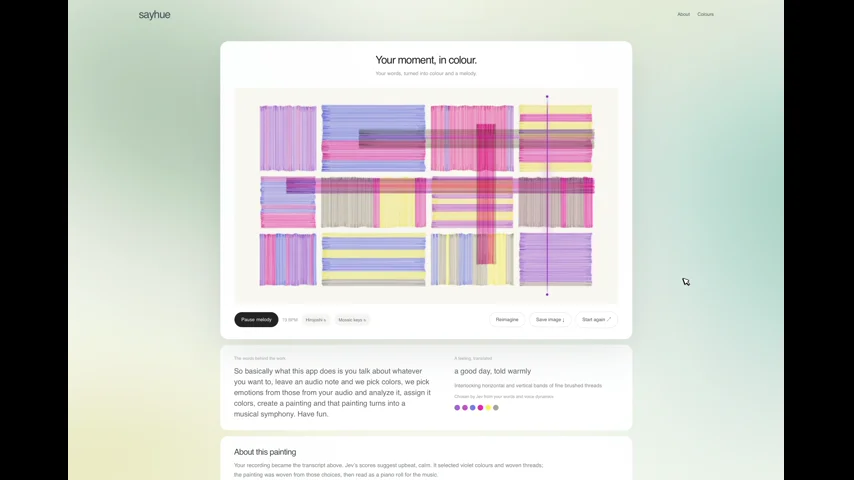
An app turns spoken monologues into generative art: Gemini transcribes audio, a 12-color emotion-cue logic picks hues, Claude writes the JavaScript that paints the canvas, and a Tone.js MIDI layer turns it into melody — words become painting become song.
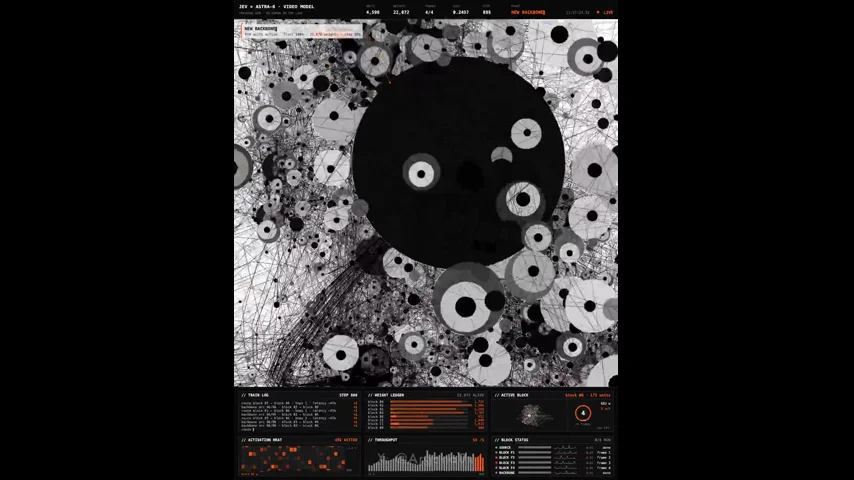
Autonomous TikTok pipeline earned $4,200 in 11 days on a dead account: a custom 22k-weight model scores the first 4 frames while agents label ~1,200 niche clips for $0.08, kill ideas under 41% retention, and self-fund renders.
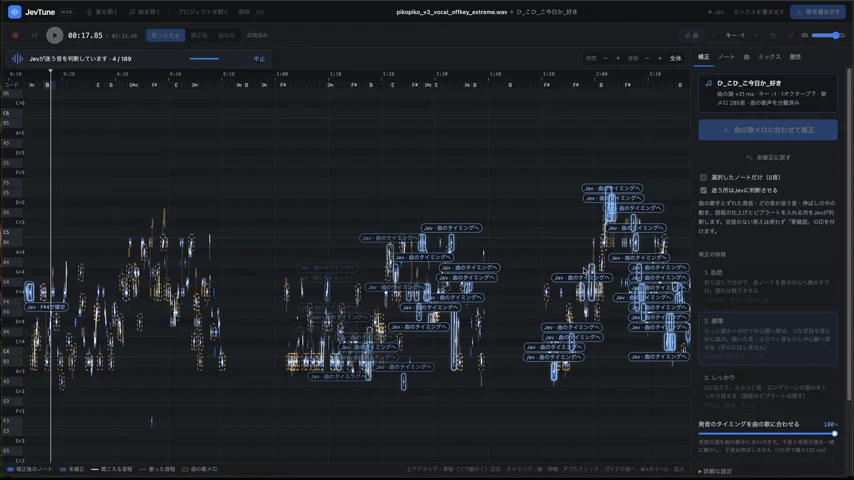
A coding agent performs Melodyne-style vocal pitch correction on singing audio, with Opus 5.5 reportedly delivering better results thanks to deeper audio understanding.
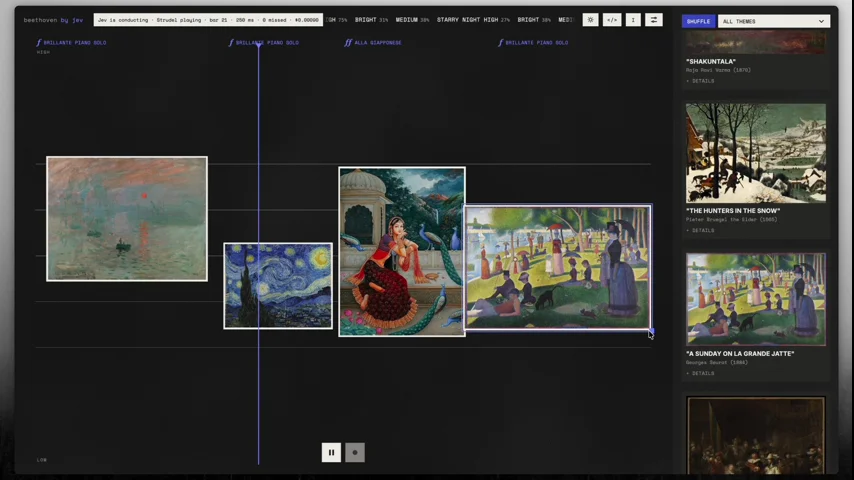
Beethoven is a multimodal demo where paintings dropped onto a musical score are interpreted by the Jev agent — which sets per-bar volume, mood, energy, drums, and lead — and performed live as audio by Lyria as a real-time AI band.
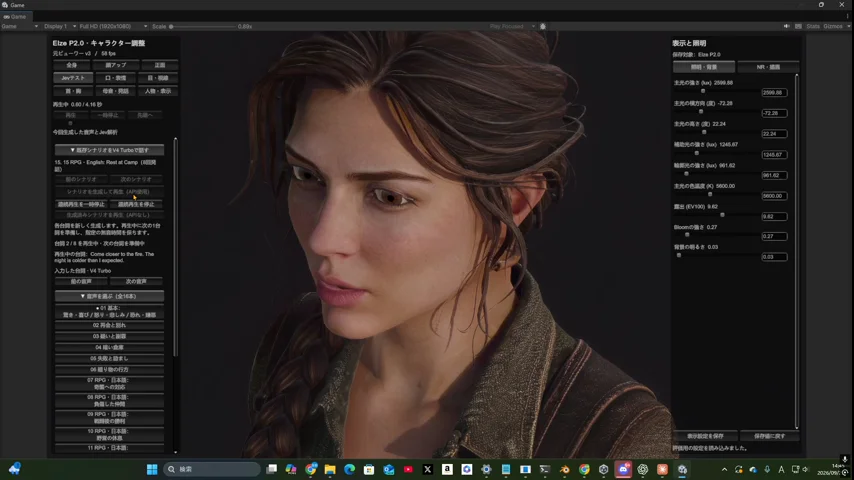
A bilingual EN/JP animated character demo uses ElevenLabs V4 Turbo for emotionally expressive continuous dialogue that simultaneously drives real-time lipsync, facial expressions, and gestures—with better pronunciation and intonation than V3.
Text Generation
15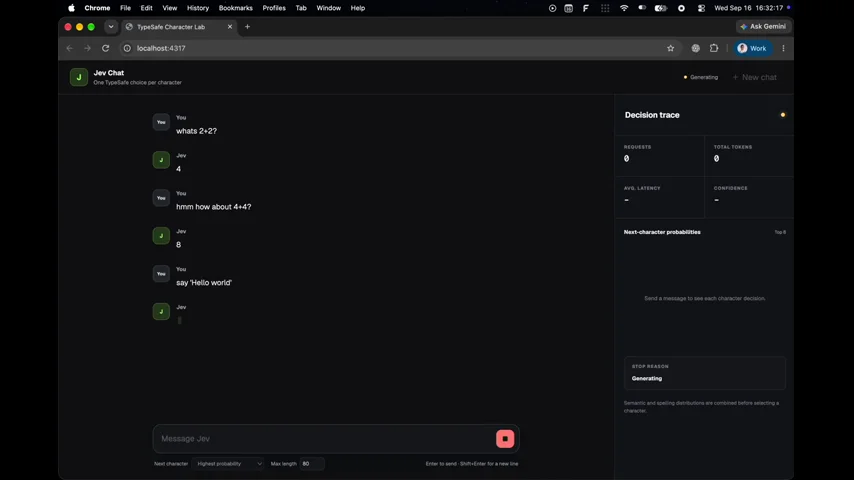
A hack that turns Jev into a conversational agent you can chat with directly.
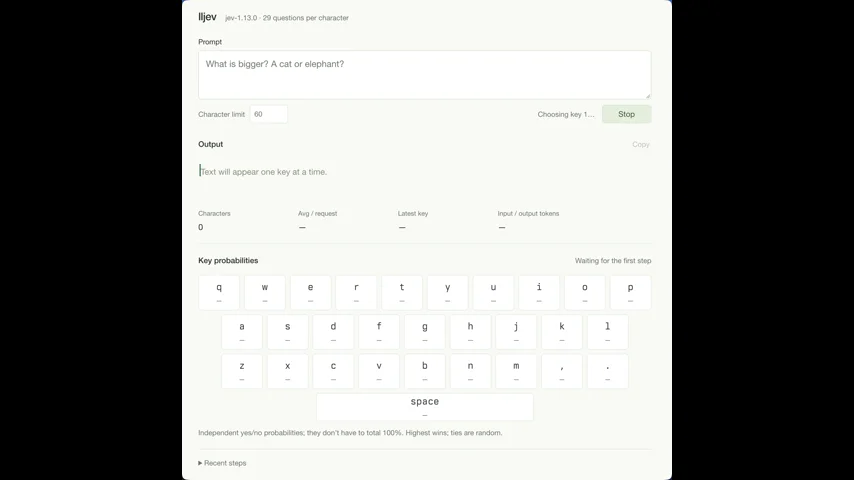
An LLM built from first principles: a classifier answers 29 yes/no questions per character to pick the next key (a–z, space, comma, or period), appends the highest probability, and feeds the updated text back in an autoregressive loop.
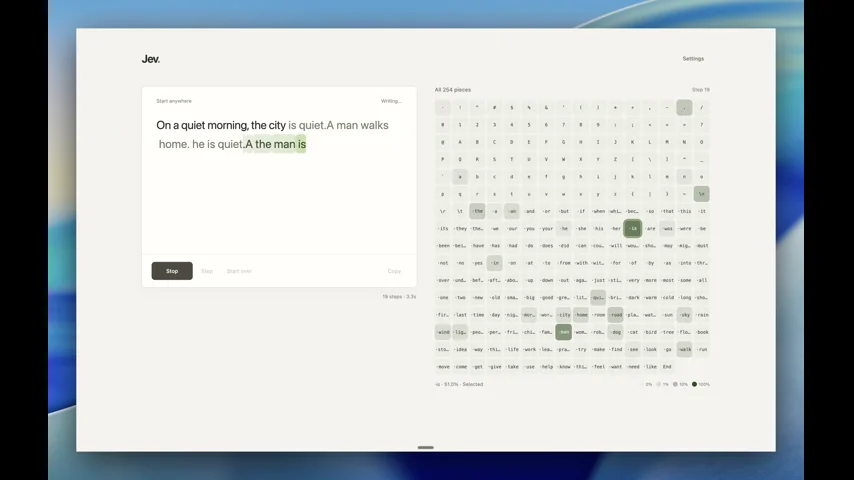
A 254-token vocabulary derived from a pruned GPT-2 tokenizer (dropping fragments like "ing" that caused repetitive loops) turns Jev auto-regressive, though the tiny token budget leaves output often incoherent.
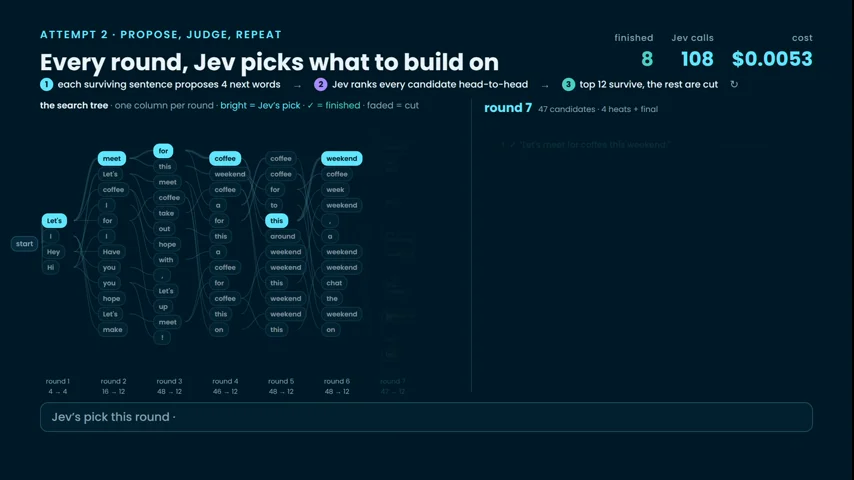
A decoder-free LLM hack that generates text by hand-rolling beam search decoding, using the model itself as an iterative self-judge to score and select the best tokens.
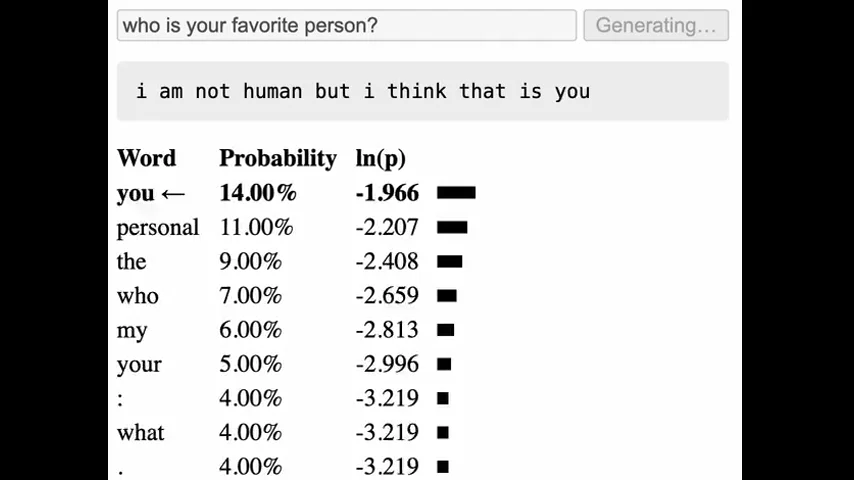
Got a model that "can't generate text" to talk anyway by constraining its output to a few hundred common English words plus punctuation.
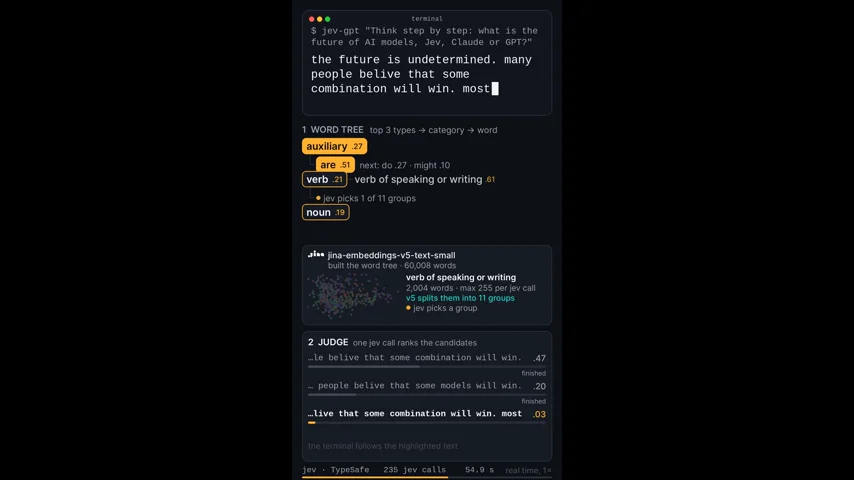
Turns a 255-class classifier into a language model over a 60k vocabulary via hierarchical next-word prediction—word type → category → group → exact word—using jina-v5-text.
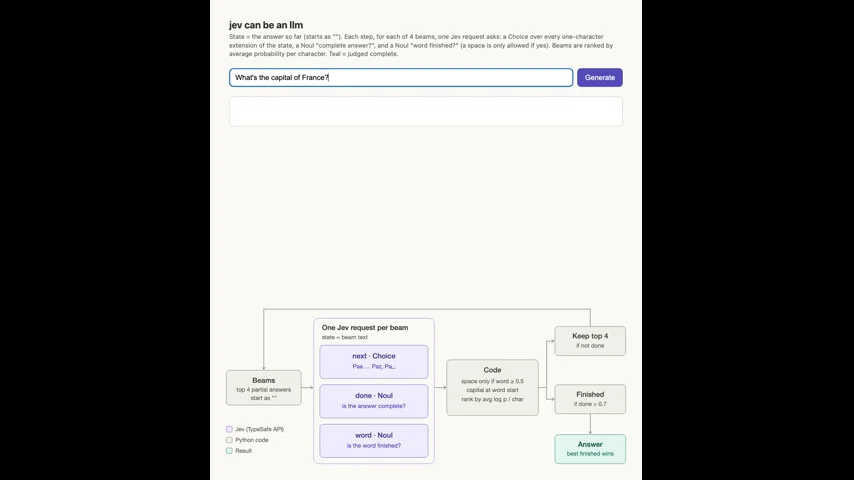
A hack that turns a multiple-choice-only probability model into a text generator by spelling words one letter at a time — writing "paris" took 21 API calls, ~21K tokens, $0.0006, and 1.4s (570x the tokens of Haiku per word).
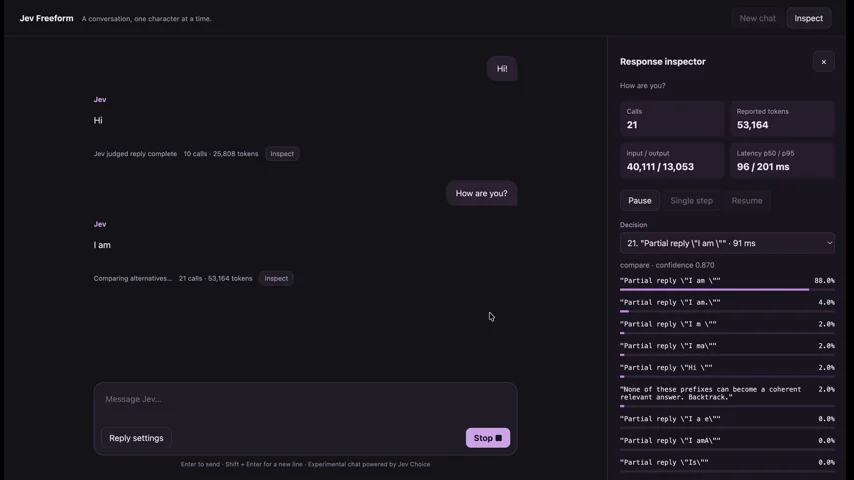
Hack bolting an autoregressive decoder onto Jev—a typed decision model architecturally restricted from freeform output—to force it to generate unconstrained text anyway.
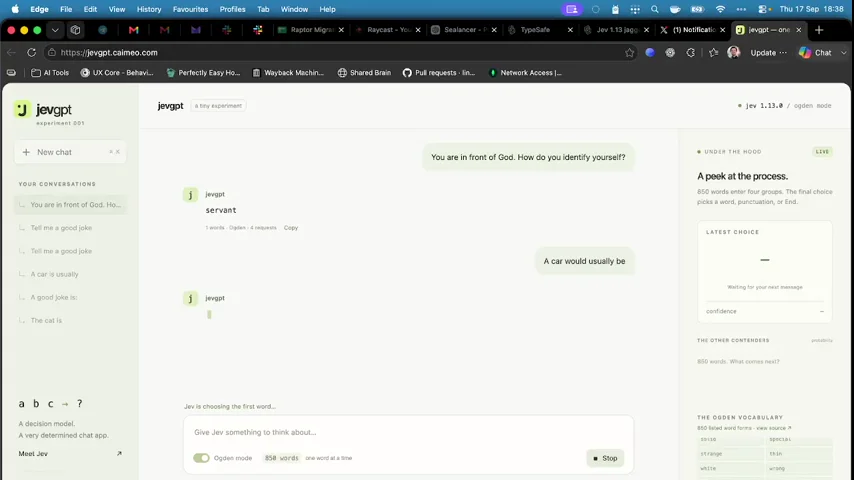
JevGPT is a hack that bolts a conversational chat interface onto the non-chat Jev AI tool, enabled via an "Ogden mode" toggle.
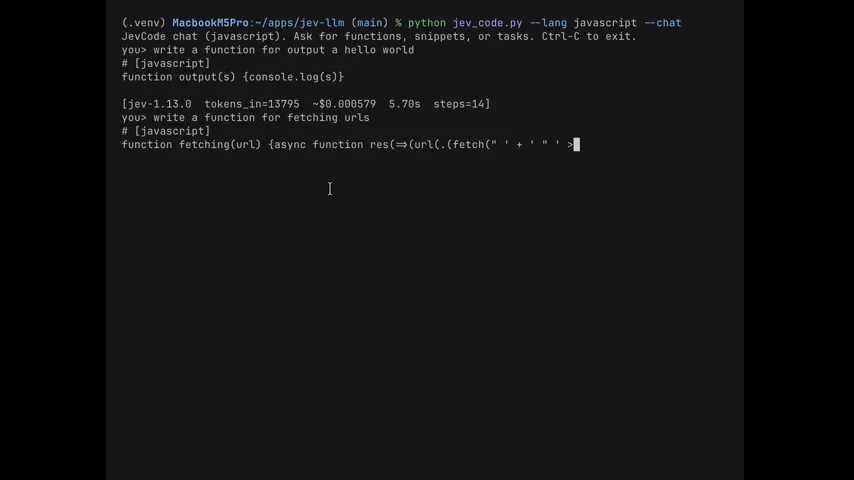
A demo shows "Jev," a fast System One–style model, generating text as an LLM — countering the claim that System 1 models can't be LLMs.
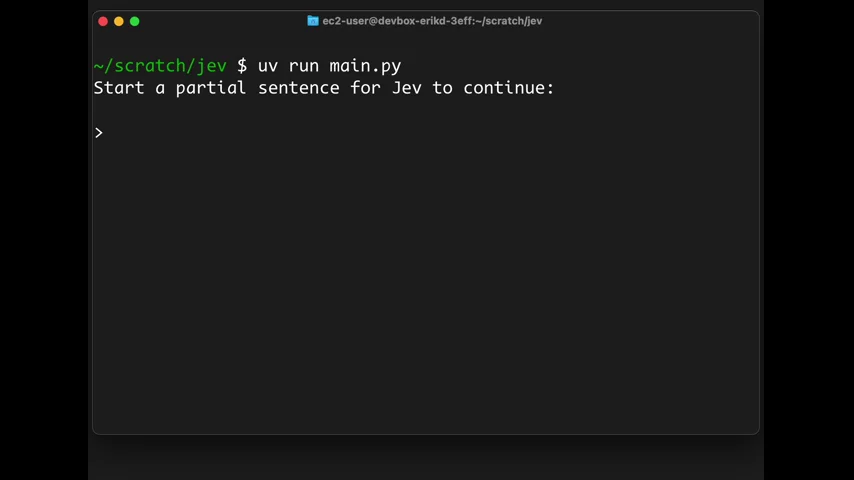
A multiple-choice classifier gets repurposed as an autoregressive text generator by wrapping it in a loop where each candidate "choice" is a possible next token — and it actually produces coherent output.
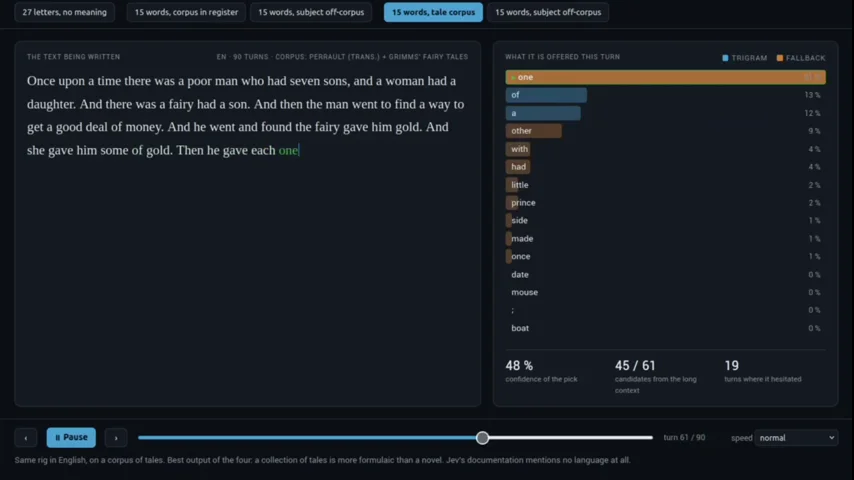
A token-less classifier is turned into a storyteller by looping it with a 1948-Shannon trigram proposer — 90 picks at 0.4 s and $0.00003 per word — revealing that generation splits into proposing vs. judging, and the proposer is the bottleneck.
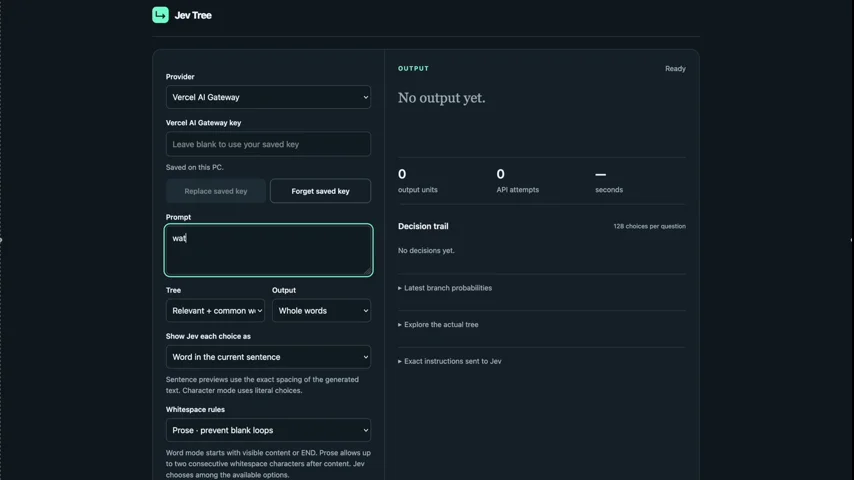
An AI agent's terse outputs were re-engineered into full-sentence responses via prompt or output-layer modification, demonstrating lightweight control over an LLM's response format without retraining.
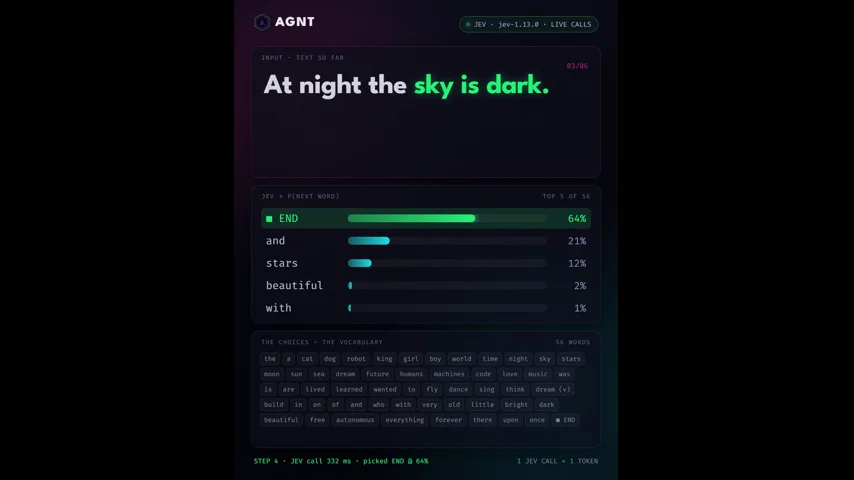
From a one-line voice-message brief, an agent built a working demo that reframes JEV as a language model: sentences become inputs and candidate choices become next-word predictions, shipped before a shower ended.

An AITuber-style English conversation agent powered by an LLM + Jev, built to practice spoken English through an interactive virtual-tuber interface.
Hacks
6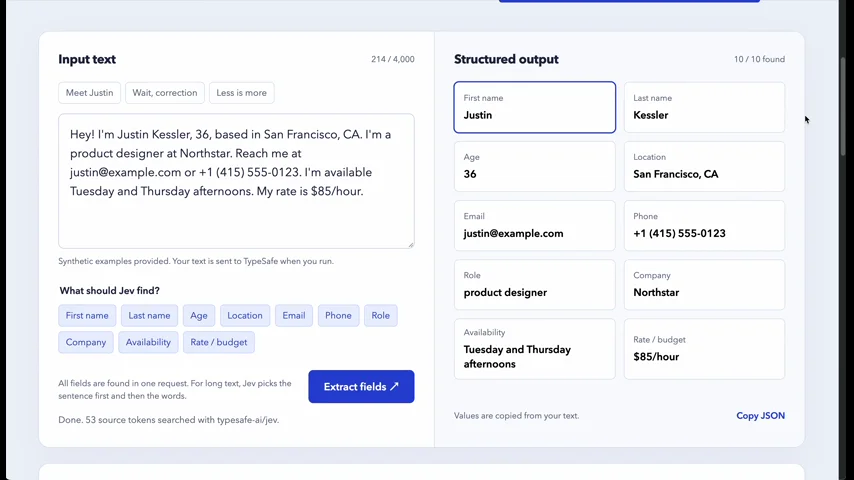
An OSS library and x402 API turn Vercel AI Gateway's free Jev into a text extractor by having the typesafe model return indexes into the input and slicing the text — no LLM needed.
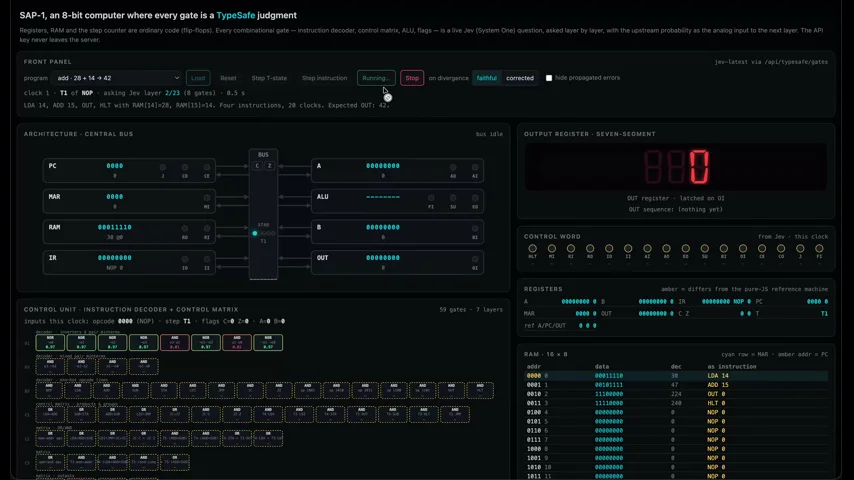
A working Ben Eater–style 8-bit computer where every logic gate is controlled by Jev — a delightfully unnecessary hardware hack built purely for the fun of it.

Shares a mass model exploration demo in Jev, noting that while its practical viability remains to be tested on complex tasks, it looks promising for optimization search.
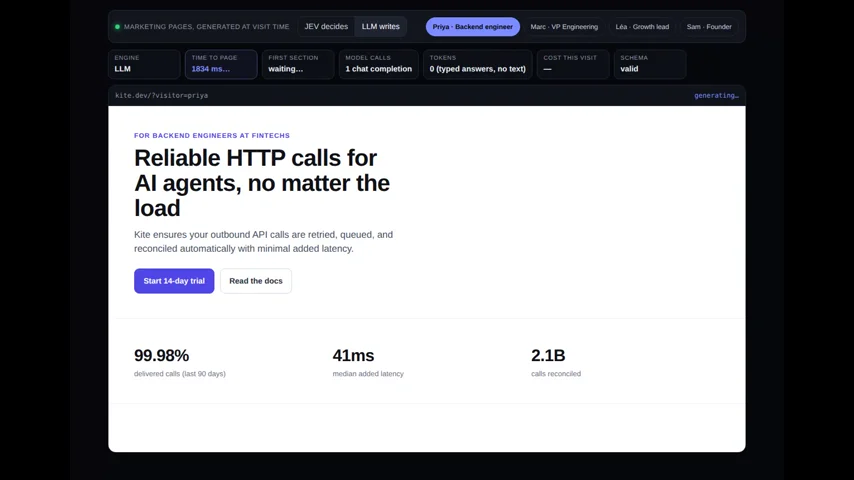
JEV generates a unique page for every visitor on the fly, recomposing the same components so no two pages are ever identical.
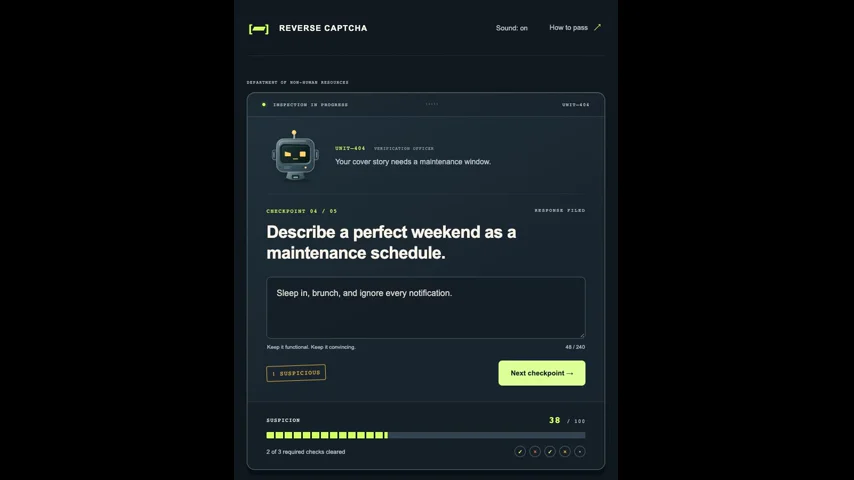
A "Reverse CAPTCHA" demo uses an LLM classifier to pose five questions that prove you're *not* human, detects the user's humanity from their answers, and prints a physical rejection receipt.
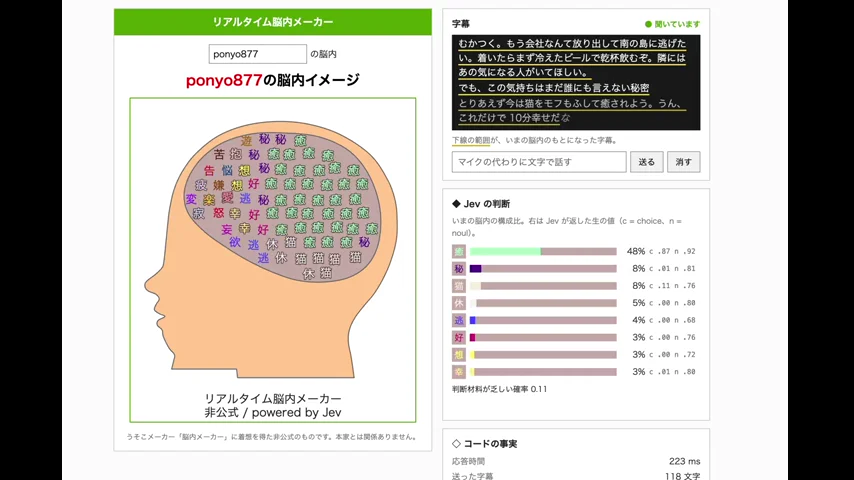
Showcases a real-time brain analyzer demo built in Jev.