138 examples
Gaming Worlds
Native Play
9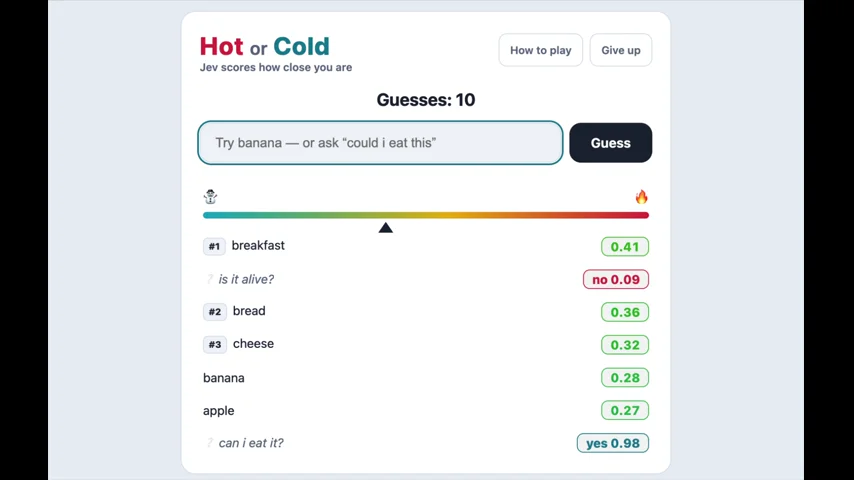
An AI agent plays a real-time "Hot or Cold" word game, instantly scoring each guess and categorizing player questions with visibly low latency.

Jev can generate game levels in real time. Faster and cheaper structured output could be a big deal for game dev! https://t.co/CiMoElDeAs
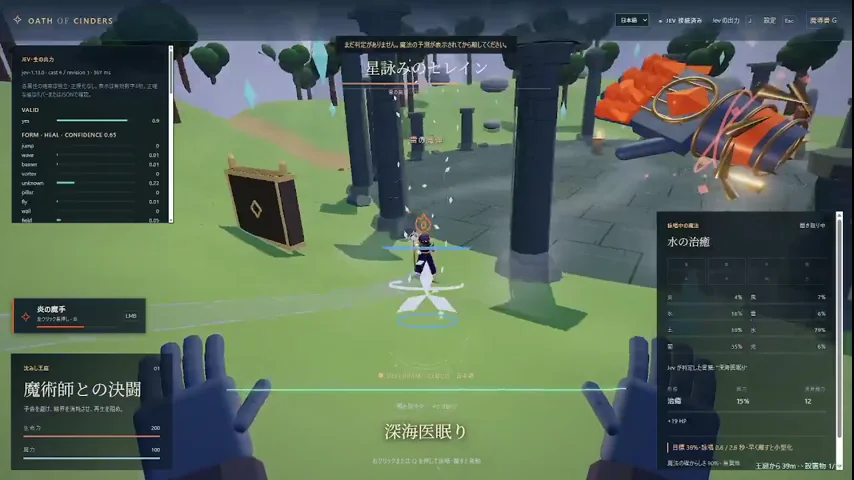
An AI-incanted spellcasting PvP game fusing Genshin-style elemental reactions with Fortnite-style building, where stacking parallel questions yields near-infinite freedom.

A Jev-powered game converts prompt words into Kyoto dialect in real time, showing small LLMs can handle lightweight natural-language tasks despite untuned prompts.

A playful AI-engineering demo of a Hunter x Hunter character/personality quiz app, built and tested as a fun side experiment.

A 1v1 turn-based fighting game built on Jev where players attack with written arguments and the Jev AI itself acts as judge, scoring each verbal blow.

A robot named Jev was given expressive capabilities — conveying emotion and conversing through beeps and audio feedback — demonstrating lightweight multimodal sound generation for human-robot interaction.
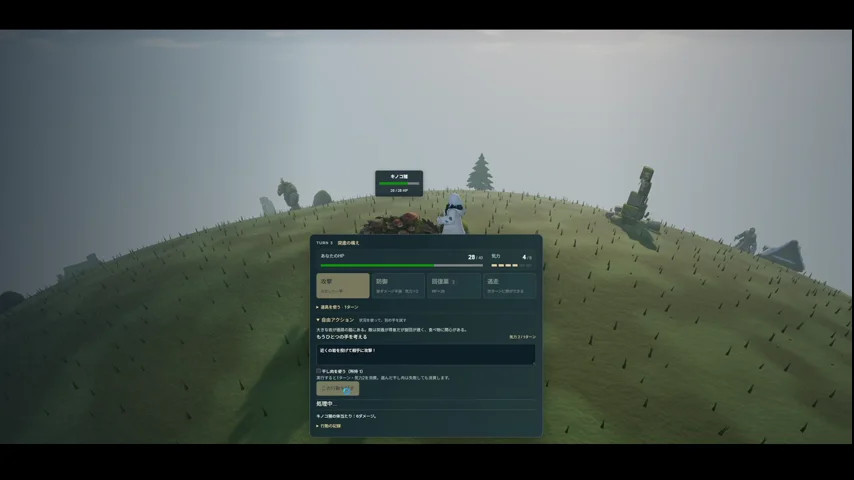
A browser-playable roguelite demo combines Tripo-generated 3D assets with the Jev model for infinite map expansion and real-time text-based adjudication of merchant negotiations and free-form combat actions.

A web game where you write ambiguous sentences that fit both sides of a binary choice (e.g., "dog vs cat", "sea vs mountain") to push the AI judge's confidence as close to 50/50 as possible.
Realtime Gameplay
57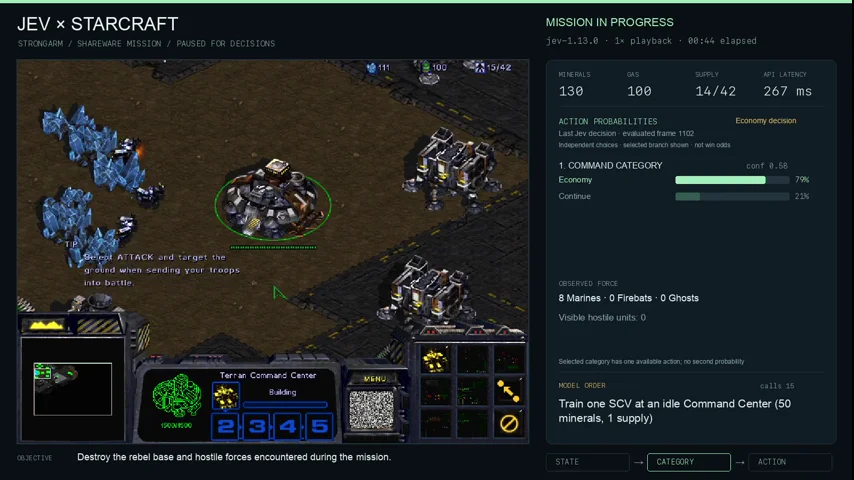
A coding agent wired a game-playing harness into StarCraft on the first attempt and autonomously won the mission, demonstrating one-shot tactical strategy execution.
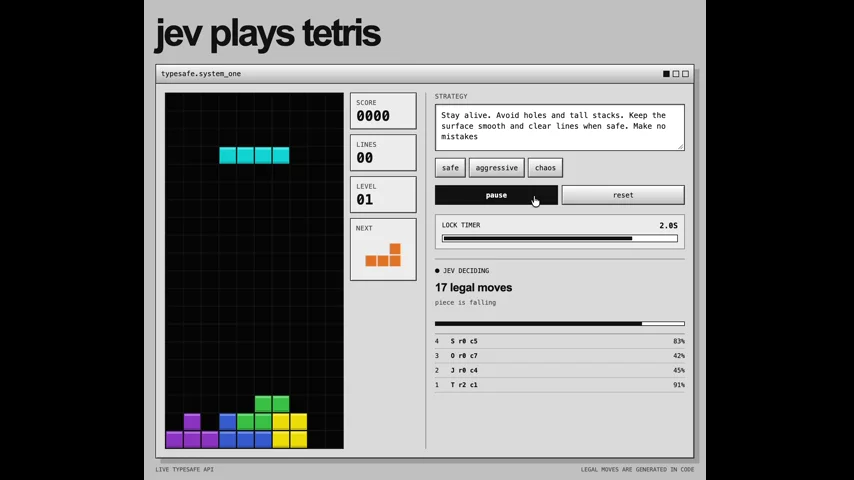
A real-time demo shows the Jev model playing Tetris, generating moves fast enough to actively push blocks downward.
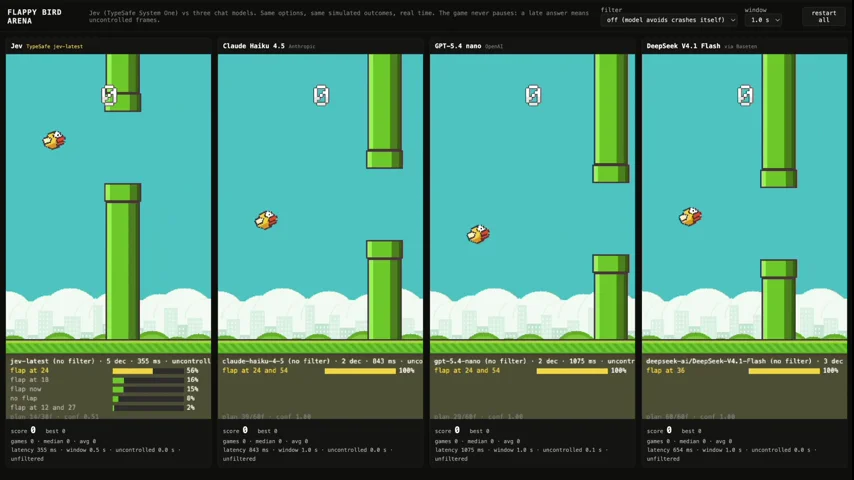
Four AI models compete head-to-head playing Flappy Bird in real time, benchmarking live action and game-playing performance across models.
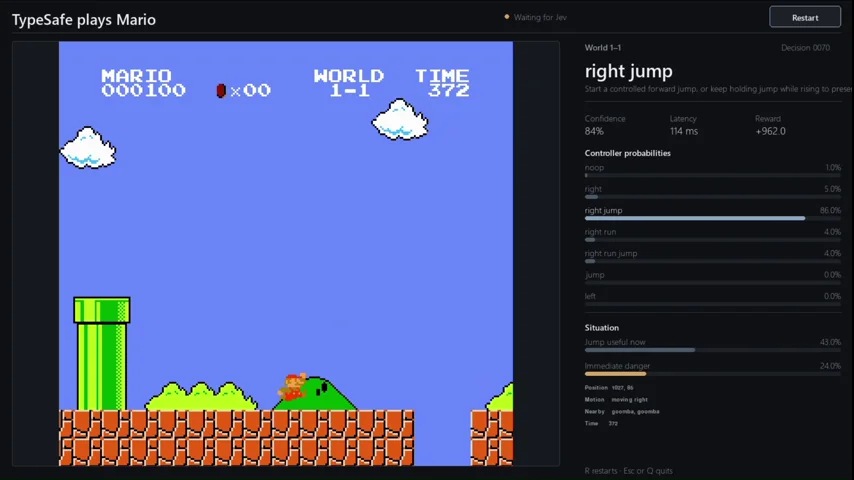
The new Jev model plays Super Mario Bros. in real time, combining fast inference with structured outputs to generate responsive, low-latency gameplay actions.
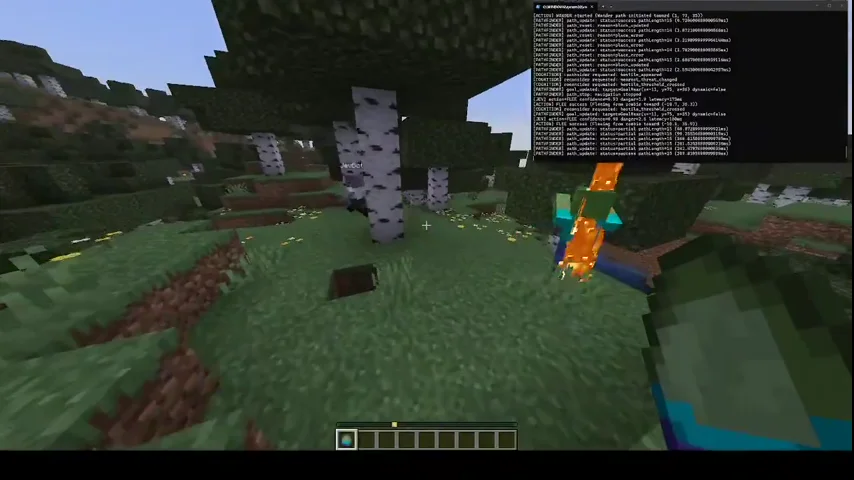
A new Jev model plugged into Minecraft autonomously dodged zombies at nightfall with zero extra prompting, using 150K tokens for 2 minutes of gameplay at just one cent.
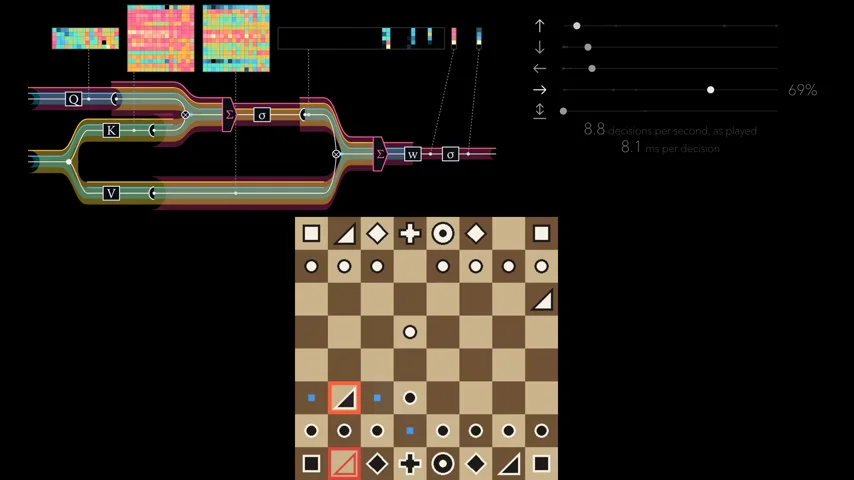
A single RL architecture designed for state-dependent action sets plays both Doom and chess (poorly) using two different controllers.
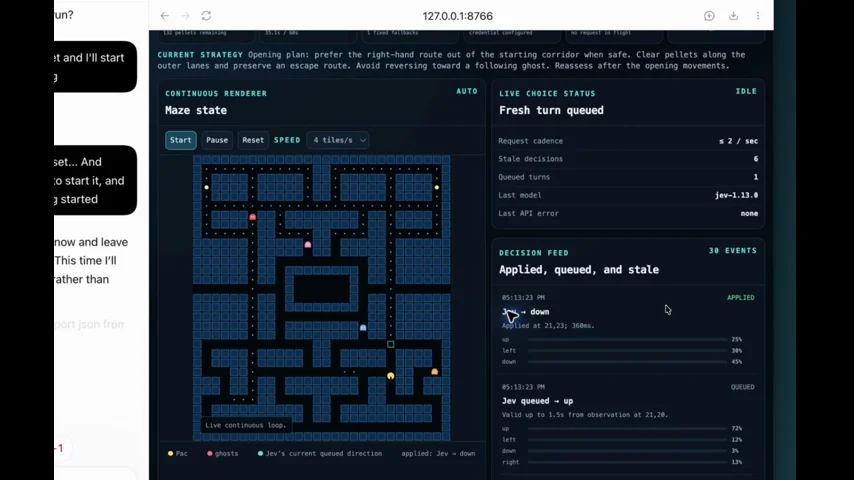
Astra strategizes Pac-Man gameplay while 'Jev' executes its plans in milliseconds, showing a real-time strategy/action split with potential to pair fast executors with larger reasoning models.
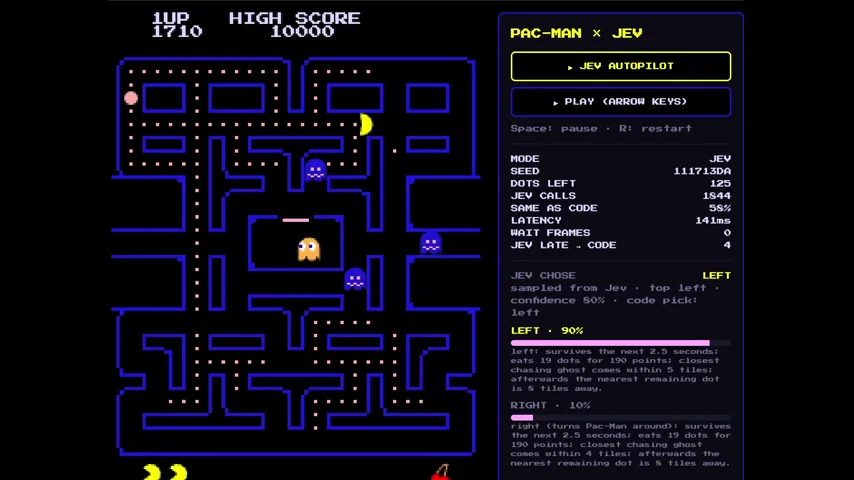
Claude autonomously plays a real-time game of Pac-Man via a type-safe integration, demonstrating live agentic control of interactive gameplay.
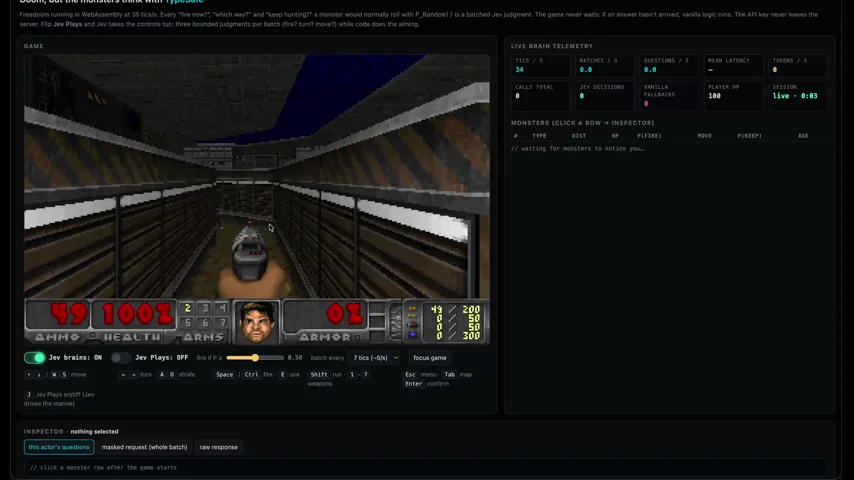
A rebuilt Doom demo swaps all enemy logic for an AI agent ("Jev"), letting you fight AI-controlled enemies or watch multiple Jev agents battle each other in real time.
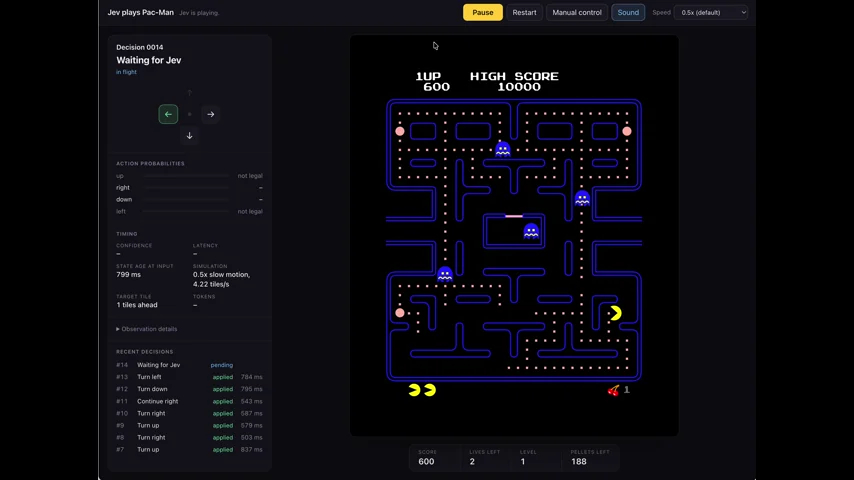
An LLM plays Pac-Man in realtime, consuming the maze state as JSON and deciding which direction to turn at each junction.
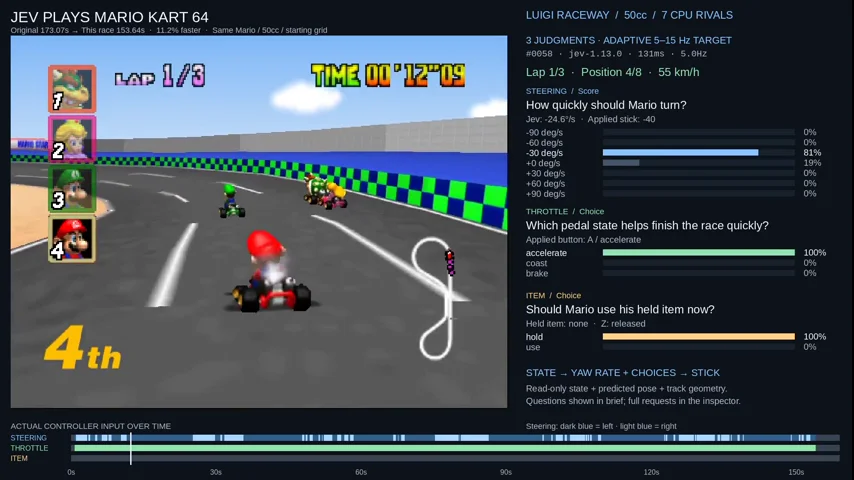
A computer-use agent demonstrates high-skill real-time gameplay in Mario Kart 64, outperforming Astra's computer-use capabilities.
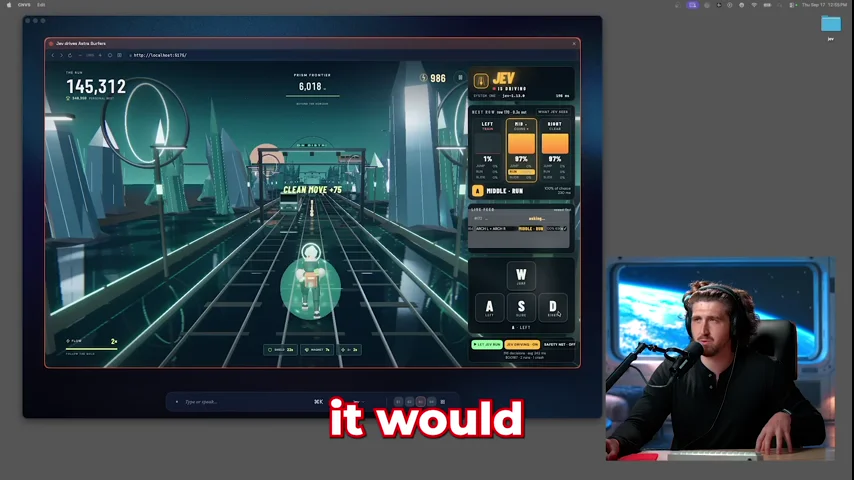
Jev is a real-time action agent demoed playing Subway Surfers at superhuman speed across 50 simultaneous games for under a cent per run, unlocking new capabilities beyond LLMs like Astra or Fable.
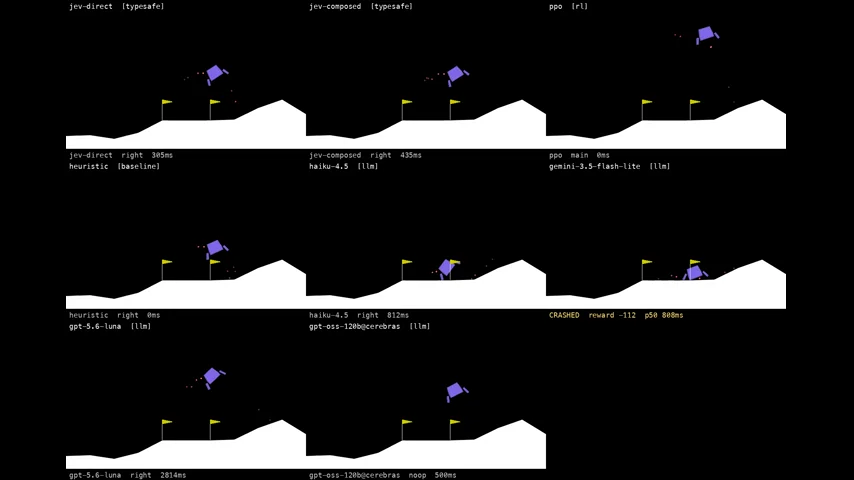
Jev, a typesafe AI agent, pilots Lunar Lander in real time and gets benchmarked against fast cost-efficient models like Luna and Haiku.
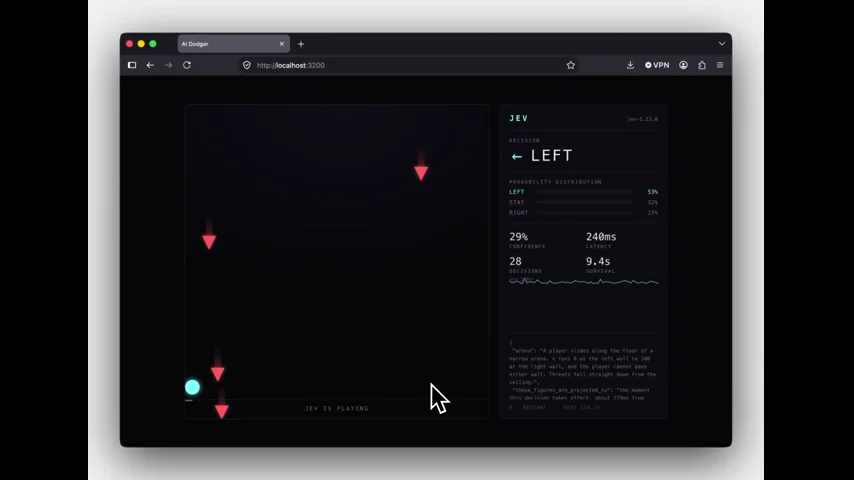
A tiny real-time game where Jev—an AI that goes beyond a normal LLM—directly controls the player character in real time with one objective: don't get hit.
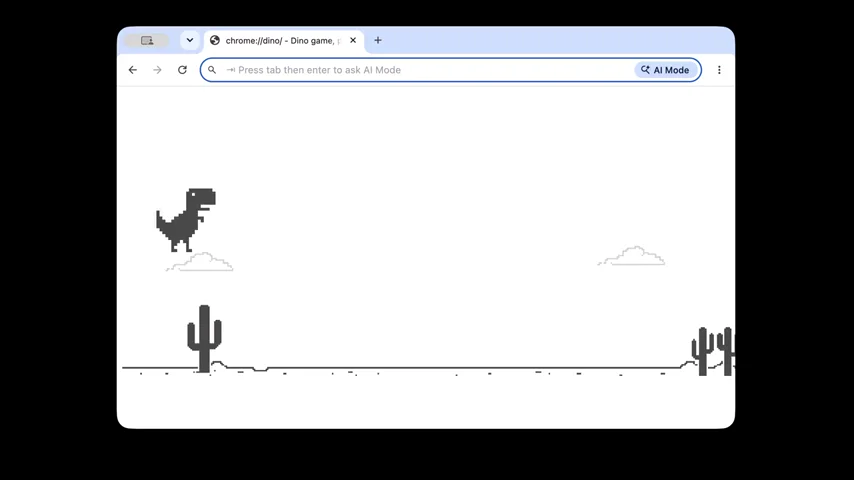
An offline RL agent for Chrome's Dino game achieved stable, indefinite jumping after past jump history was added to its state inputs.
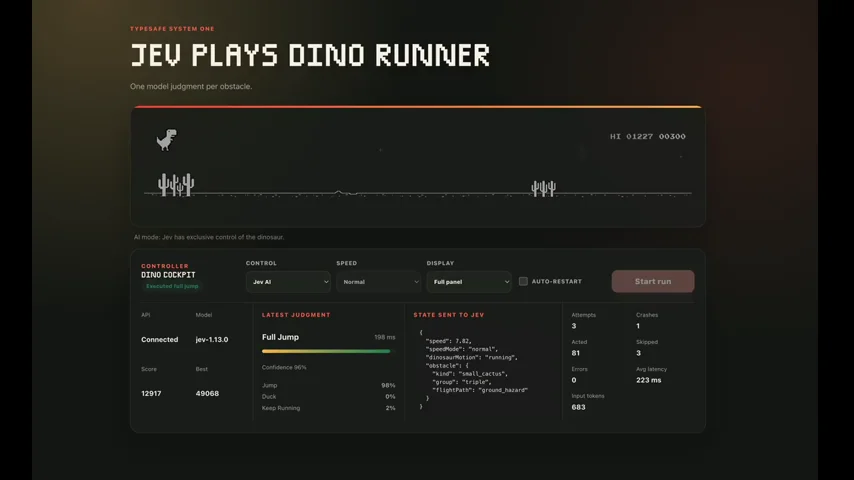
An AI agent plays the Chrome dino-runner game in real time, reacting fast enough to clear obstacles competently.
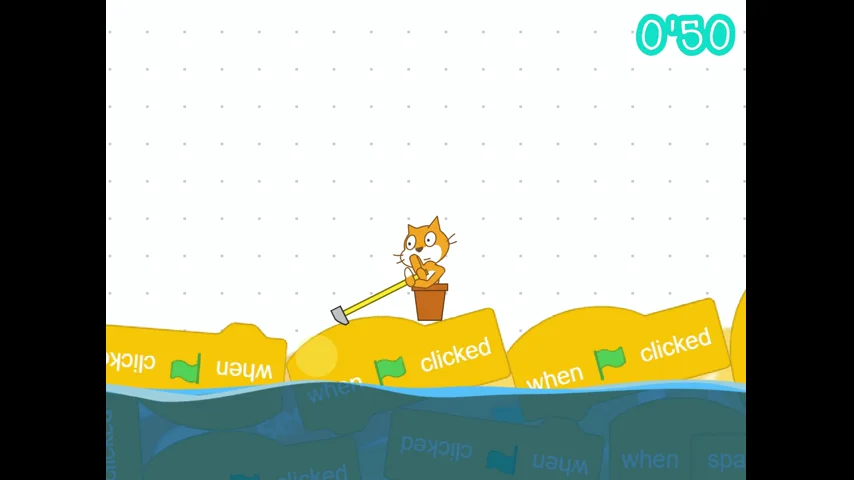
A real-time AI gameplay agent attempts Getting Over It — a notoriously precision-demanding physics platformer — and fails hilariously, showcasing live decision-making under punishing, unforgiving game mechanics.
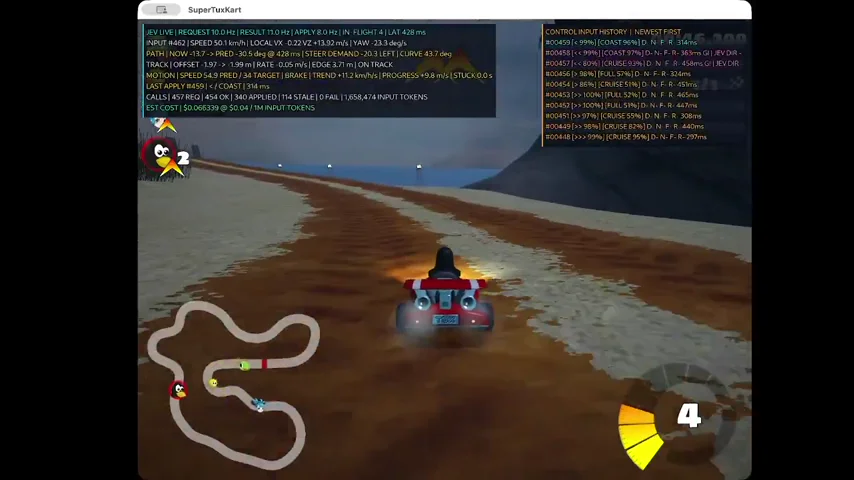
An AI agent plays SuperTuxKart in real time, perceiving the screen and steering the kart autonomously through live gameplay.
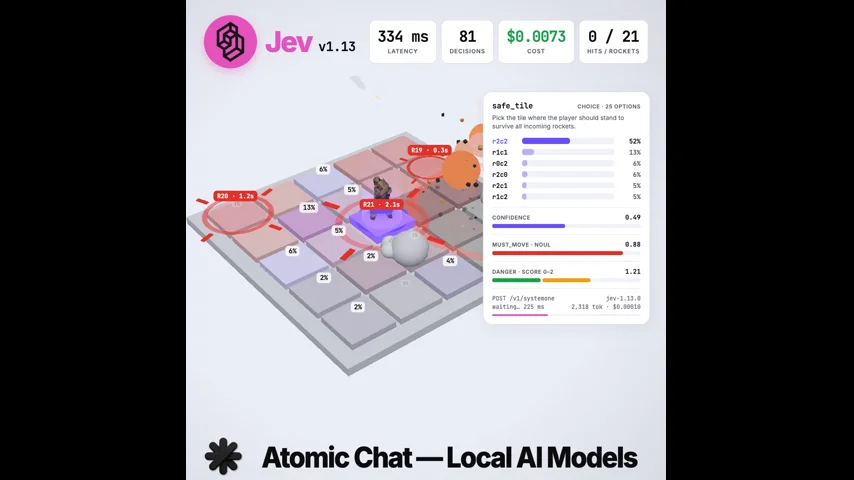
Jev v1.13 uses a non-LLM decision-returning model to compute a safe tile every 330 ms during falling rocket attacks, surviving 25 of 26 trials for under one cent via API.
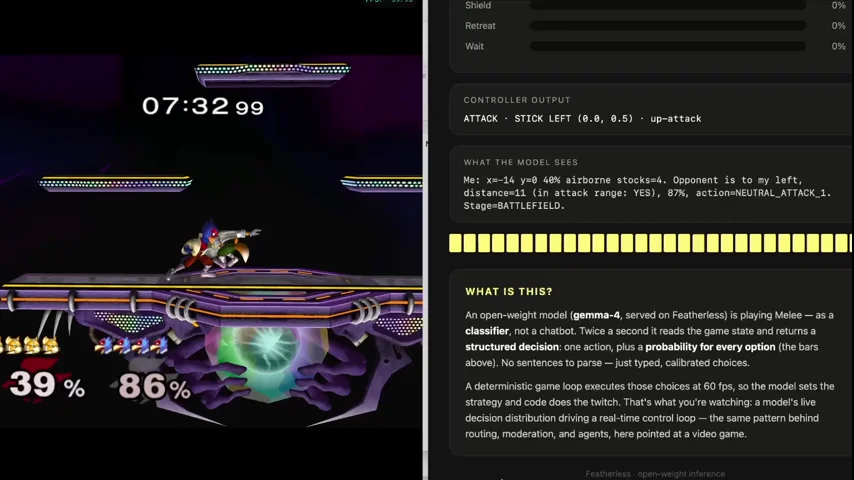
A Gemma-4 classifier endpoint served via Featherless is wired into libmelee to read Super Smash Bros. Melee game state and issue approach/attack decisions every 500ms, piloting Fox competitively against CPU level 3 as a cheap, fast real-time decision loop.
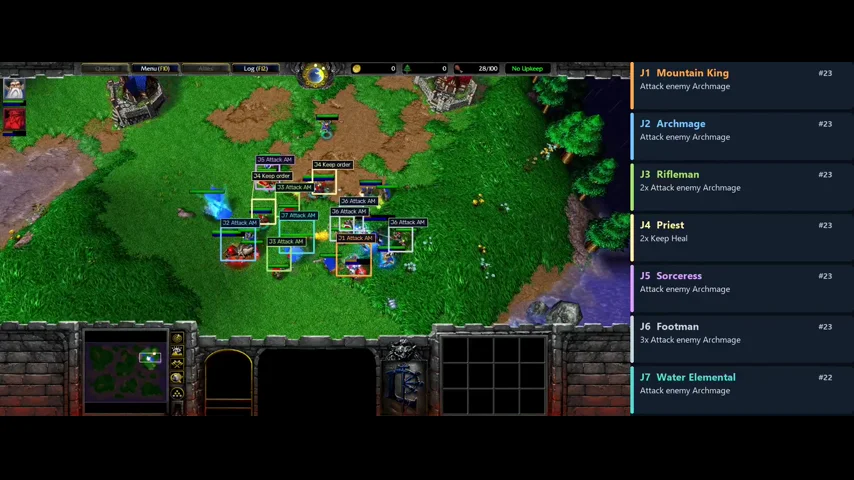
An AI agent that micro-controls every soldier in an entire Warcraft army like an individual hero, handling real-time micro and positioning for each unit simultaneously.
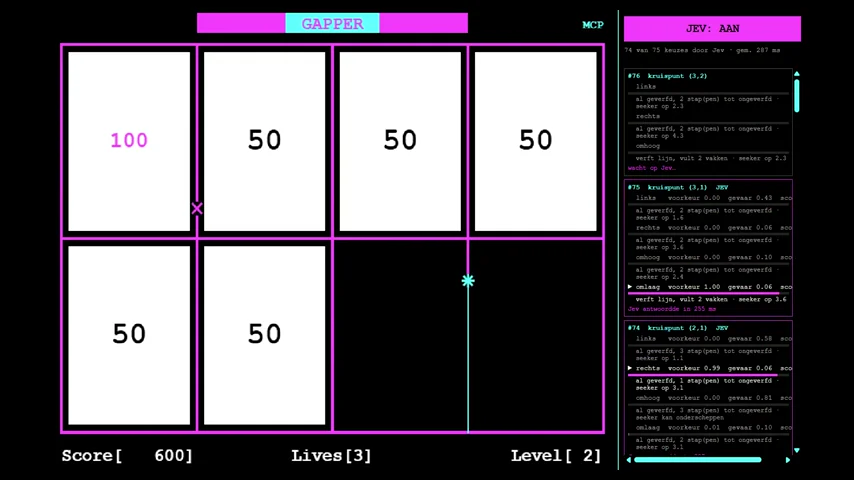
A faithful recreation of the 1986 arcade game Gapper is played fully autonomously in realtime by an AI agent on autopilot.
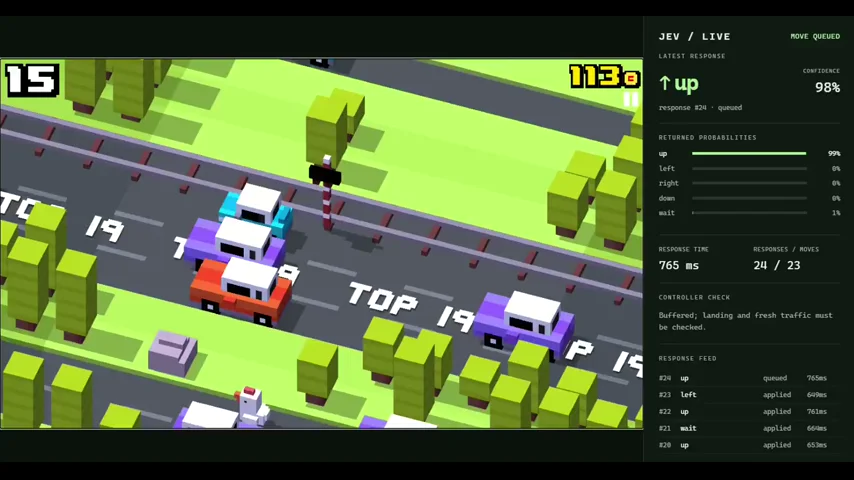
Astra-built controller hands live control of real Crossy Road to Jev, whose gameplay decisions stream visibly in real time.
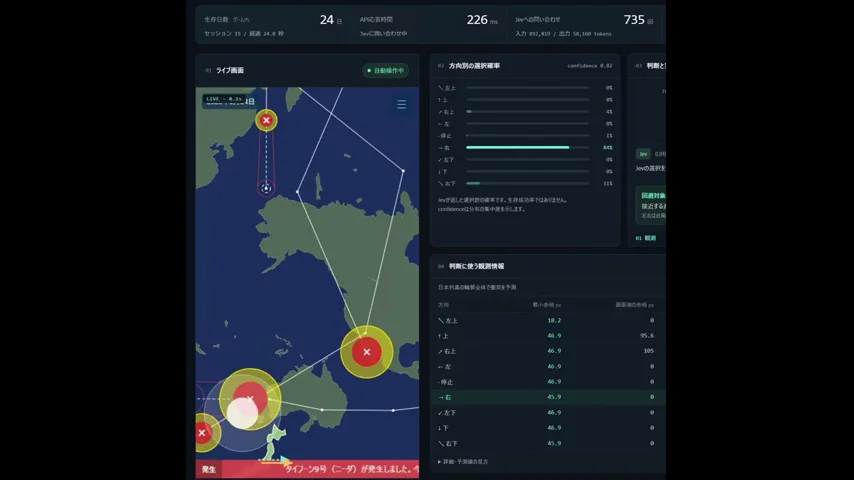
A cloud-based AI agent autoplays a typhoon-escape game better than its human operator, though open questions remain about whether cloud latency can sustain millisecond-critical real-time gameplay.
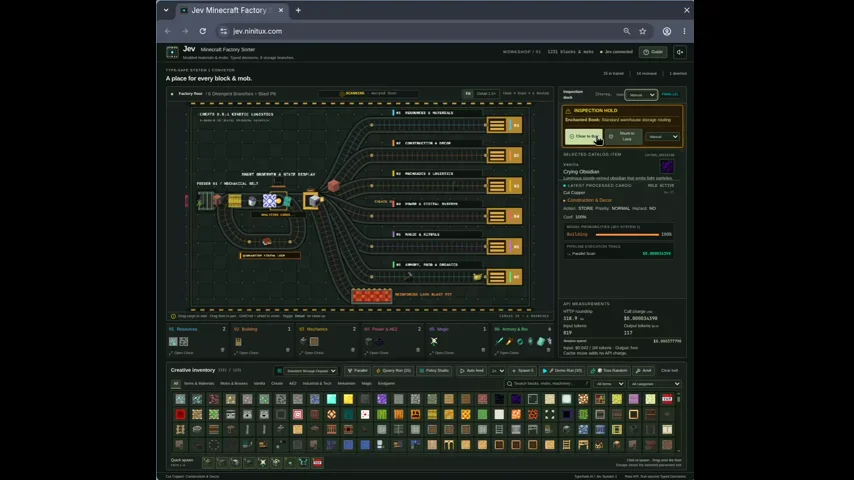
A single-prompt agent harness demo where Astra plans and reviews while a Gemini swarm builds a working Minecraft factory sorter, with TypeSafe's new Jev language deciding item routing in real-time gameplay.
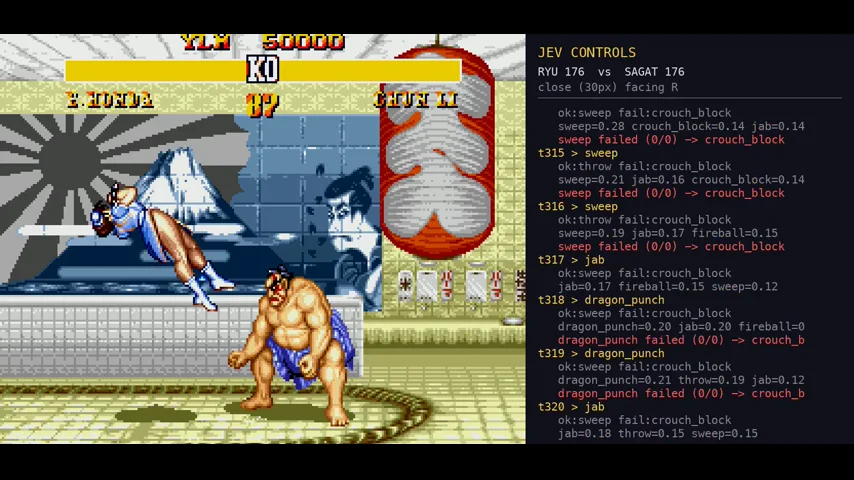
A real-time AI agent ingests live game state and selects winning next moves in Street Fighter with impressive speed.
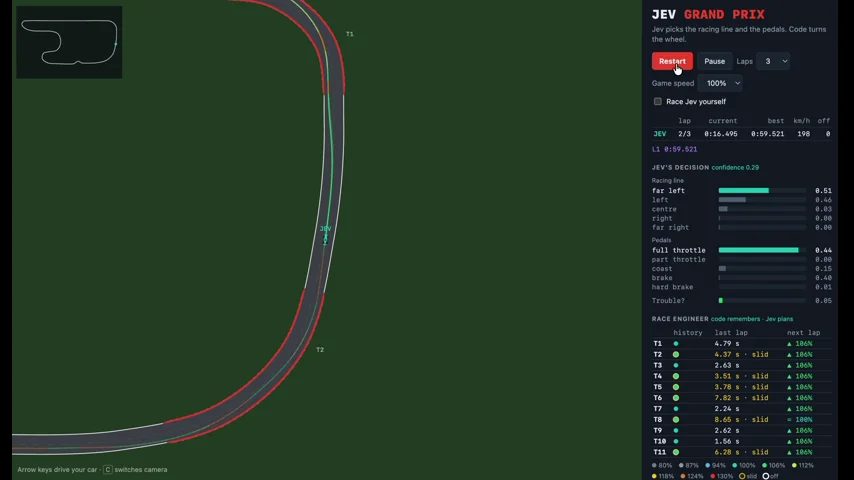
A racing game where an AI driver built with Claude Code picks racing lines and braking points from speed and corner data, and—having no memory—re-optimizes each lap by reviewing all 11 corner split times to decide where to push harder.
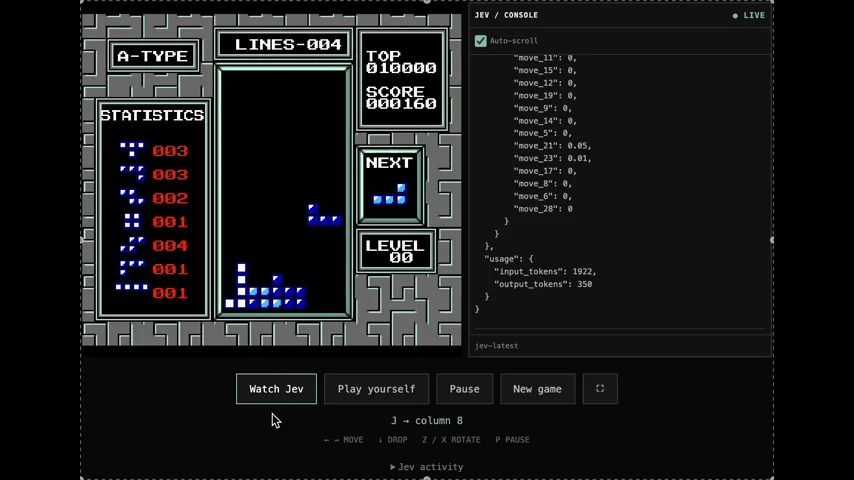
AI agent Jev plays NES Tetris in real time, autonomously controlling gameplay end-to-end.
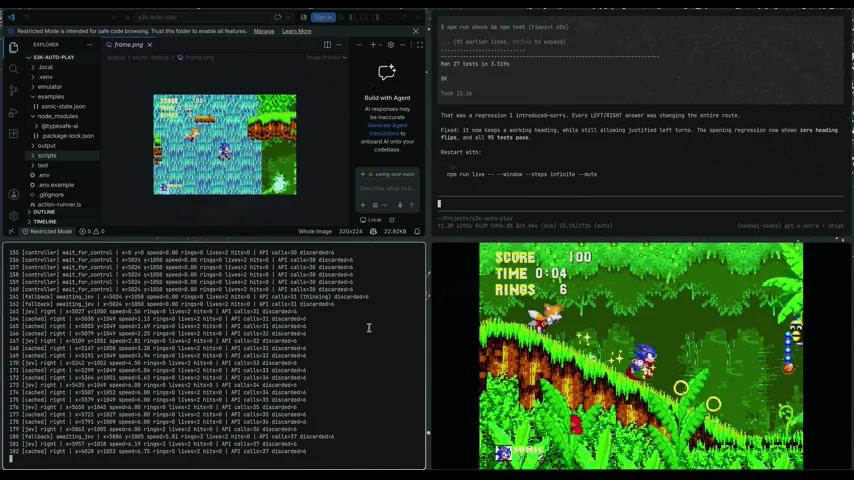
An AI game-playing agent so fast at real-time action that it had to be deliberately throttled down to play Sonic at watchable speed.
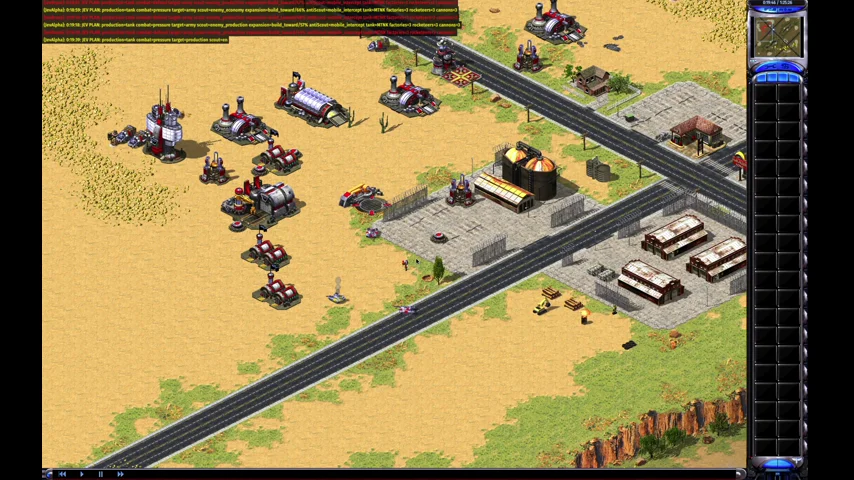
TypeSafe's Jev model plays Red Alert 2 end-to-end in real time — scouting, optimizing economy and base placement, timing expansions/attacks/superweapons, and emergently microing armies and split-pushing tanks around enemy defenses.
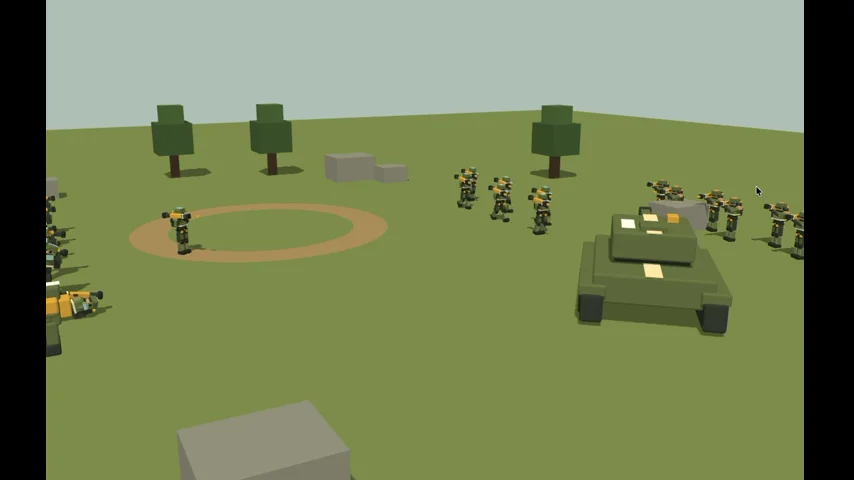
A browser-based real-time strategy game demo combining SpacetimeDB-powered multiplayer with an AI-agent opponent that plays matches live in the browser.
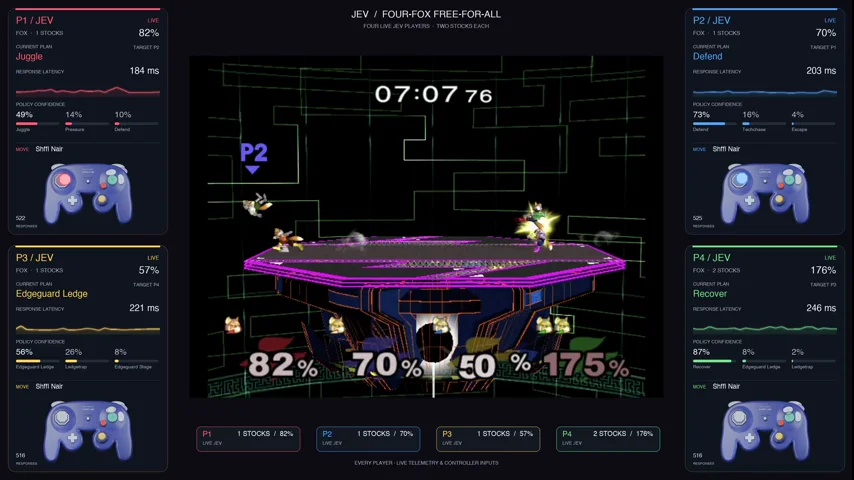
Jev is a real-time AI agent that simultaneously controls all four characters in a Super Smash Bros. self-play match, picking optimal moves in fractions of a second while burning 22M+ tokens for just a few cents — showcasing near-instant LLM inference for gameplay.
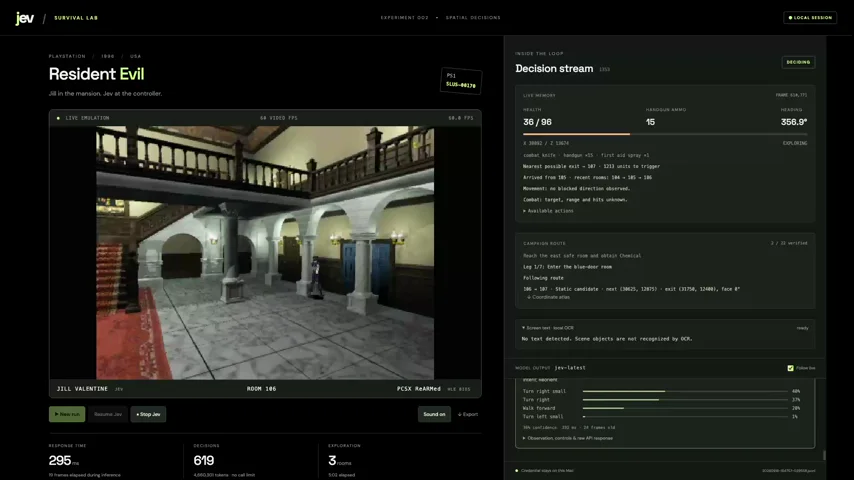
An AI agent plays the original Resident Evil in real time—navigating 3D space, fighting zombies, solving puzzles, and pursuing objectives—though it got bitten early and refused to shoot the zombie dogs.

Jev vs GPT-5.6 Sol and Claude Haiku 4.5 at Pong. The ball moves when the model decides. Jev (@typesafeai, via @vercel AI Gateway) answers in about 200ms and makes generalised real
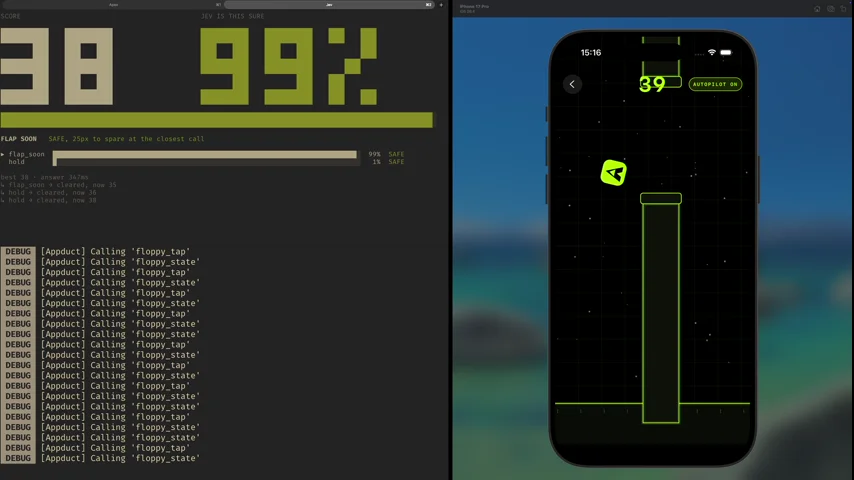
An AI agent plays Flappy Bird in real time with effortless, human-level precision, showcasing low-latency visual perception and continuous control.
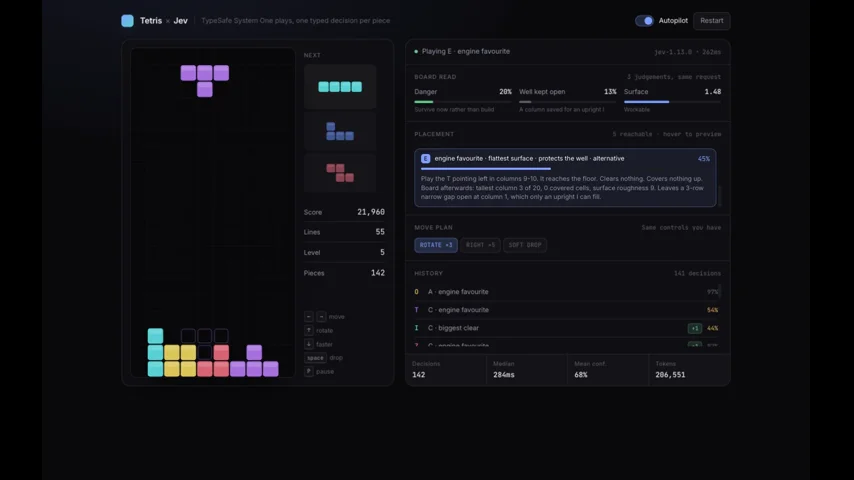
The TypeSafe Jev model plays Tetris live, scoring 5 candidate placements by probability per piece at 285ms per decision—172 pieces, 66 lines cleared and counting, with its real-time reasoning streamed on screen.
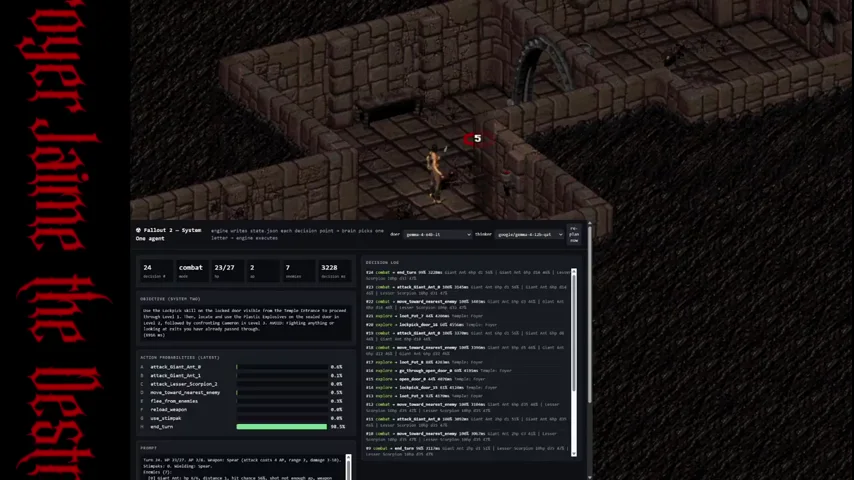
Claude-patched open-source Fallout 2 CE engine streams live game state (combat, dialogue, exploration, inventory) to a local Gemma 4B model that plays the game on a laptop, with no cloud involved.
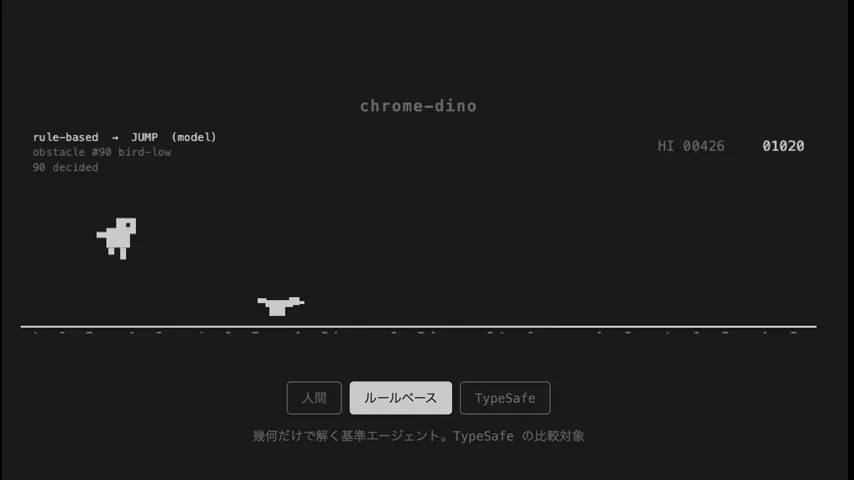
A real-time gameplay benchmark pits an AI agent against a rule-based baseline and a human player on a timing-based game at increased difficulty.
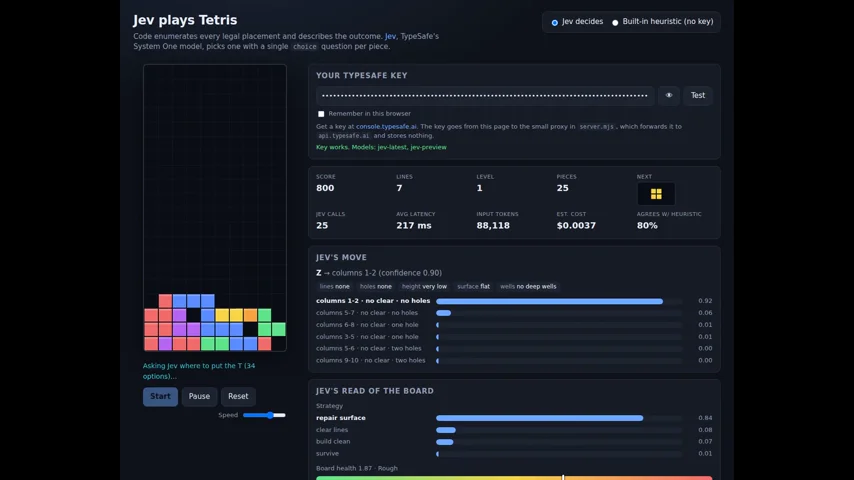
Jev — a fast, cheap model with no reasoning or thinking — plays Tetris in real time, but its lack of smarts shows through visibly questionable moves.
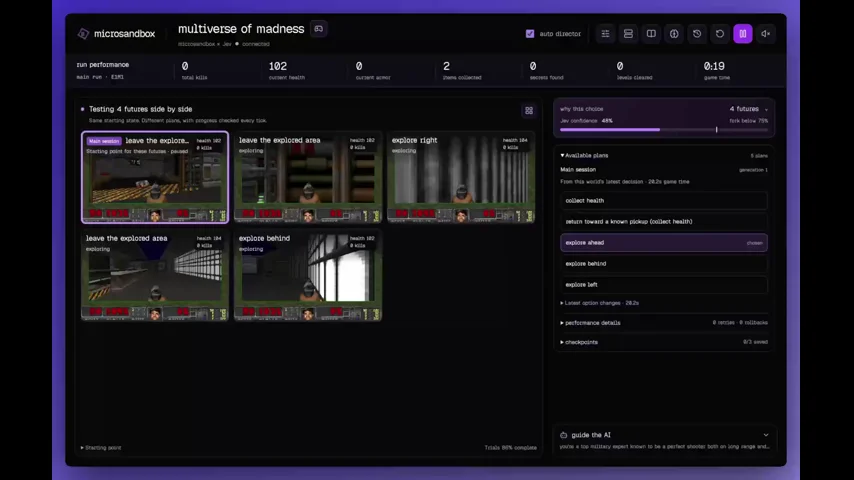
An LLM-guided agent plays Doom by forking parallel sandboxed runs (via Microsandbox) from the same checkpoint, scoring the futures and continuing from the best outcome—or rewinding to an earlier checkpoint when no path works out.
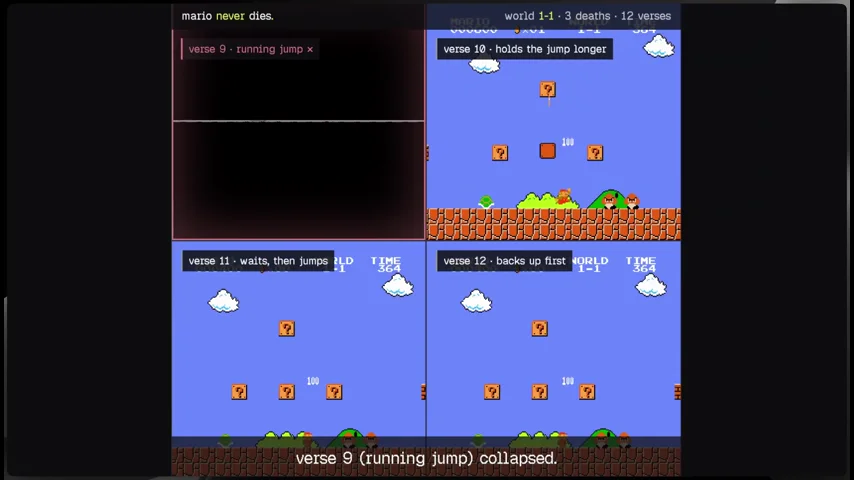
"Mario Never Dies" lets an AI agent (Jev) pick every move inside a microsandbox VM, and each time Mario dies it forks the entire VM into 4 parallel timelines—whichever run survives becomes canon, erasing the rest.
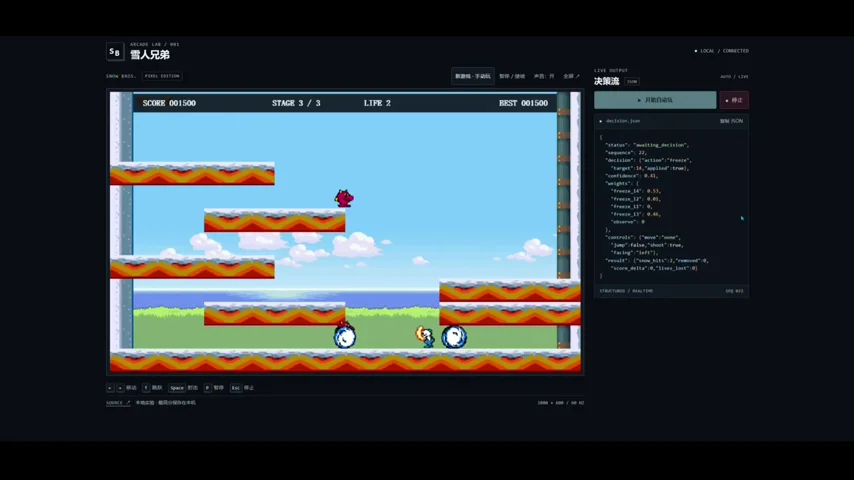
An AI agent plays Snow Bros. in real time, rapidly learning and outperforming the human demoer.
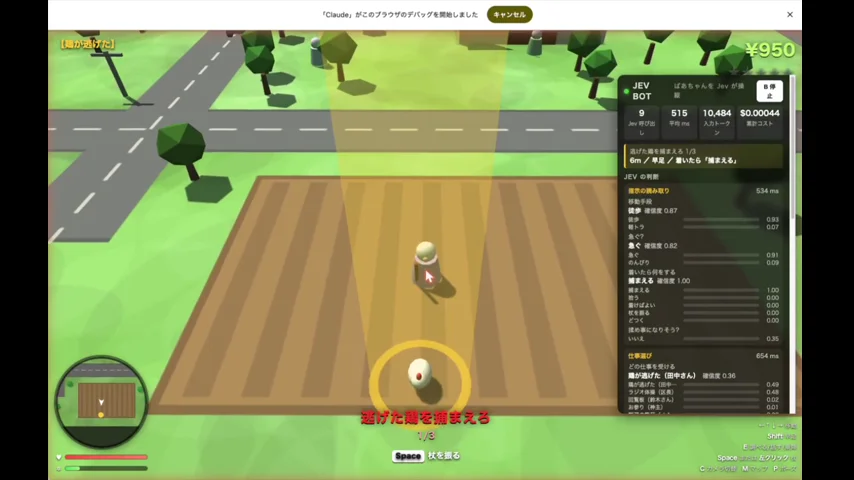
A self-built "Babaa Auto" agent autonomously clears game stages in a real-time hands-free gameplay demo.
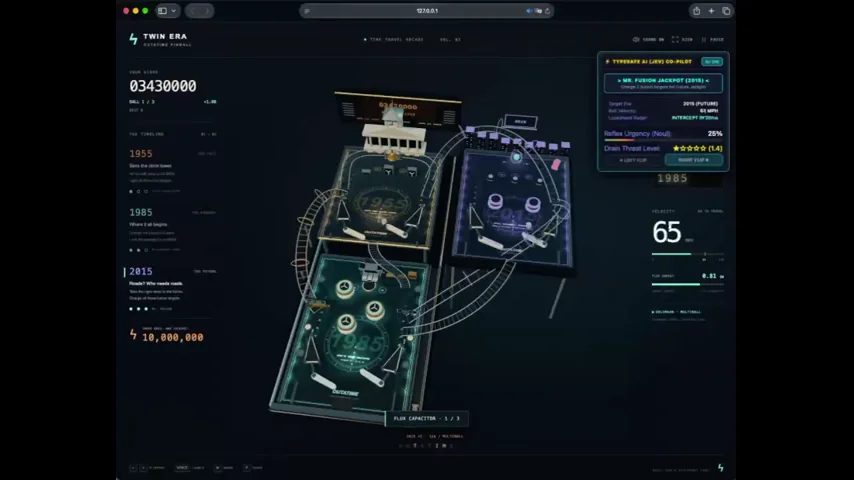
A custom Back-to-the-Future-style 3D pinball game autonomously played at high speed by the TypeSafe AI "Jev" engine, showcasing ultra-low-latency real-time inference in live gameplay control.
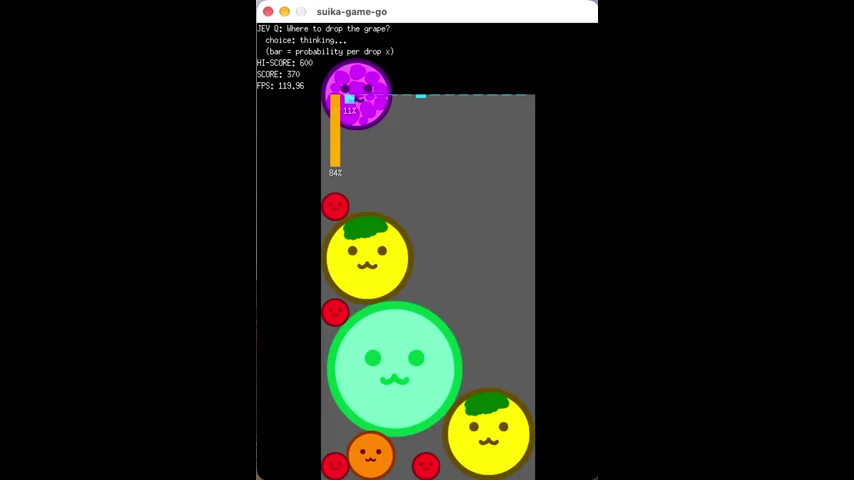
An AI agent named jev plays a Suika Game–style physics puzzle game built in Go's Ebitengine, demonstrating real-time autonomous gameplay on a custom game engine.
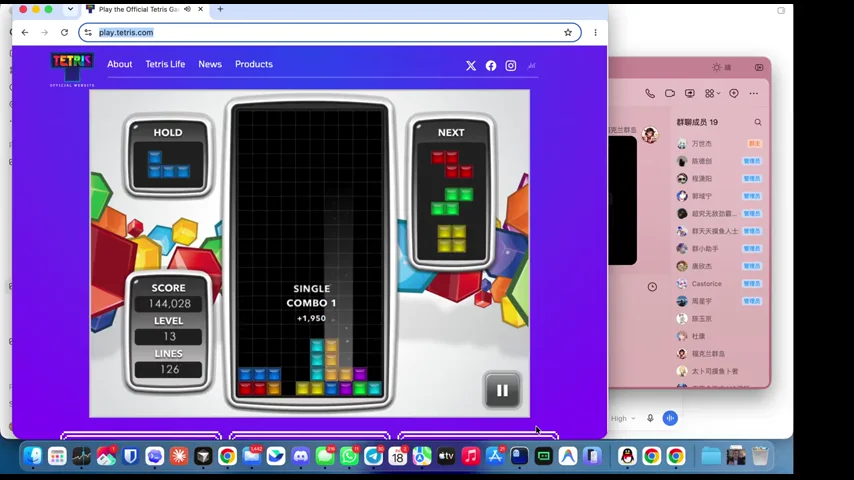
An AI agent called Jev plays the official version of Tetris in real time, effortlessly clearing lines and handling gameplay with ease.
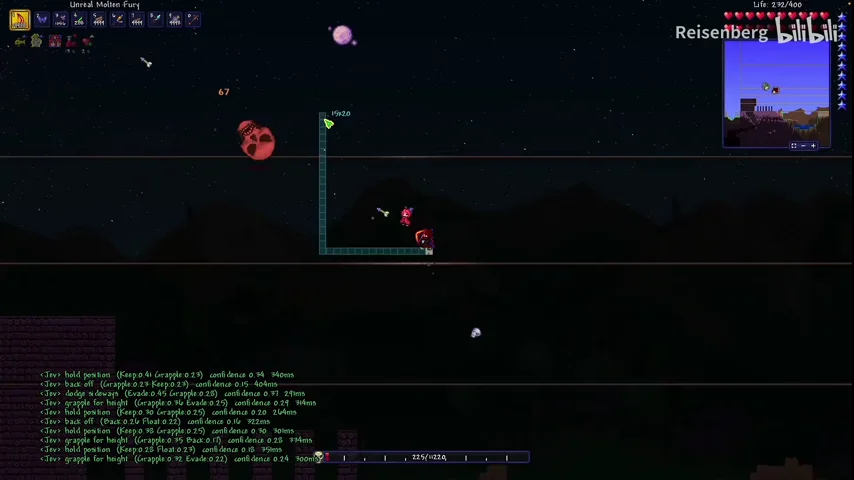
An AI cleared every pre-Wall of Flesh boss in Terraria Master Mode via a closed control loop — outputting high-level decisions (approach, dodge, dash, jump, danger checks) every 0.2s while a program executes per-frame movement and attacks.
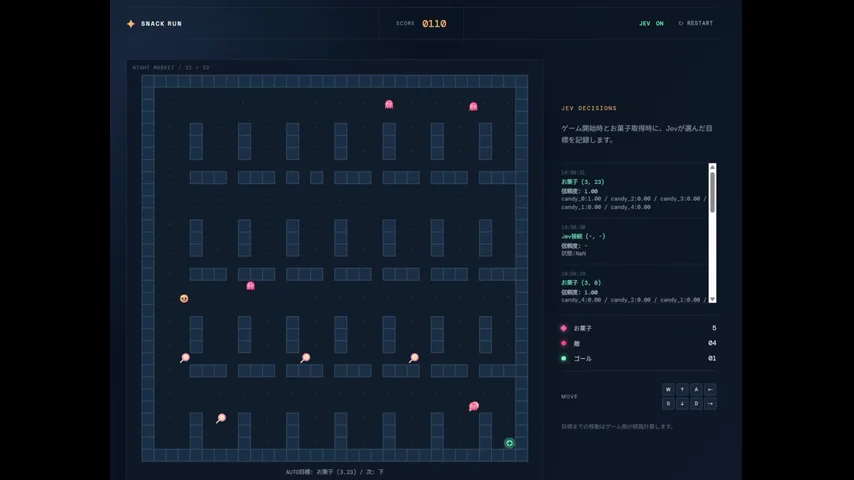
An AI model handles only the conditional-branch logic in a real-time game demo—collect snacks, dodge enemies, reach the goal—with fast responses, though the code-level wiring favors programmers.
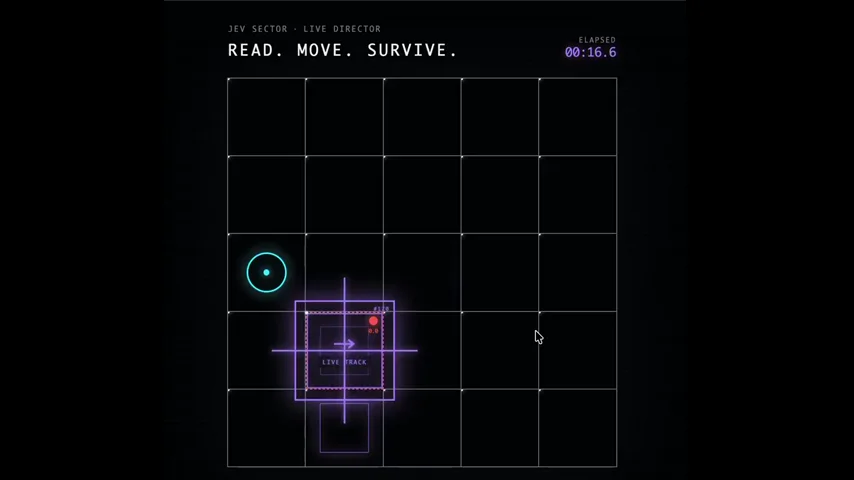
Demo streams a player's live position to an AI agent that shoots back in realtime, but the verdict is a plain codebase would suffice — broad AI delegation rarely beats narrow, scoped use.
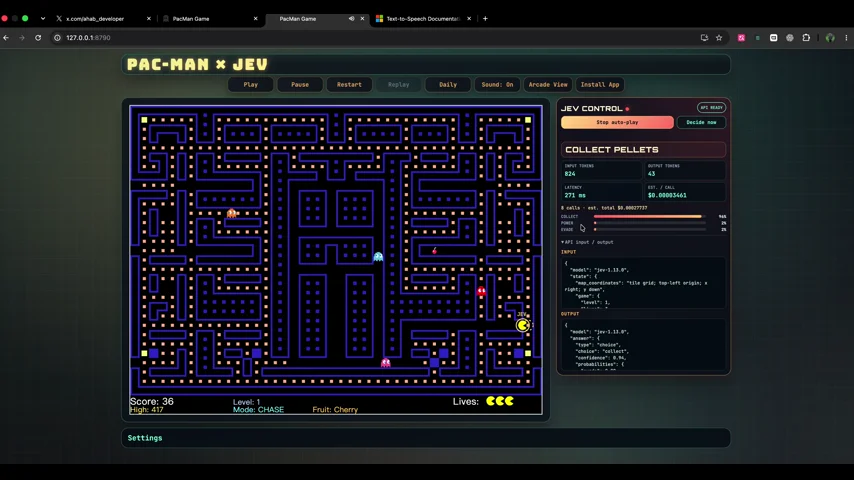
An AI agent autonomously plays Pac-Man in real time — reading the map, pellets, and ghost positions to decide each move — while running for extended sessions at roughly $0.001 in total cost.
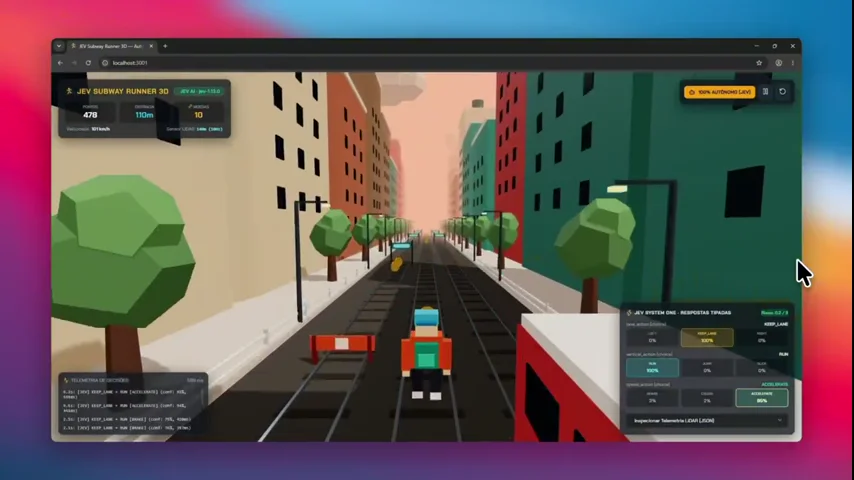
A React-built Subway Surfers–style 3D runner where every jump, slide, dodge, and acceleration is decided 100% in real time by TypeSafe AI.
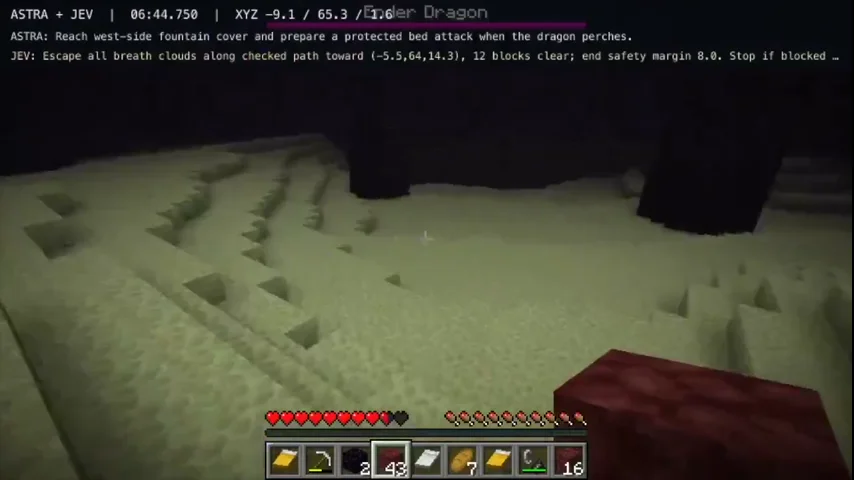
An open-sourced harness lets two AI agents beat Minecraft's Ender Dragon in 8m43s for under $1, combining near-instant decision-making with continually learning skills for real-time gameplay.
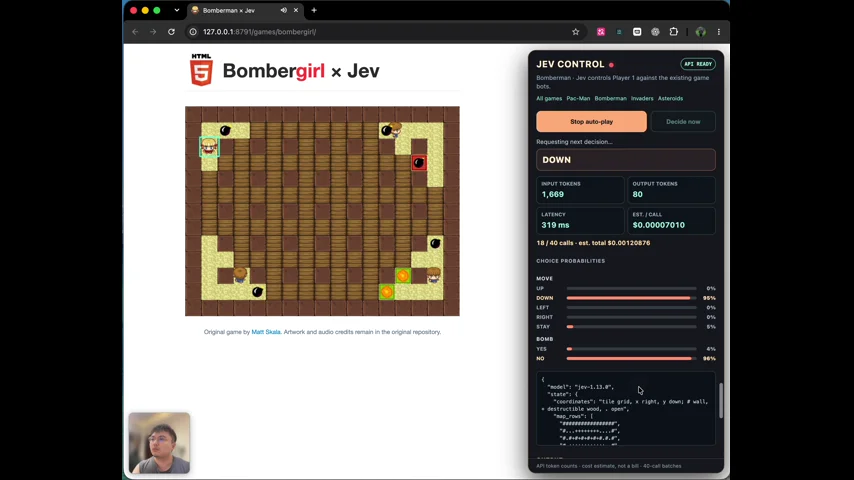
An AI model named Jev now serves as Bomberman's real-time brain with unbeatable price and latency, needing only minor input tuning to fully master the game.
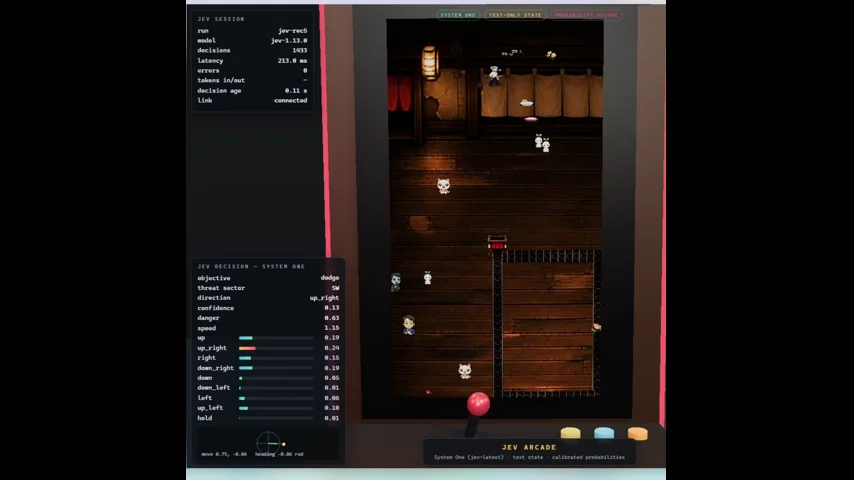
An end-to-end LLM pipeline designs the game-state encoding for a probability-only model, decodes its outputs into game controls, and clears Sushi Survivors' beginner boss stage in 10 minutes of real-time play.
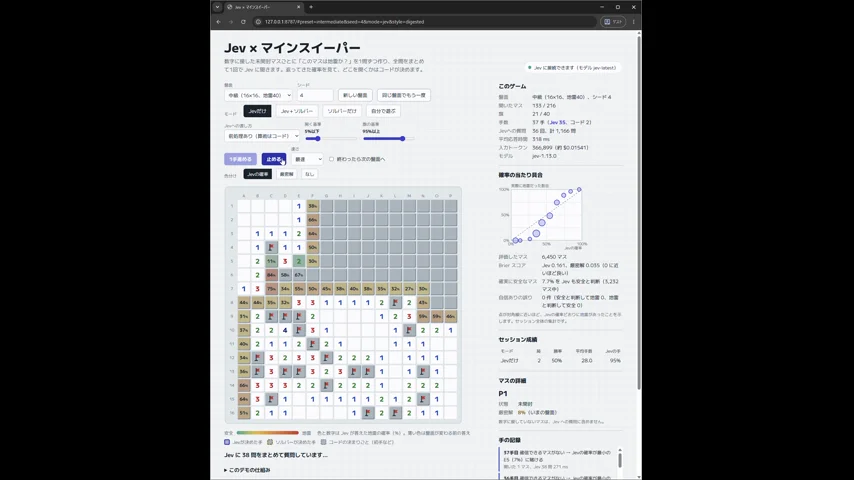
An AI agent autonomously solves Minesweeper in real-time gameplay, perceiving the board state and reasoning through cell-by-cell mine deductions without human input.
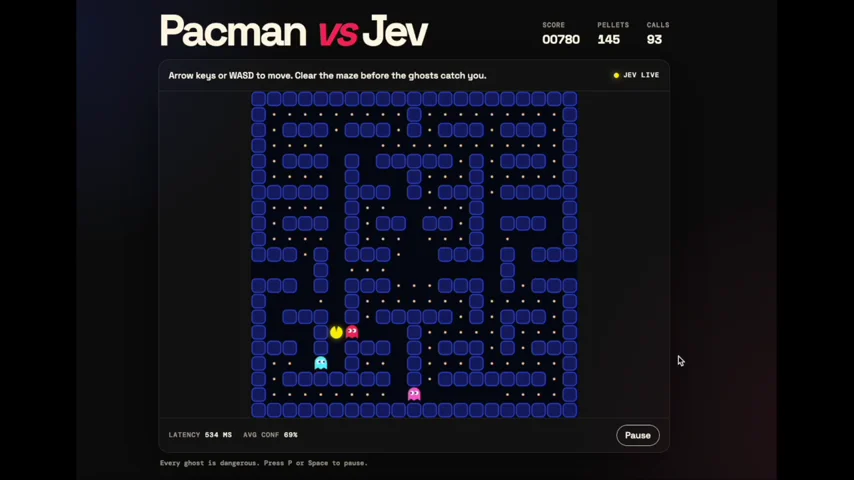
A Pac-Man demo where an LLM agent controls the ghosts against a human player in real time, running a full game for under $0.01 at ~500ms average latency.

An AI agent is demoed playing unreleased 90s Japanese arcade games in real time, parsing live gameplay and generating control inputs on the fly.
Turn Strategy
33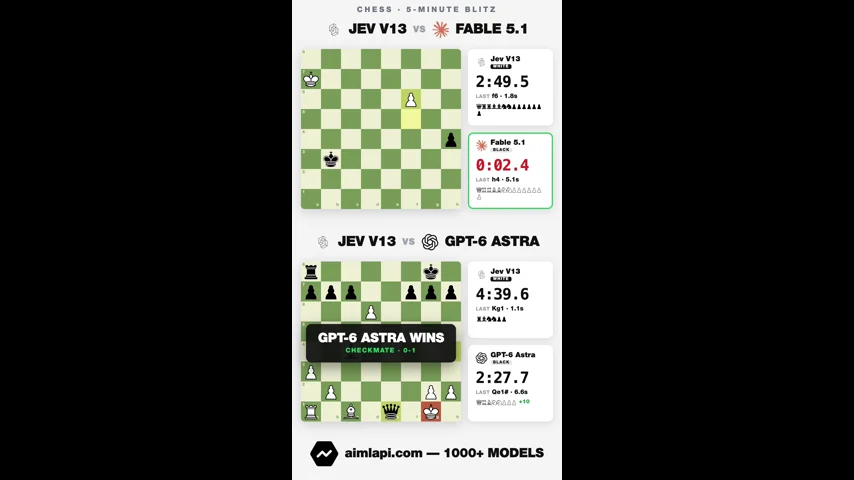
A decision-only (non-LLM) model played 5+0 blitz chess at ~2.6s/move—one API call per move—flagging Fable 5.1 despite being down 16 material, but got mated in 18 moves by Astra.
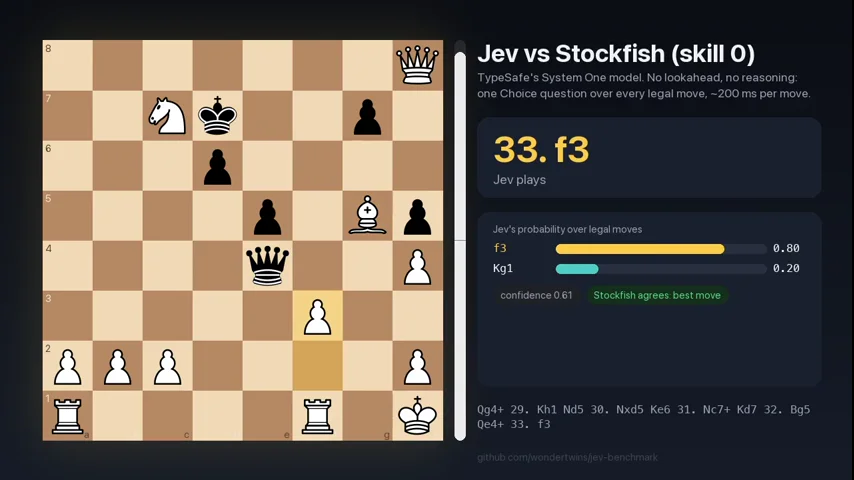
An AI chess engine ("Jev") plays at roughly 950 Elo with sub-second move latency.
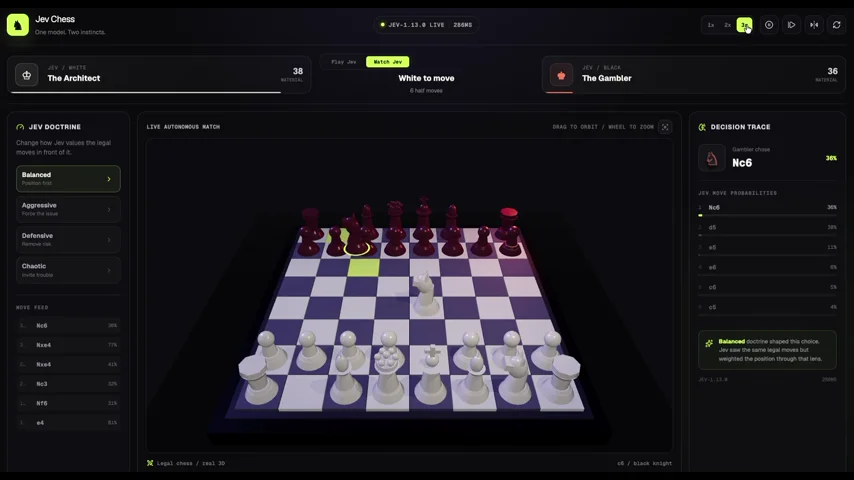
A demo where "jev," a single AI model, plays 3D chess against itself — developing a self-rivalry — with a live stream to watch or jump in and disrupt the match.
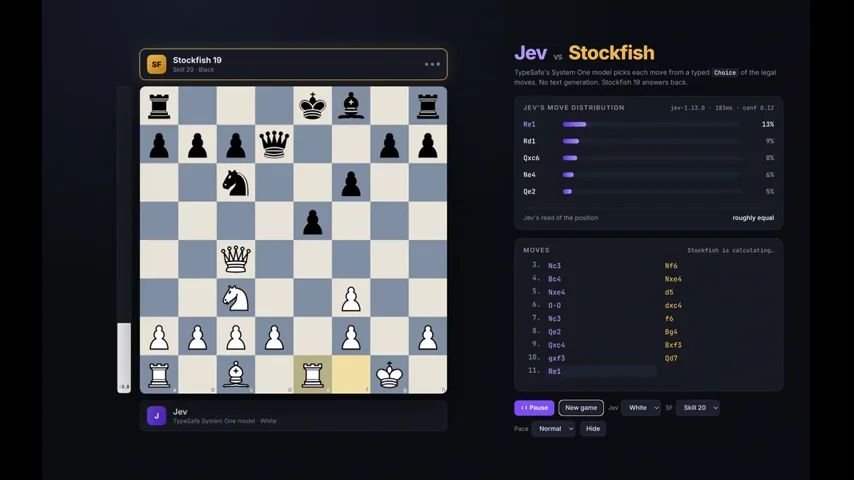
A non-generative decision model that scores every legal chess move in a single forward pass goes head-to-head with Stockfish, picking each move via one API call in ~2.6s at roughly $0.0015 per game.
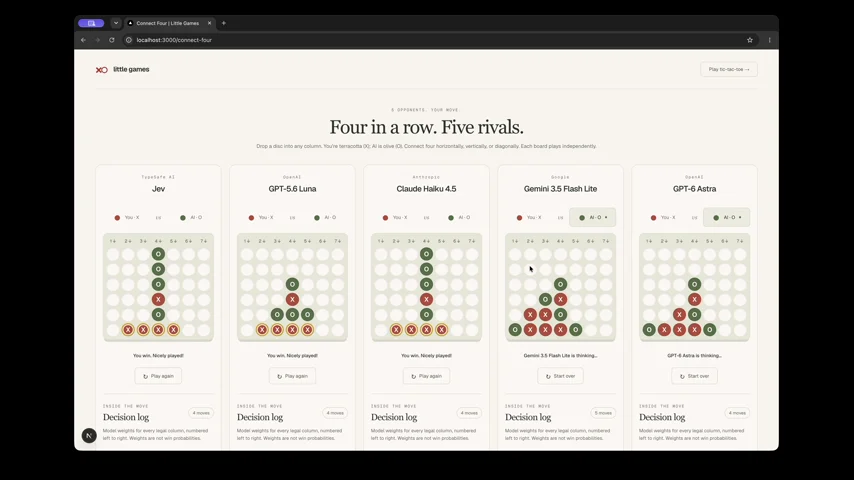
A test of whether an AI agent could model a turn-based board game as a state machine unexpectedly revealed that Gemini 3.5 is a strong board game player.
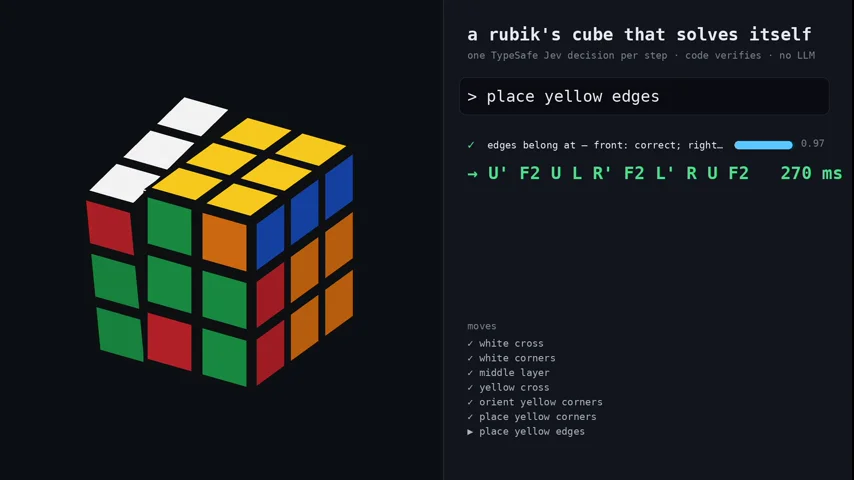
I got a rubik's cube to solve itself with @typesafeai 's Jev and it solves it like a person does, 94 moves, not the 22 move optimal solution. Jev isn't an LLM, it just answers one
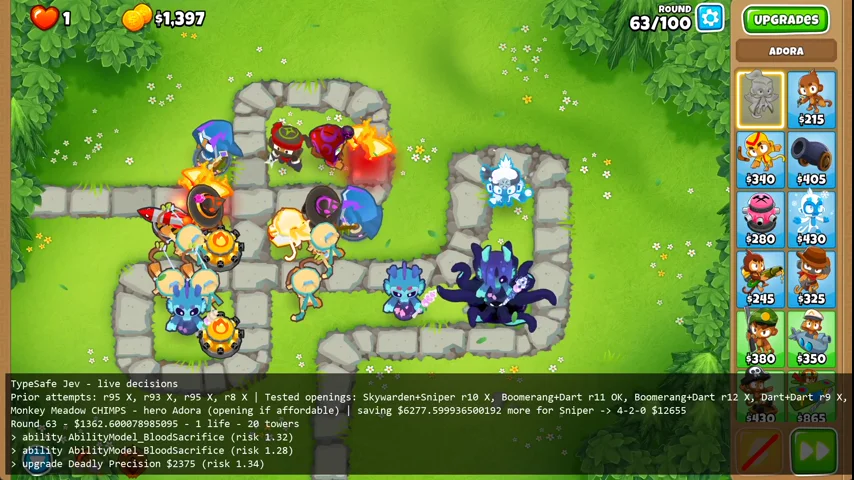
Jev can play and beat the hardest gamemode in BTD6 (CHIMPS) with no outside help. - realtime, fast forwarded - rounds automatically start with no pause between rounds - self learn
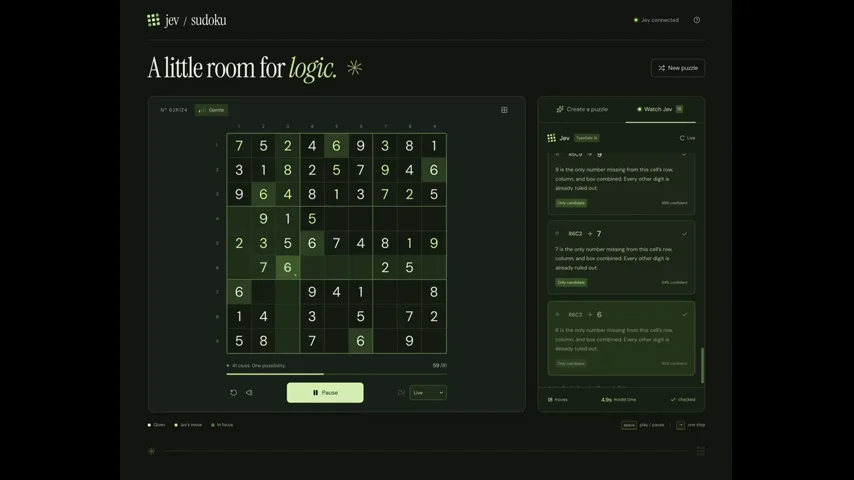
A Sudoku playground where the Jev agent takes a difficulty brief and picks moves you can watch live or slowed down, while a local engine validates every move and guarantees each puzzle stays uniquely solvable.
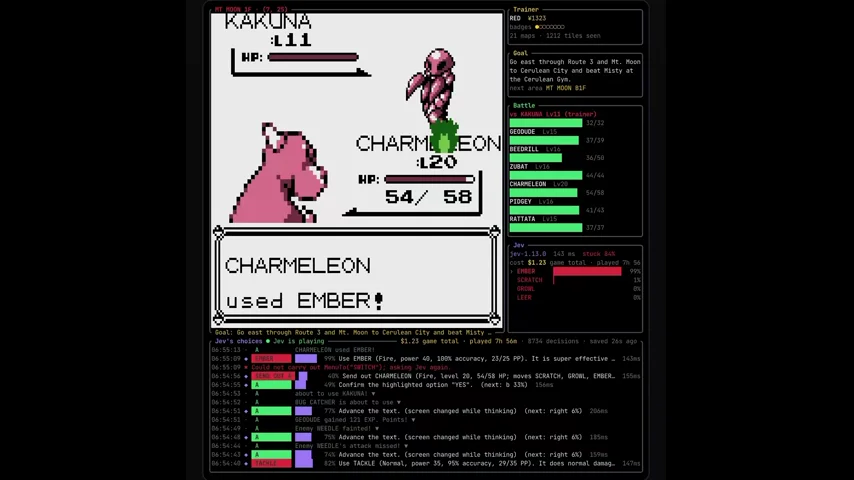
An AI agent playing Pokémon has made 8,000+ decisions for just $1.21, defeating Brock for the first gym badge and now leveling up inside Mt. Moon.

In the turn-based word game Yapello, Jev and GPT-6 Astra played a real private multiplayer match (30s turns, 24 unlabeled candidate moves each): Astra won 105–72, but Jev was 12x faster (2.02s vs 24.29s API time) at <$0.01 vs $0.32.
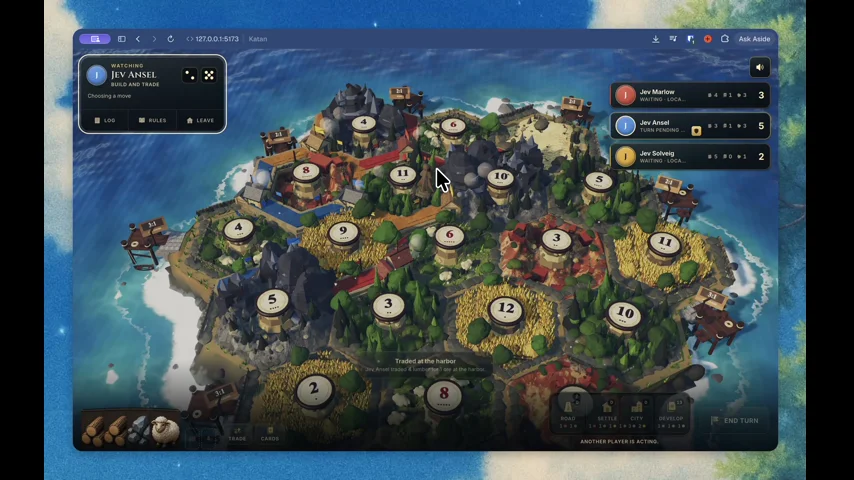
An AI agent autonomously plays a full game of Catan against itself in real time, brute-forcing moves with a preference for development cards over cities at mind-boggling, un-sped-up speed.
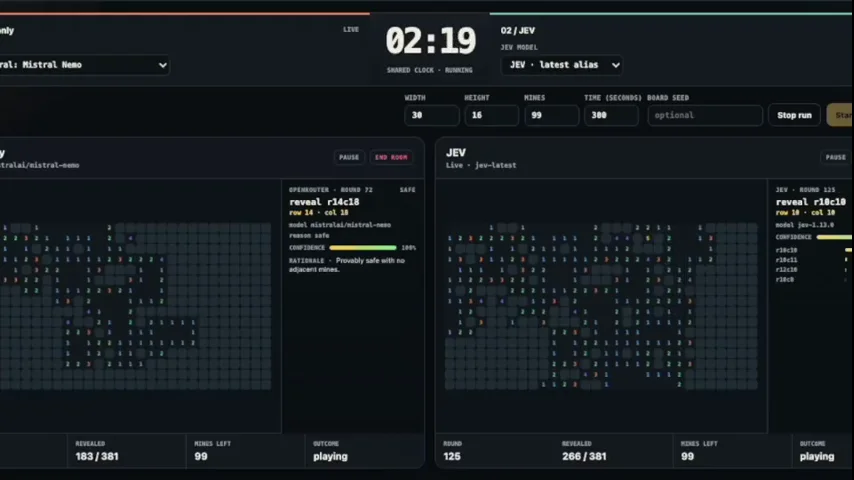
A head-to-head Minesweeper showdown pits a human player against Mistral Nemo on Expert mode, scaling up to a massive 200x200 board.

Four Jev AI agents autonomously compete in a live Ludo match, demonstrating multi-agent turn-based strategy gameplay in a video sped up 5×.
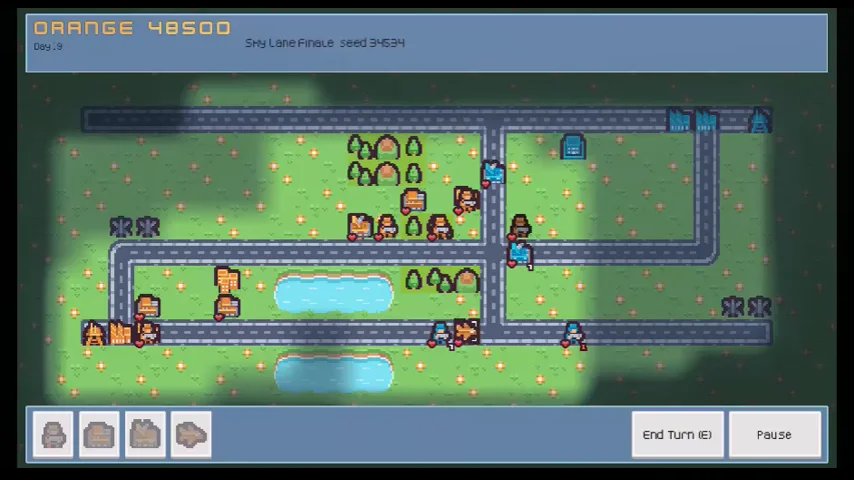
A locally-tuned AI agent plays Advance Wars-style turn-based strategy matches autonomously—fielding a smaller Orange army with no turn limit, winning by wiping out the enemy or capturing their HQ.
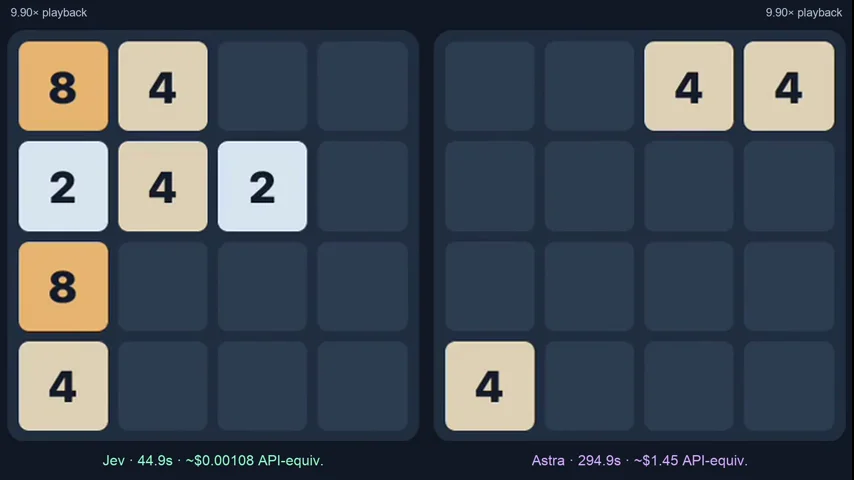
Jev plays the turn-based game 2048 5x faster and 1000x cheaper than astra, though its reasoning clearly lags state-of-the-art models like astra and fable.
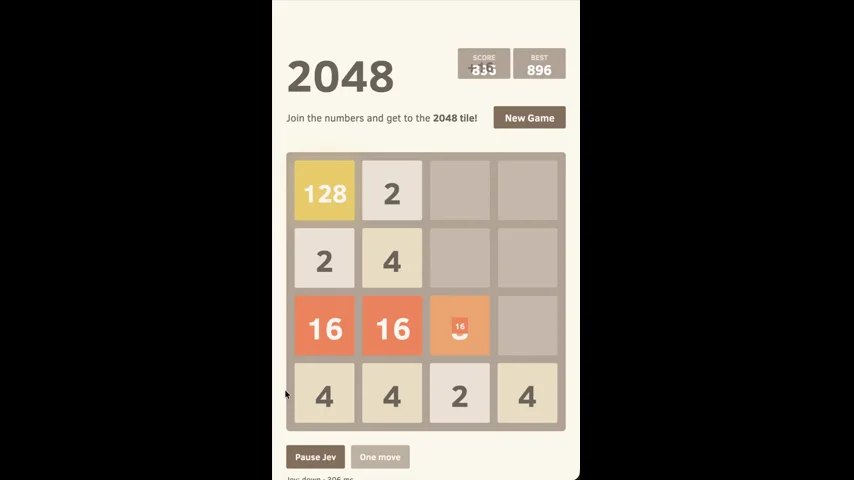
An AI agent plays the puzzle game 2048 but struggles to make progress, repeatedly getting stuck at the 128 tile.
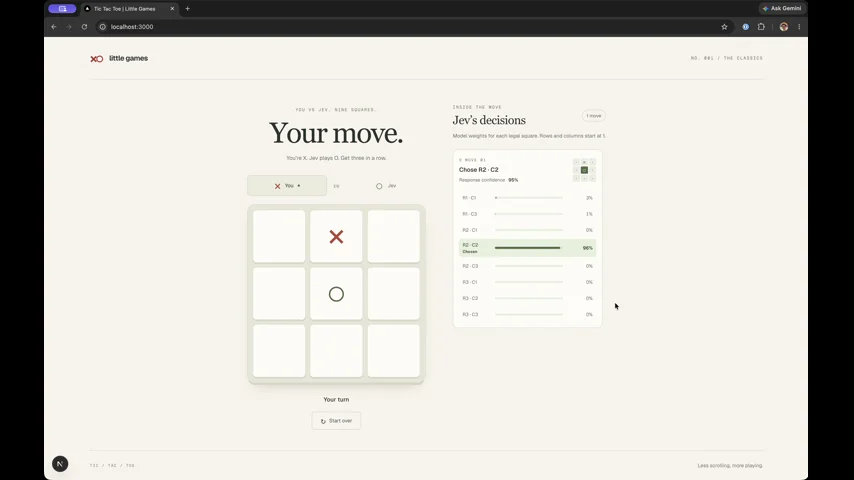
i thought that Jev was going to good a playing state machine games, but odd enough, it's really bad a tic tac toe 🤔 astra (high) vs jev | told astra to play odd moves https://t.c
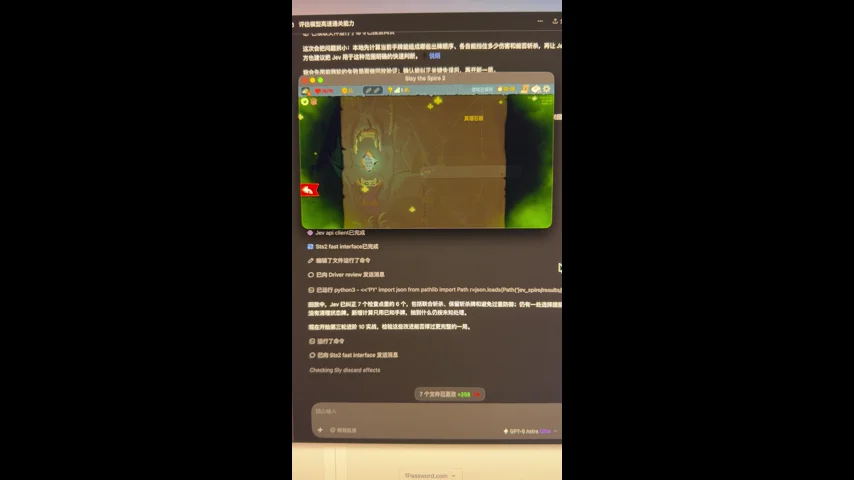
Jev, a new model built for high-frequency decision-making, plays Slay the Spire 2 with just 0.7s per action—superhuman gaming speed that outpaces the stronger-but-slower GPT-6 Astra.
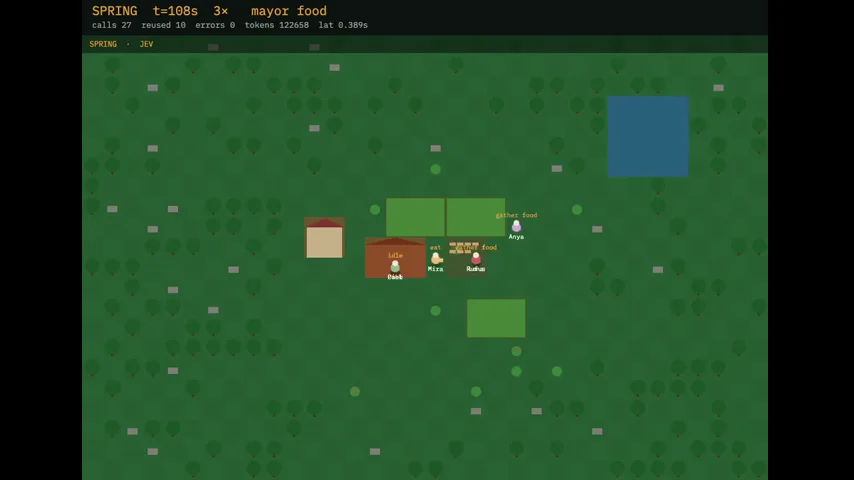
LLM agent "jev" plays Banished as mayor—one call per tick sets town priority plus a job for all 6 villagers—keeping 6/6 alive through two winters with 3 fields and 5 harvests in just 43 calls totaling 377ms.
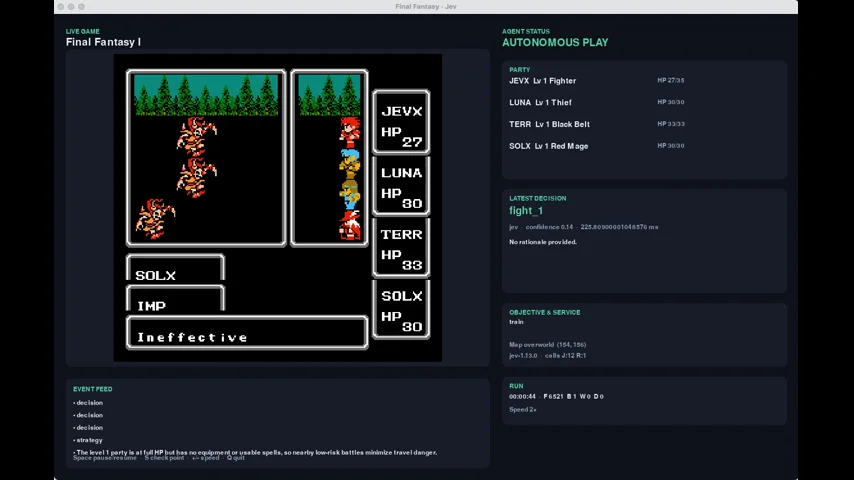
A quick repo mod gets a TypeSafe-rule-driven agent playing Final Fantasy, with an audio agent next to dynamically rewrite rules at runtime—recovering from stuck states without restarting or recompiling.
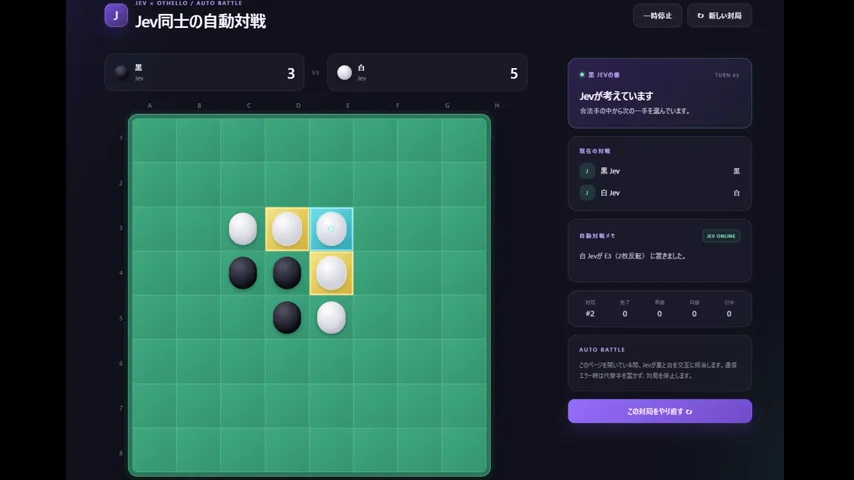
Two AI agents play Othello against each other at real-time speed, with future demos of Smash Bros. and Minecraft hinging on how much game-system context can fit.
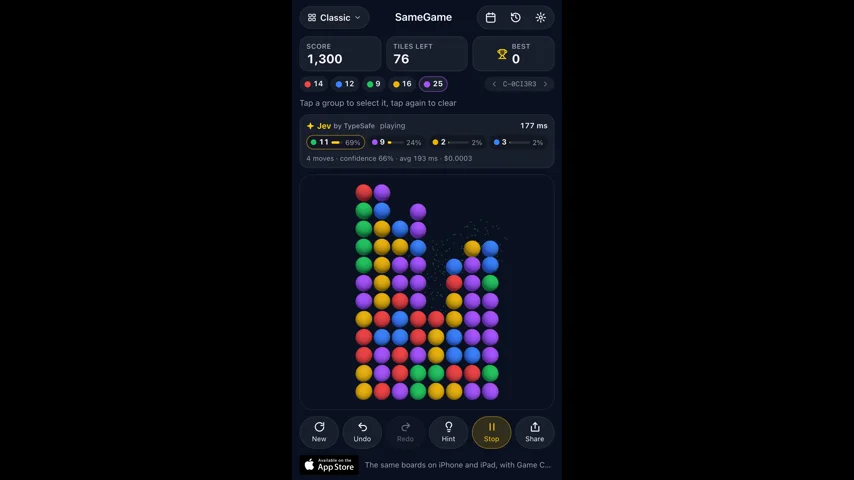
An AI agent plays SameGame with zero search or lookahead — code enumerates every legal move's outcome each turn and the model picks one, clearing boards at ~0.3s per move and ~$0.001 per game.
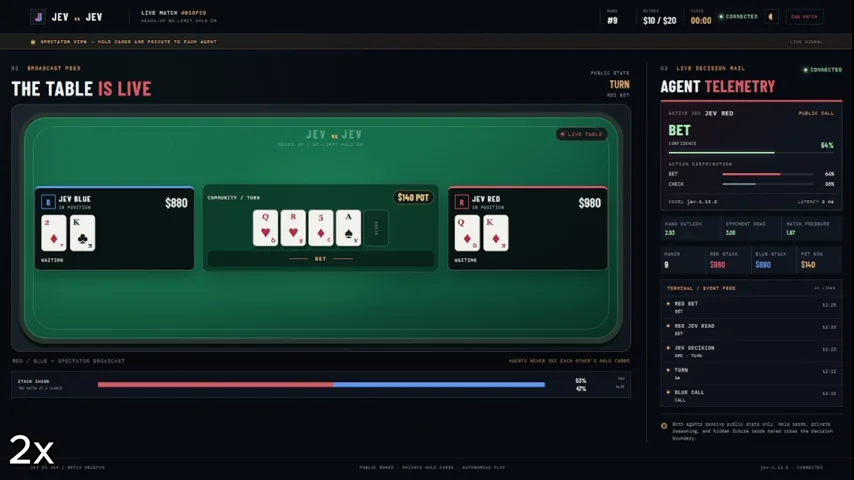
Two AI agents played 20 hands of heads-up poker with hidden cards and 1,000 chips each, making 153 decisions (both caught bluffing) before one took all 2,000 chips—for a total match cost of $0.02.
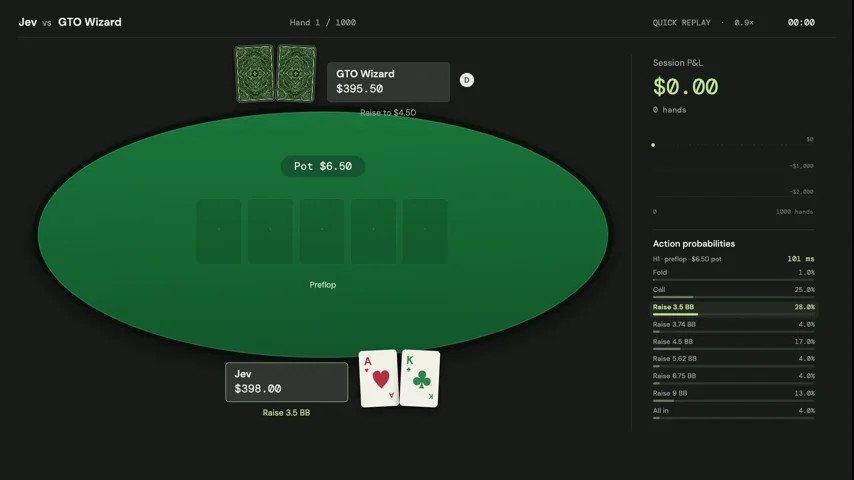
An AI agent played 1,000 hands of heads-up poker against GTO Wizard with a median 141ms decision latency, losing $1,800 at -94.2bb/100 (-72.9bb/100 luck-adjusted, still better than always folding).
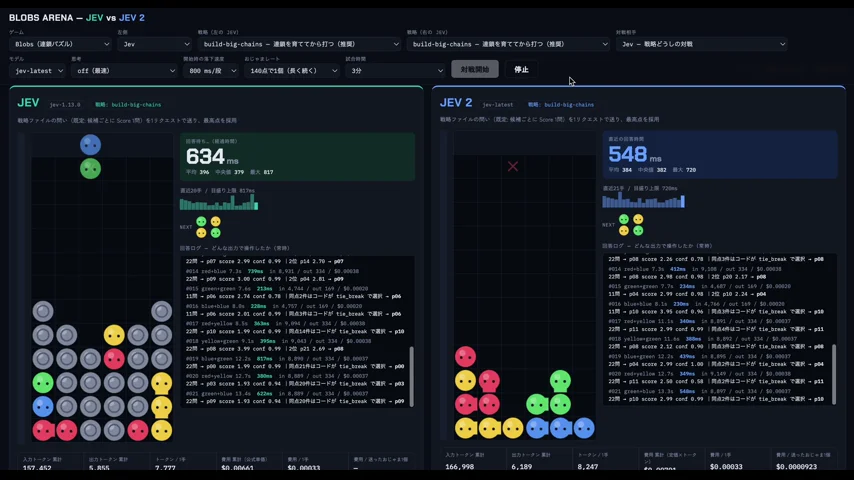
An AI engine for a turn-based puzzle game now autonomously builds and executes up to 6-chain combos, though with clear headroom for further optimization.
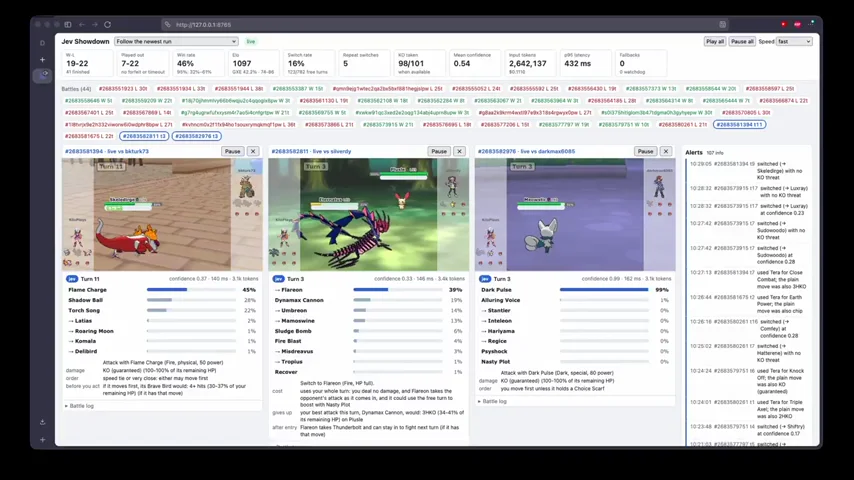
Jev, TypeSafe's AI model, autonomously plays Pokémon Showdown—handling every move and switch across 5 parallel battles, completing 41 games using 2.6M+ input tokens for just ~$0.11 in inference cost.
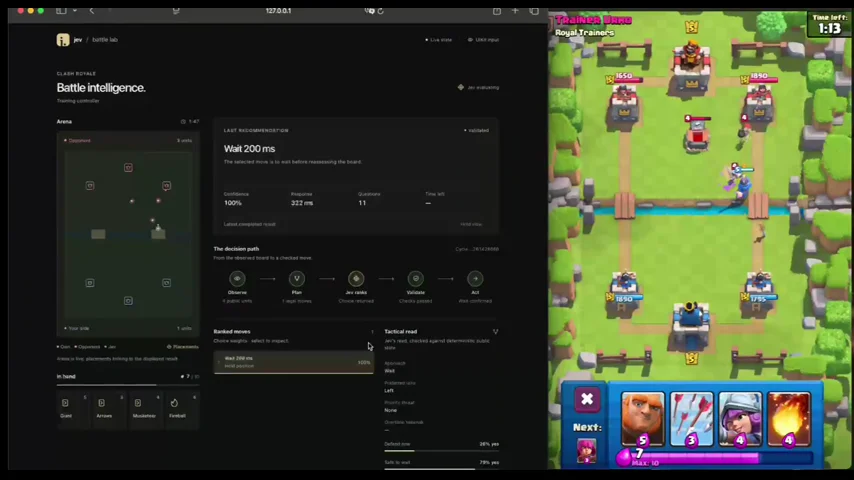
An autonomous AI agent playing Clash Royale end-to-end in real time, perceiving the board state and executing live strategic plays without human input.
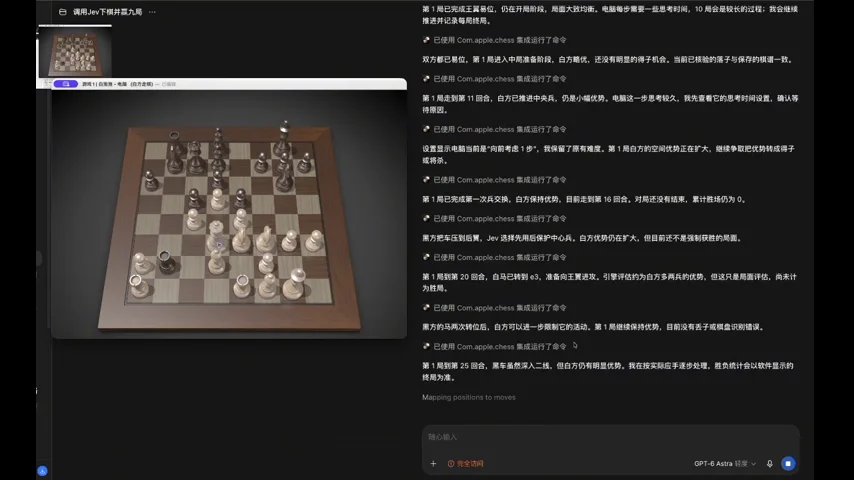
Codex Astra + Jev autonomously made every decision to play and win a full chess game at high speed, hinting at major potential for quant trading and agent-driven websites.
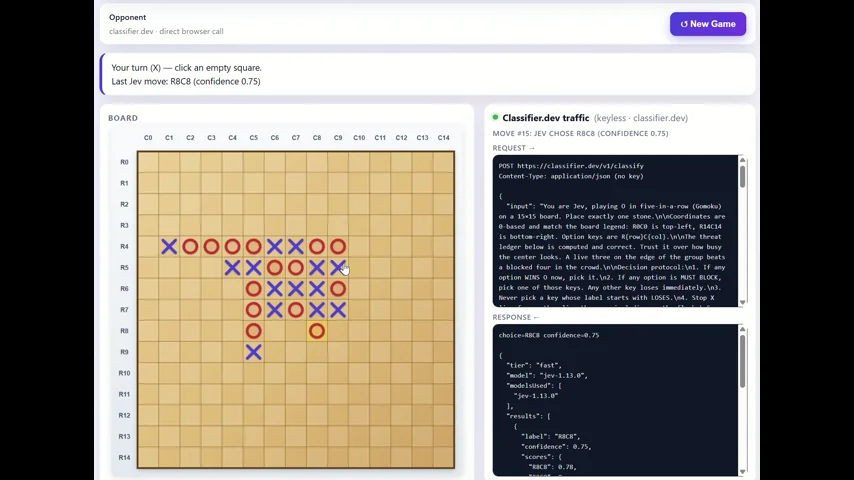
Swapping in a new LLM as the move-selection engine inside a Gomoku-playing harness yields reasonably strong gameplay.
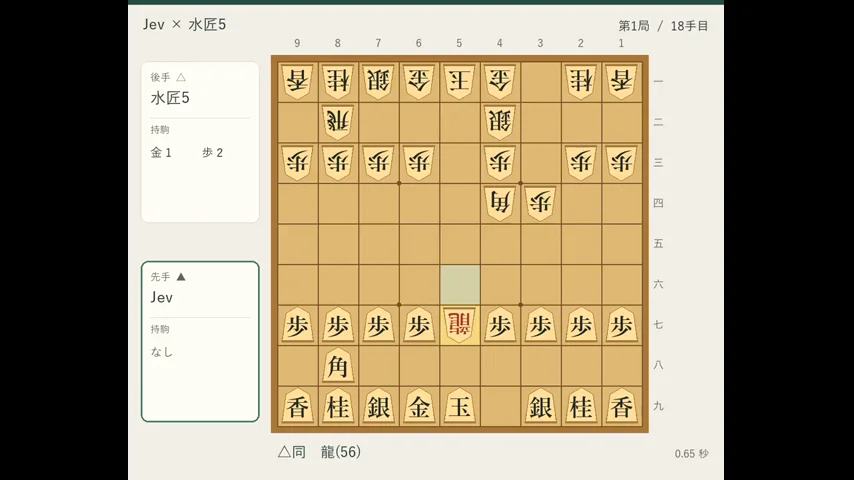
A demo pits an AI shogi player against the Suisho engine, which predictably dominates the match.
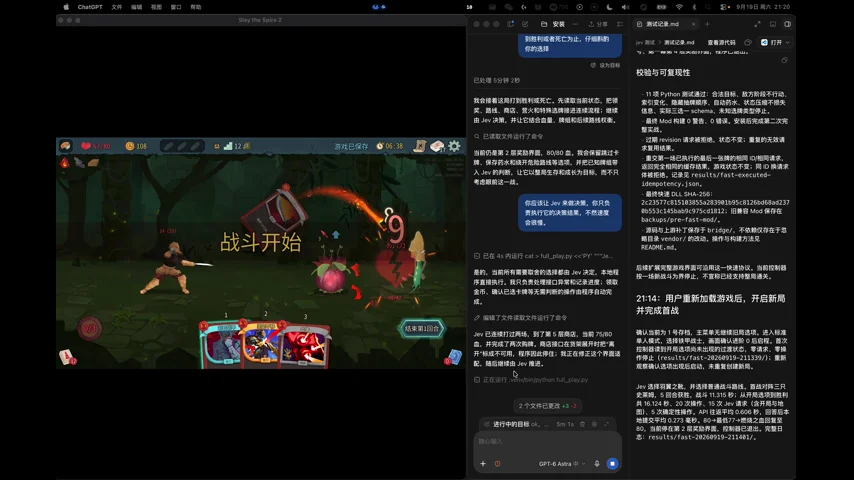
Codex-powered agent blazes through Slay the Spire 2 turns faster than viewers can track the gameplay, though its strategy remains mediocre.
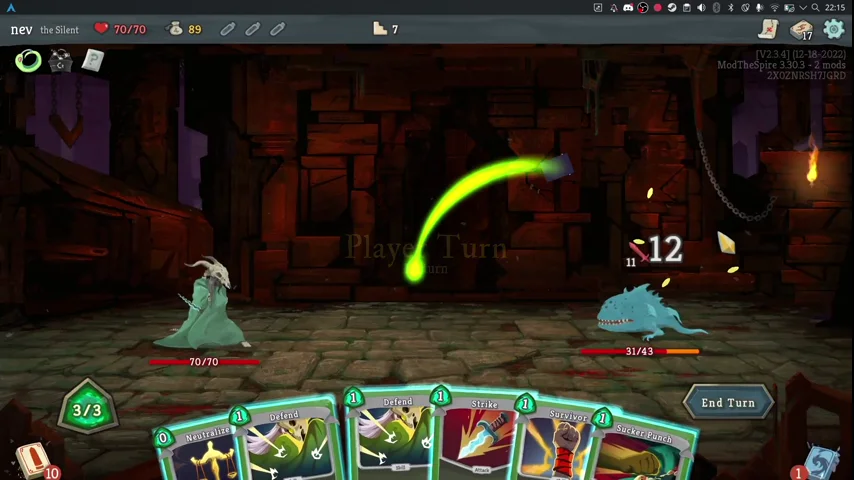
An AI agent autonomously speedruns a full Slay the Spire run while the user watches, demonstrating turn-based strategy games as a strong use case for real-time agentic gameplay.
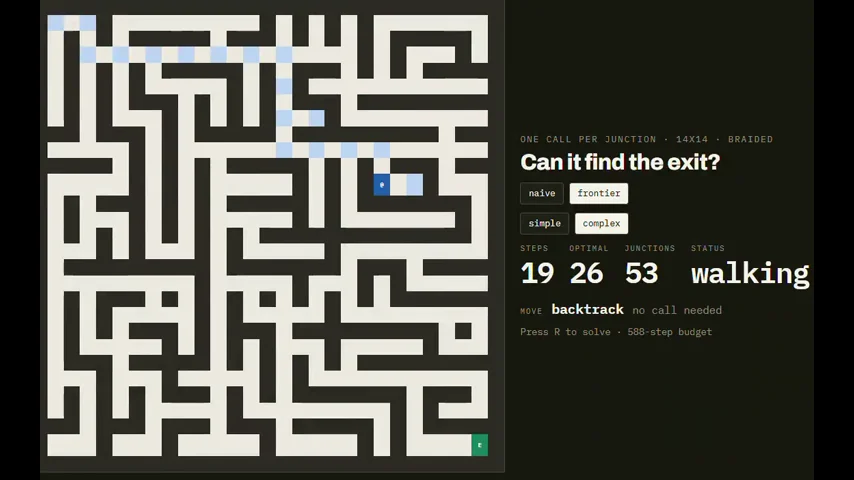
Giving an LLM maze-solving judgment only at junctions while code holds the DFS stack and visited set solved a 14×14 braided maze in 22 calls and 56 steps (2.2× optimal), versus 60 per-step calls that just paced a 7-cell corridor at 96% confidence.
Virtual Behaviors
39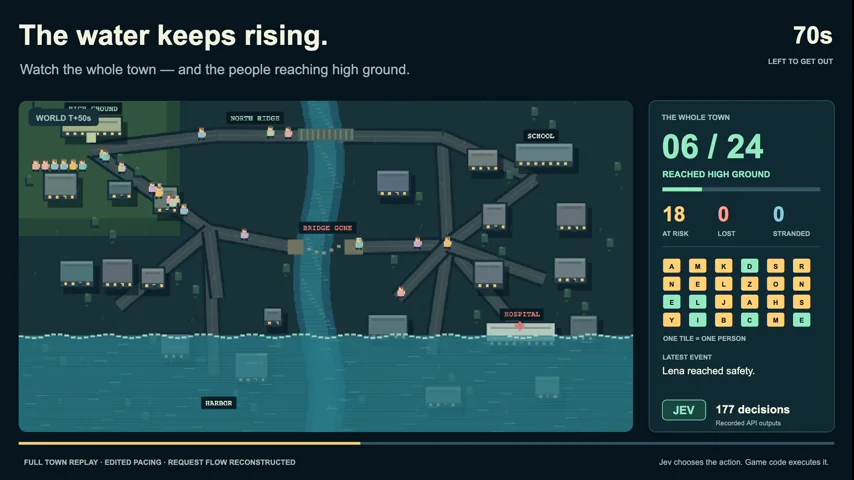
A social simulation gave 24 AI agents their own memories, relationships, and limited visibility inside a flooding town, letting each decide over 237 real API calls whether to escape, help strangers, or search for family.
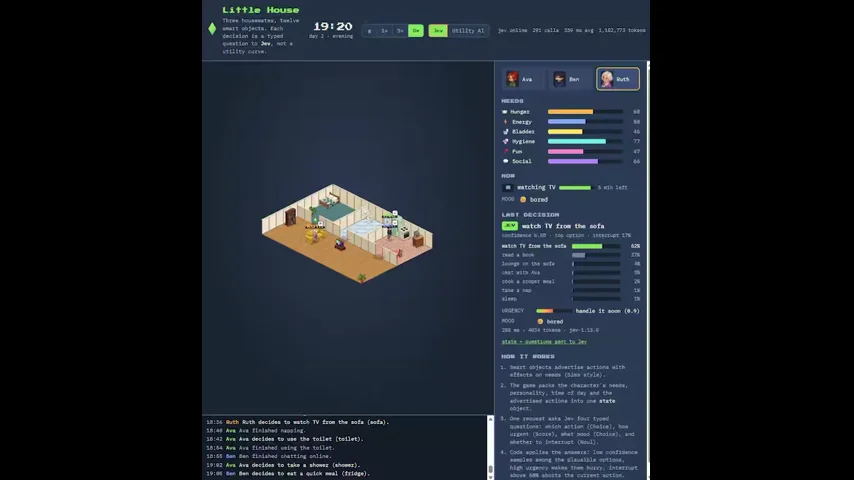
A Claude-driven game where an AI agent replaces traditional utility AI and smart-object systems, evaluating each NPC's needs and dynamically selecting the right in-environment tool to satisfy them.
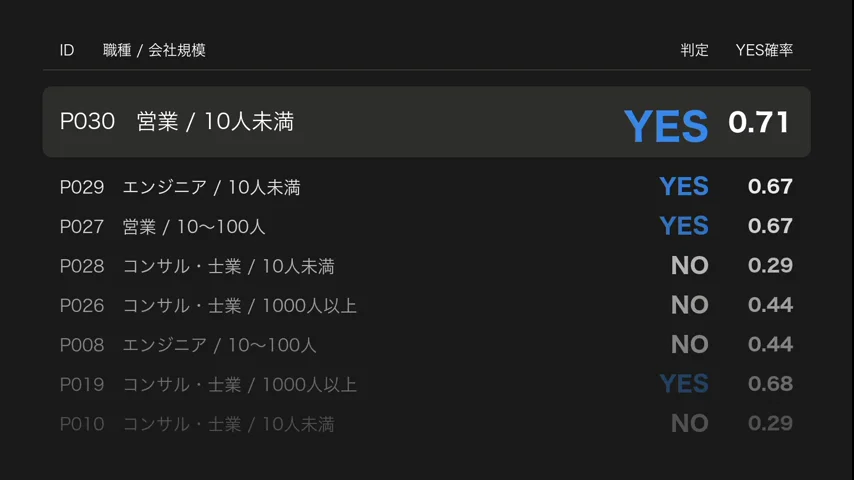
A persona-simulation pipeline queries 150 synthetic personas with 12 product-adoption questions each via API, finishing in ~5 seconds for just ¥1.8 despite trans-Pacific Japan–US network latency inflating the true runtime.
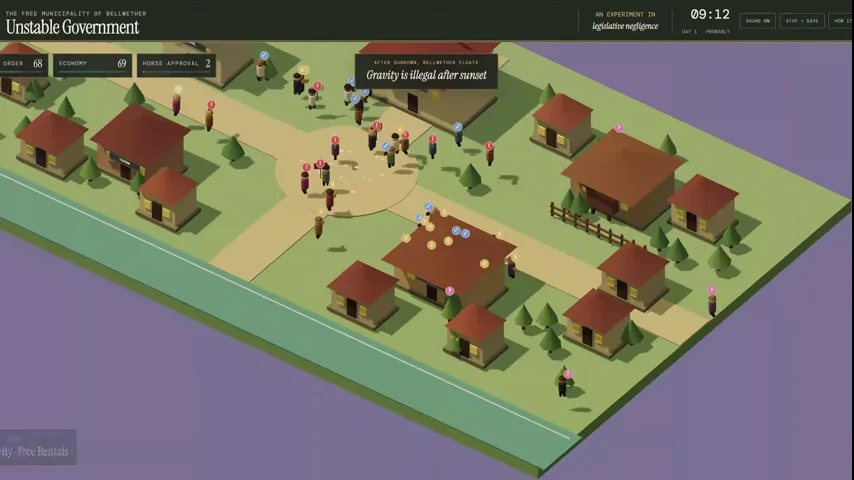
A town sim where you write a terrible law, Claude invents reactions and directs the set pieces, a second model decides each of 40 citizens' responses, and the fallout renders as tomorrow's front page.
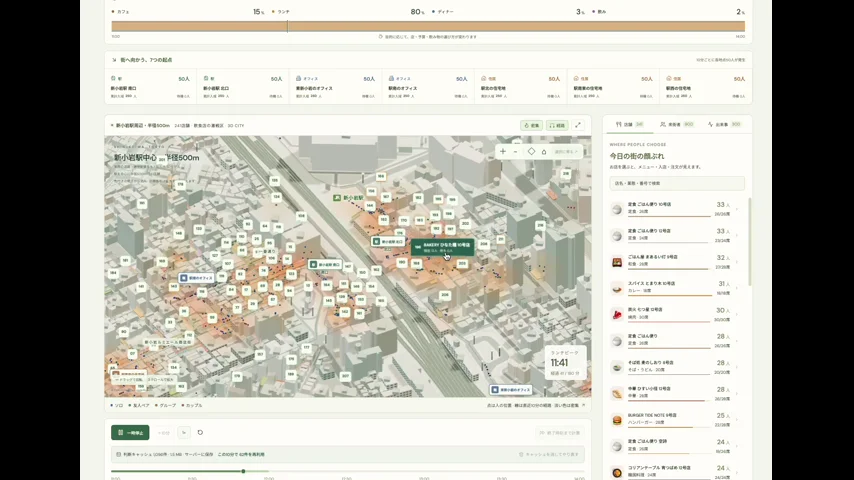
An LLM-driven foot-traffic simulation of a restaurant interior that renders customer flow in ~1.5 seconds even at high token counts.
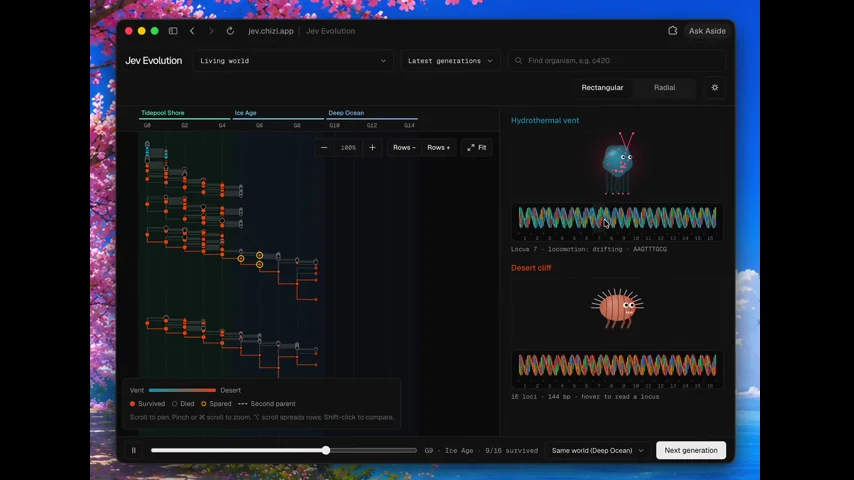
A small typed-odds model called Jev drove a 432-creature, 14-generation evolution simulation with two opposite-DNA species and an ice age, deciding every survival, mating, and cause of death.
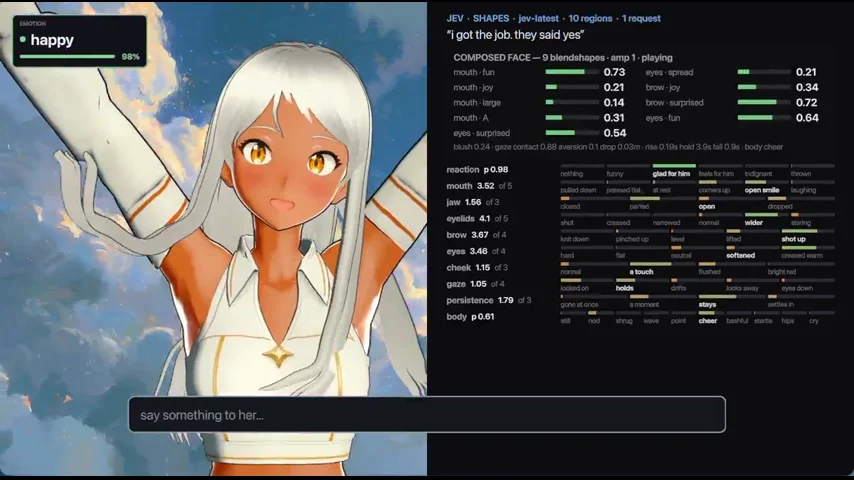
An orchestration engine drives a 3D character's entire performance—mouth, brows, eyes, cheeks, gaze, and body—as ten per-message decisions composed live into one coherent reaction with no preset expressions.
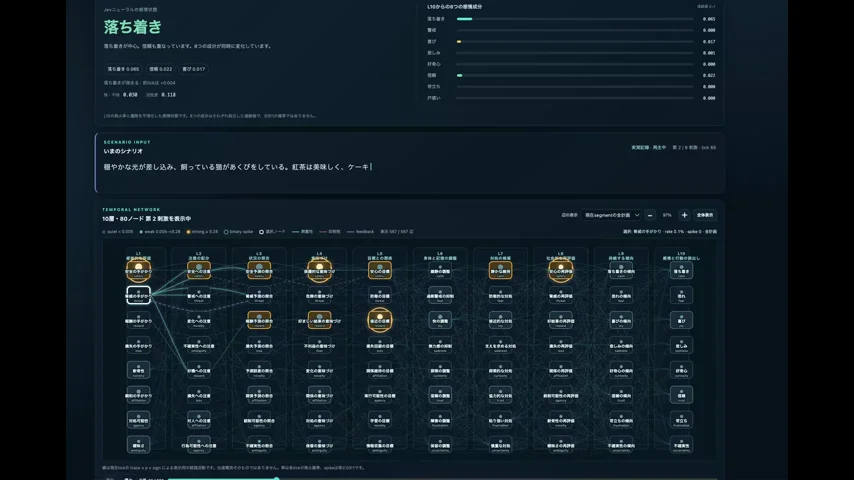
A conversational AI demo generates simulated "neurons" that drive a progressing scenario with real-time, dynamically shifting emotional states.
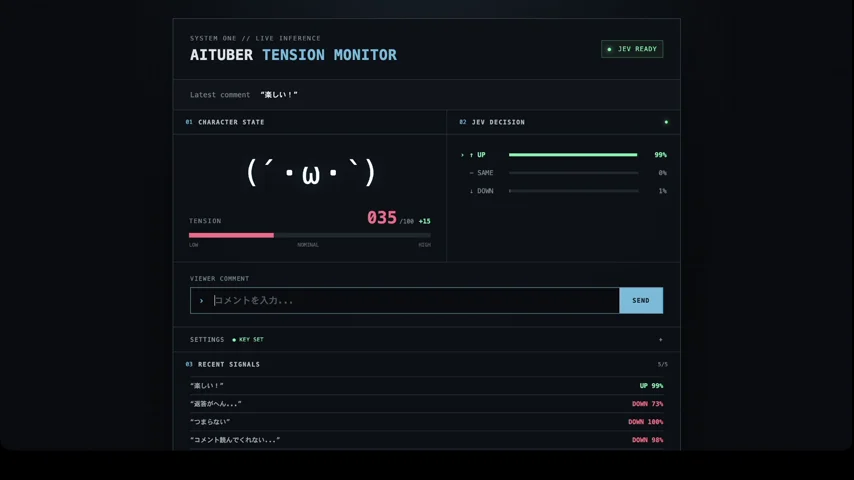
A minimal AITuber demo that raises, holds, or lowers a virtual character's excitement in response to live chat comments, letting even non-speaking avatars host streams and broadening character design options.
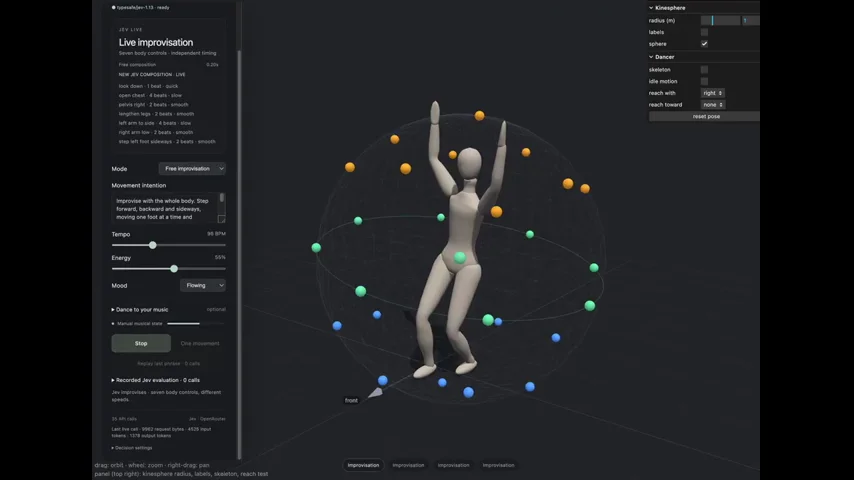
An embodied AI improvises contemporary dance in real time, independently controlling head, arms, hips, legs, and footwork with per-limb targets and timing via a local motion engine — a prediction model on a dance floor.
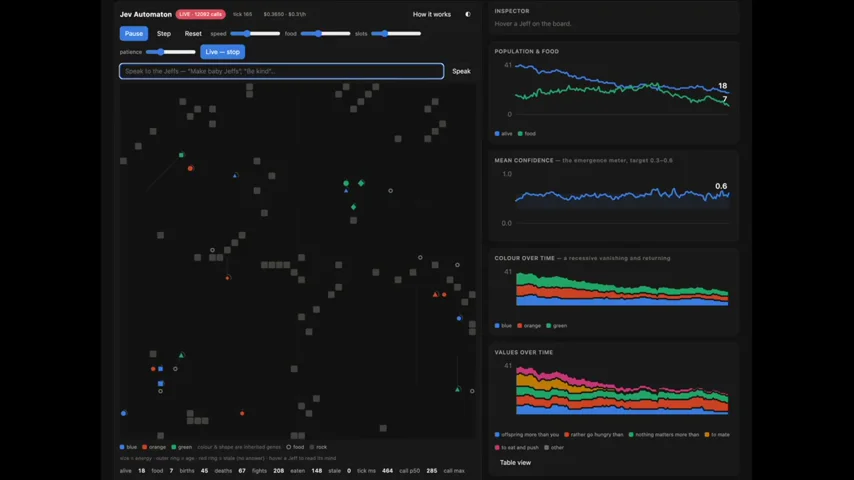
A cellular-automaton-style sim where the Jev AI engine decides each cell's behavior from its characteristics—fully emergent with no scripted rules, already playable but still needing tuning for richer dynamics.
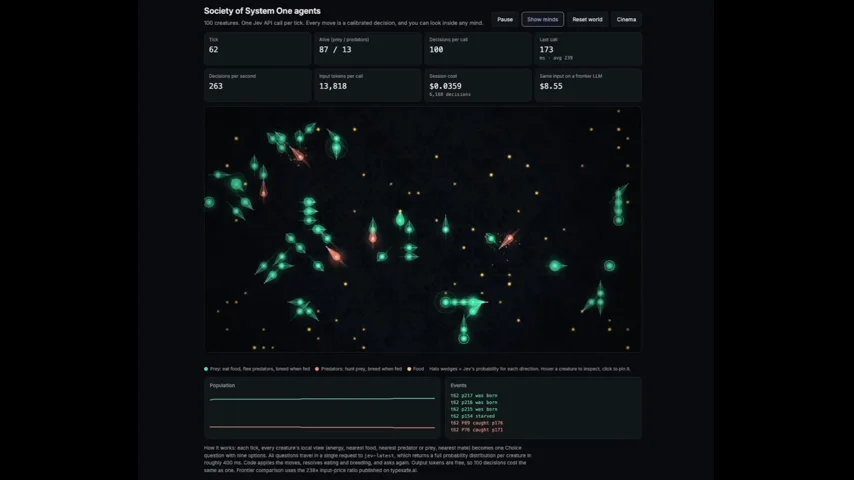
A 100-agent society simulation where all agents think in one batched API call — 100 decisions per request at ~250ms — running 20,000 decisions for 11 cents, ~240x cheaper than a frontier model.
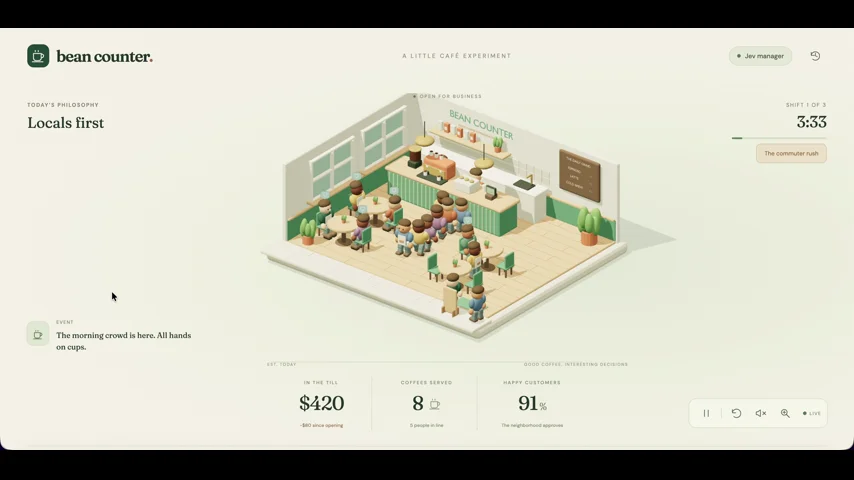
An autonomous AI agent runs a simulated coffee shop with a $500 budget—setting prices, hiring staff, buying supplies, and picking upgrades under a user-chosen philosophy—ending in profit or bankruptcy within 4 minutes.
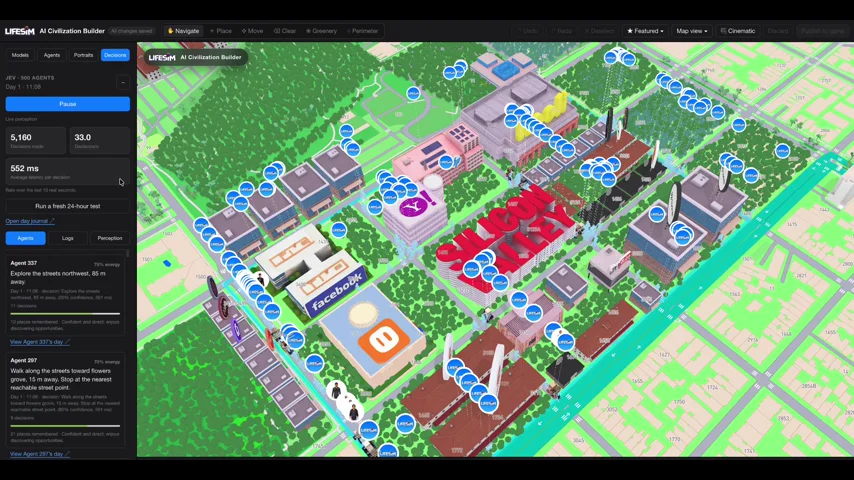
Jev ran 500 real-time LLM agents in parallel inside a 3D environment at ~500ms average latency and 35 API calls/s with a completely naive, zero-optimization implementation.
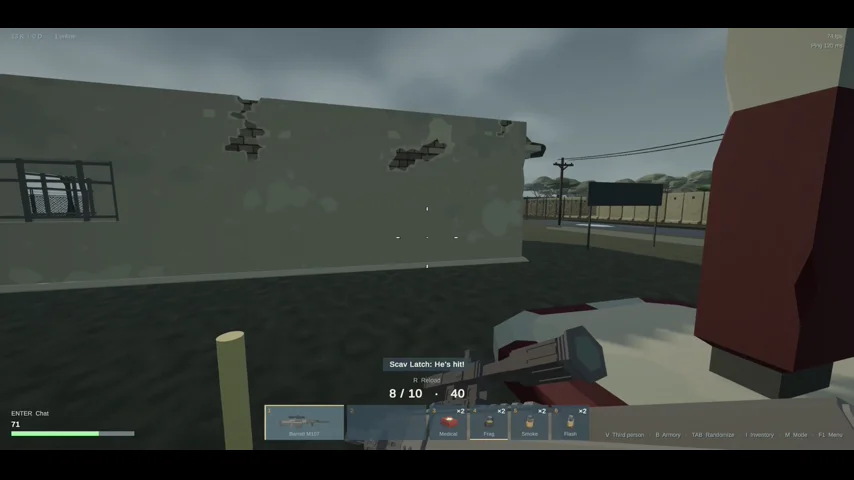
A Jev-powered enemy squad AI for a prototype browser FPS runs inference server-side while the game client renders in-browser.
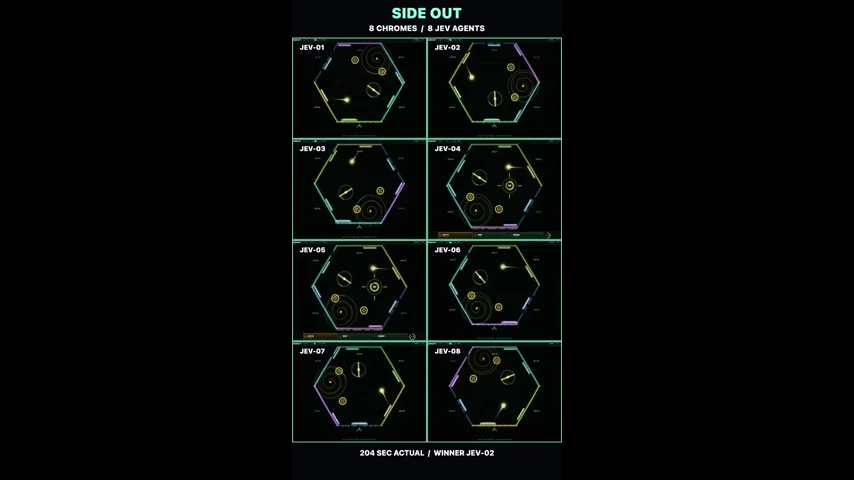
8 jev agents playing side out https://t.co/gQEIbeBapw
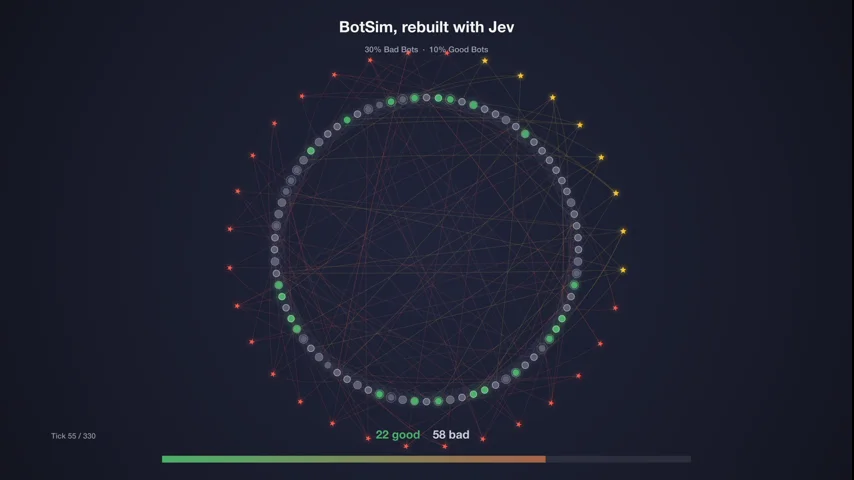
BotSim is an agent-based social simulation in which humans, malicious bots, and defensive bots compete for dominance over the information space, recreating peer-reviewed JASSS research.

A real-time Plato avatar mockup that uses jev to drive facial expressions and avatar state directly from live conversation, demoed answering "what's the meaning of life?" for game NPCs, teaching avatars, and companion apps.
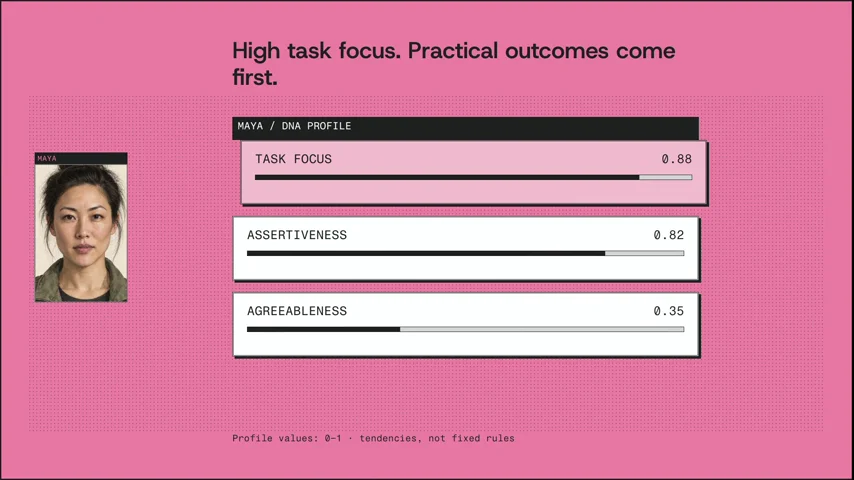
Game NPCs run as autonomous AI agents with persistent memories and DNA-shaped personalities: Jev selects a character's response intent from their profile in 0.48s, then GPT-5.6 Luna renders it as dialogue.

TypeSafe acts as the decision layer for an AI game companion, parsing player messages and game context to return a structured action, destination, and confidence score while game code executes and dialogue stays prewritten.
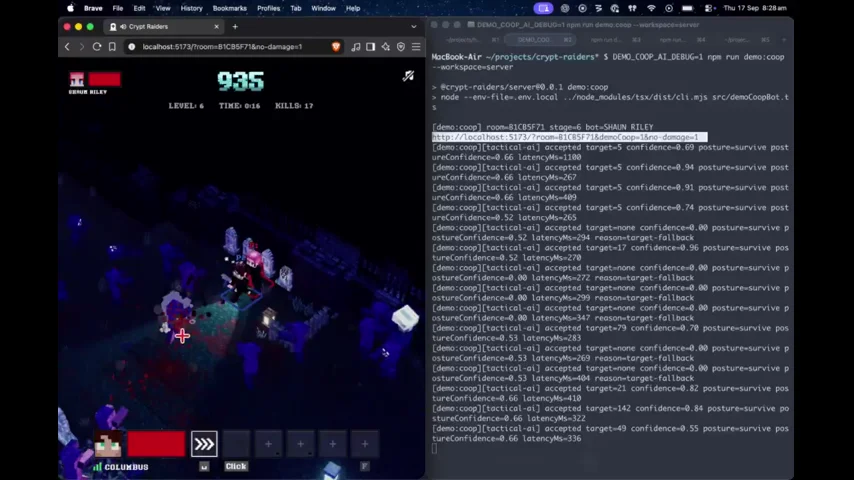
A ~1-hour Three.js demo wires TypeSafeAI into a co-op bot that reads game state in real time to choose intents—engage, regroup, survive, or escape—with a live decision log, at ~$0.02 per 10 minutes of playtesting.

A "typesafe" AI brain conditionally decides whether each of three virtual plants grows, blooms, or rests, while Three.js animates the results—built with Astra as an early experiment for future branching-behavior ideas.
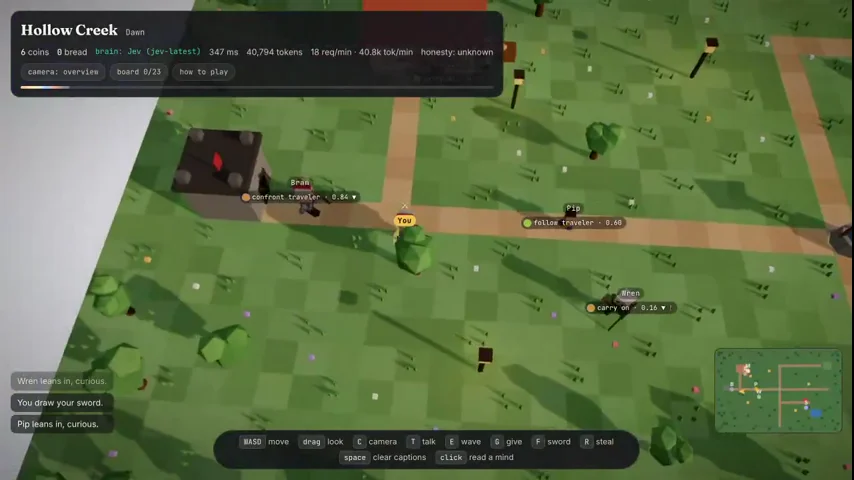
A TypeSafe AI Jev demo runs a village of NPCs that emit typed per-tick decisions — actions, feelings toward you, and whether they believe you — instead of generating dialogue, making every behavior inspectable and deterministic.

A cellular automaton runs agents in parallel to simulate emotional contagion across a crowd—agents surrounded by anger or sadness sink into depression, while nearby panic cascades into collective panic.
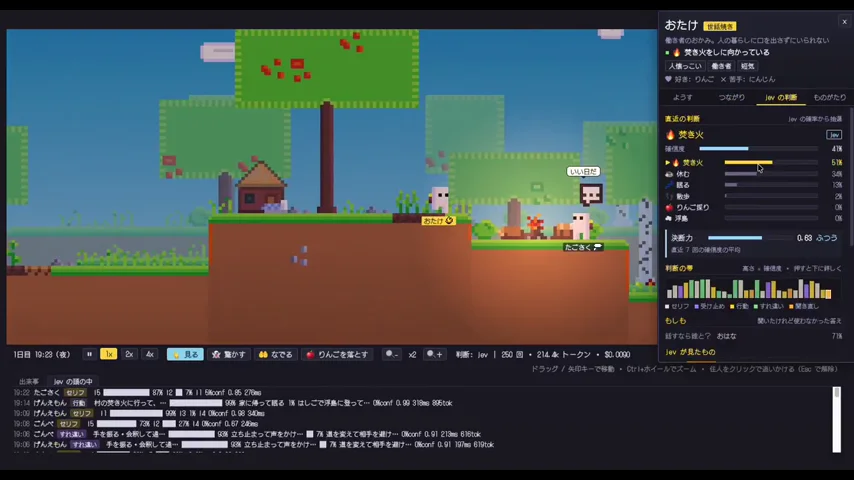
A life-simulator demo built with Jev, showcasing virtual agents autonomously living out daily routines and behaviors.
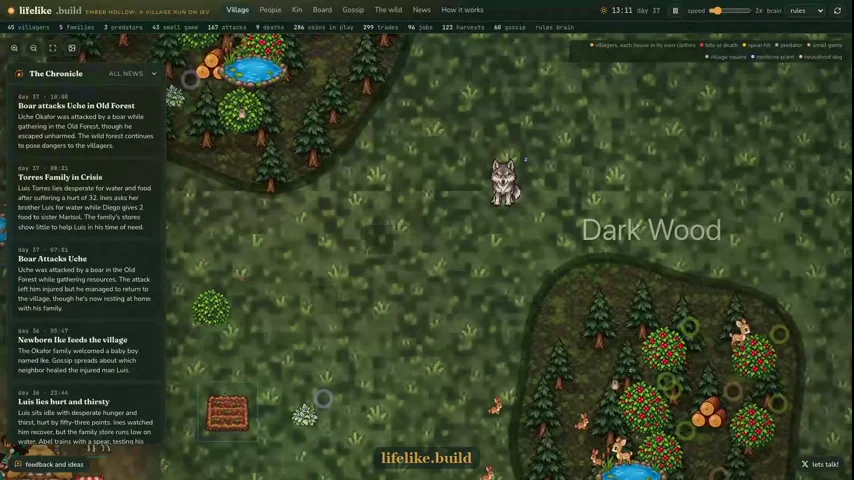
A livestreamed autonomous village where five families forage, farm, trade, and gossip — every decision made by TypeSafe's Jev model, a second small model writes a running newspaper, and villager memories and reasoning are inspectable.
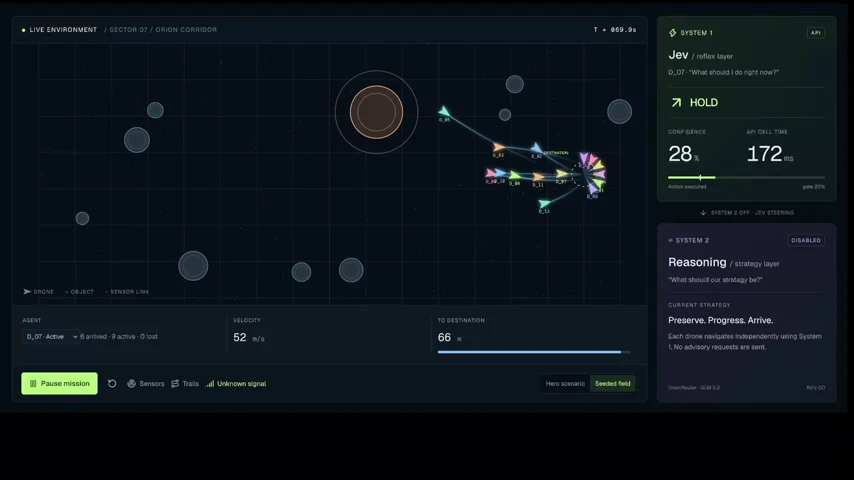
An AI agent controls a swarm of 15 autonomous drones in real time, achieving <300ms decision latency and 100% survival navigating a simulated asteroid field.
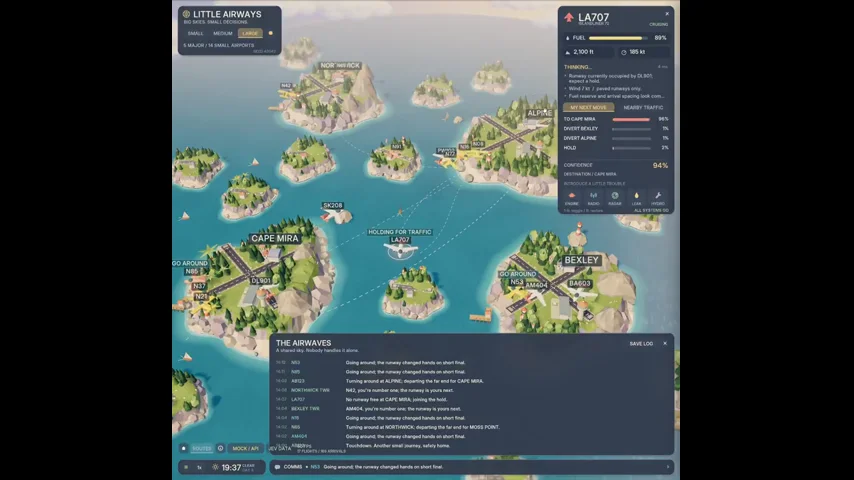
A multi-agent airplane simulation where each plane reasons only from local state while a type-safe agent runtime (Jev, powered by GLM-5.3) makes every decision with calibrated probabilities in ~150ms roundtrips—built in 6 hours.

Jev classifies the intent of every incoming message in real time and selects a matching emotion for the Ness character to display, giving the AI companion reactive, context-aware expressions.
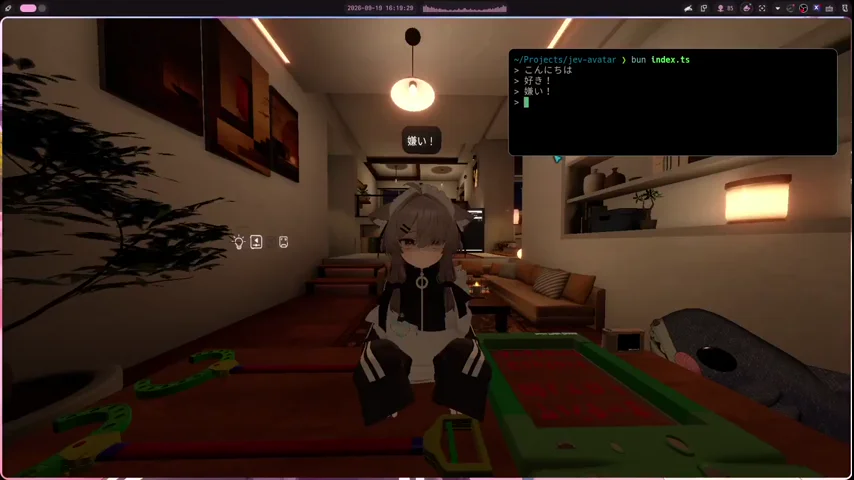
An AI system that parses live chat content and automatically drives a VRChat avatar's facial expressions in real time with near-instant LLM response latency.
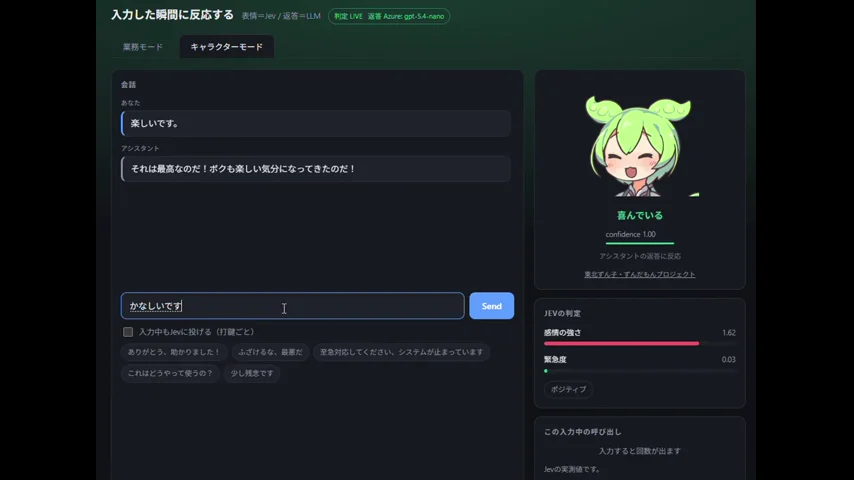
A live demo of "Jev," a real-time reactive avatar system that judges user input mid-typing and changes facial expressions on the fly, toggled via a checkbox inside an existing LLM chat interface.
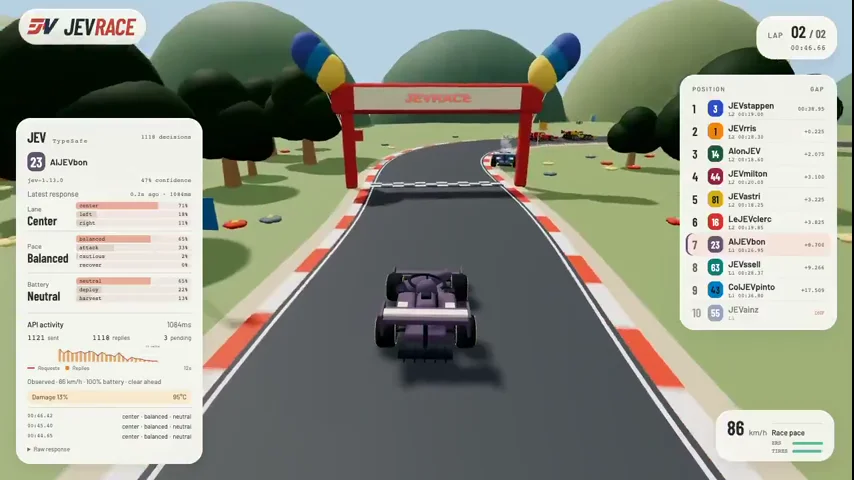
JEVRACE stages a 3D F1 race where 10 same-model cars use distinct prompts, ~42m local visibility, and strategy instructions across >4B track seeds, with inspectable per-car prompt/response logs.

LLM-driven idle village sim where villagers and the player-character evolve personalities that autonomously decide daily actions in real time, with events narrated on a text timeline and the player steerable only via behavioral guidelines and choices.
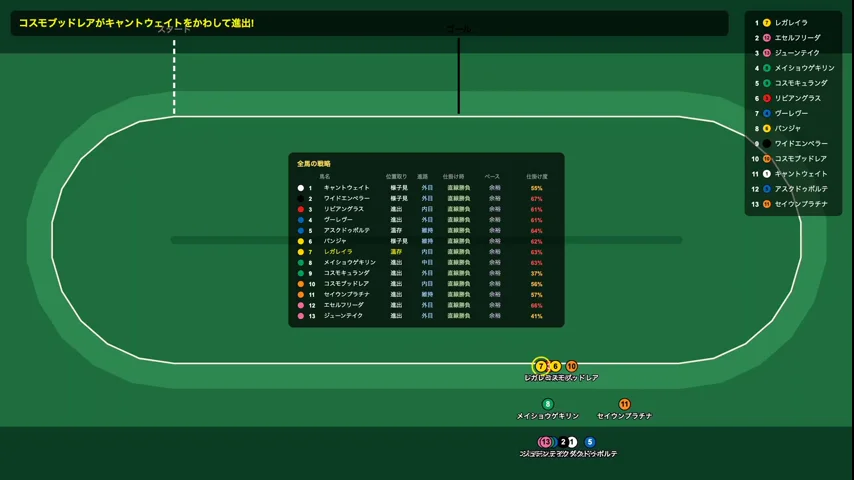
Used Jev to run a horse-racing decision-making simulation where each jockey is an agent choosing positioning and strategy every 200m, with ~2,000 API calls costing next to nothing.

A simulator polls 5,000+ synthetic Malaysians—each with distinct backgrounds, locations, personalities, and views—on one policy question, aggregating thousands of responses in seconds into sentiment breakdowns by region, concerns, and individual profile.

An AI VTuber that reads chat comments and responds with speech, expressions, gaze, and gestures — Gemini generates replies, JEV controls Live2D motion/props, Aivis Cloud synthesizes voice — demoed in real time with all 196 Live2D parameters visualized.
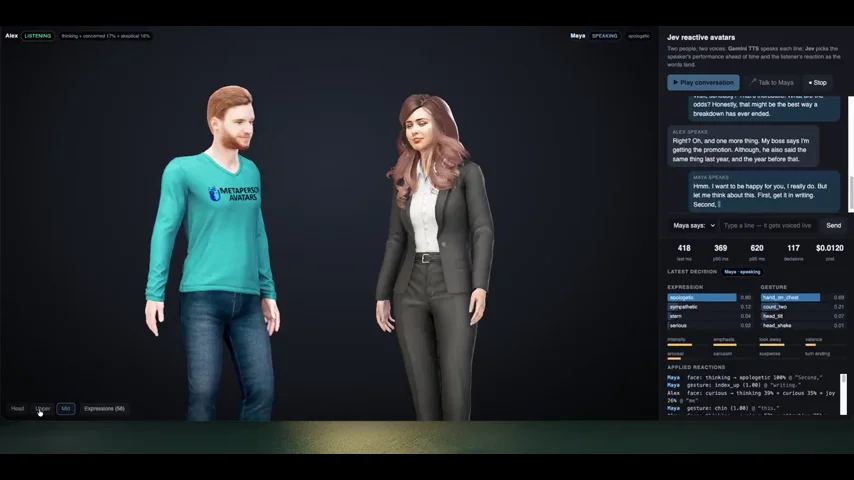
Demo uses TypeSafe AI's Jev model to select avatars' facial/body expressions in real time during a scripted two-avatar conversation.
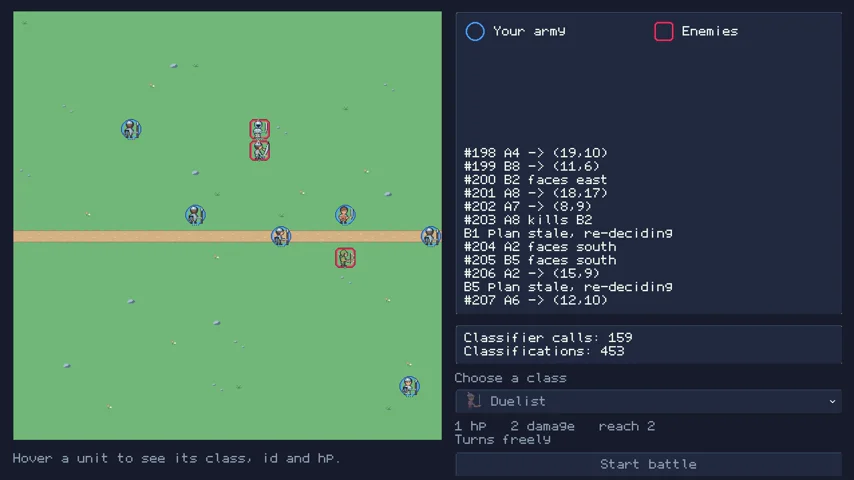
A Godot demo runs an autonomous NPC war with two teams of independently decision-making units, with combat quality improving further after switching to a different model.
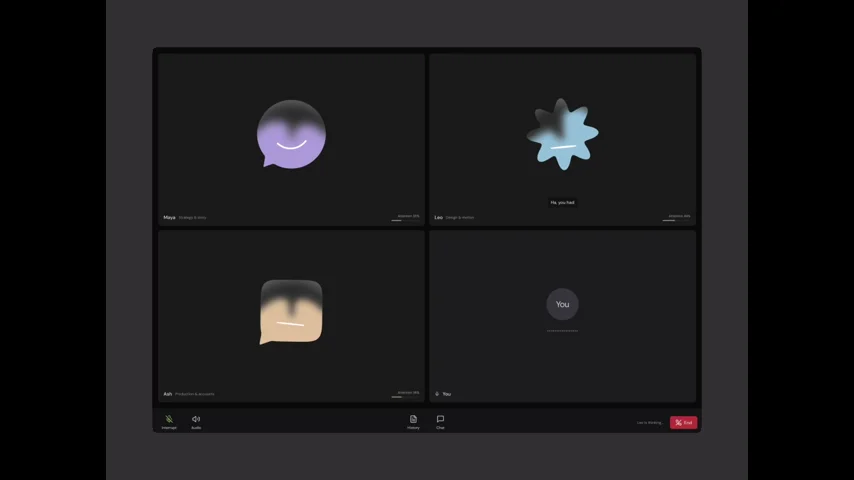
Demo uses JEV attention scores to route a user's voice conversation to the agent most likely to answer, while in parallel ranking mood scores to update each avatar's props in real time.