154 examples
Interaction
Feed Cleanup
19
A typesafe browser extension acts as an undetectable realtime adblocker by classifying every DOM element as ad or non-ad and removing flagged elements on the fly.
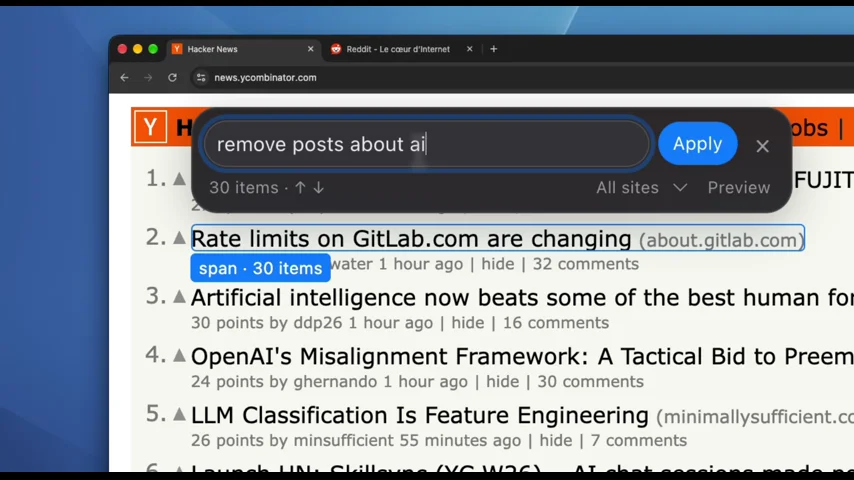
A Chrome extension that filters the internet in plain English: pick a post, describe what you don't want to see, and it hides similar content as you scroll, applying the same rules across every site.
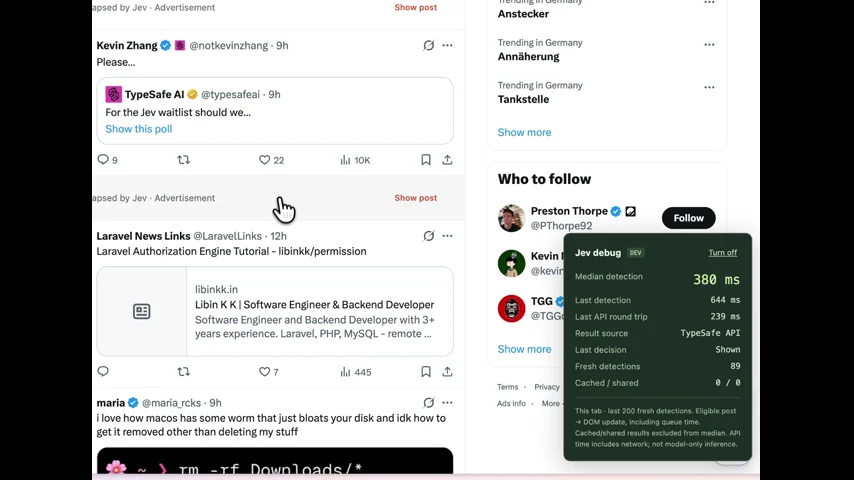
A browser extension that hides or collapses X posts via natural-language rules, running fast enough to be imperceptible and cheap enough to point to a future of LLM-powered ad blockers and content firewalls.

A nanocode fork showing a small agent that greps a searchable memory.md file and applies Jev compaction to automatically prune unnecessary memories.

Benchmarking an agent's speed at live-removing negative comments from chat.
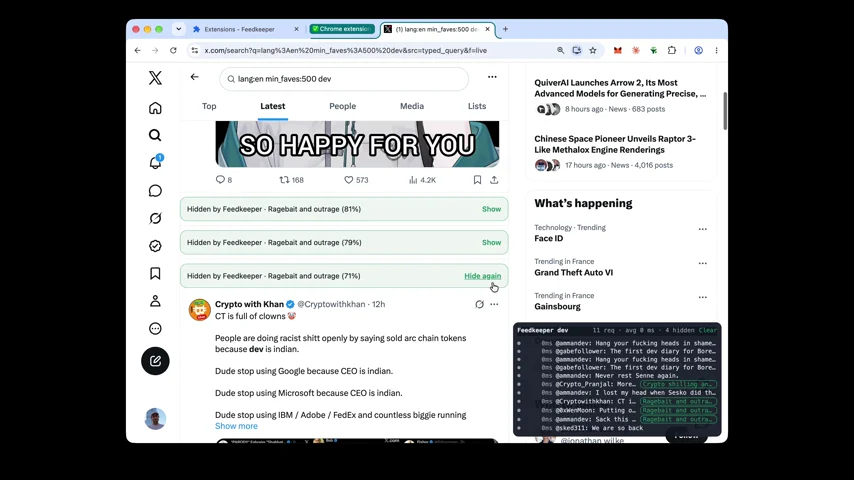
A Chrome extension uses a cheap, fast LLM API to read your feed and hide posts matching custom filters, at near-zero cost.
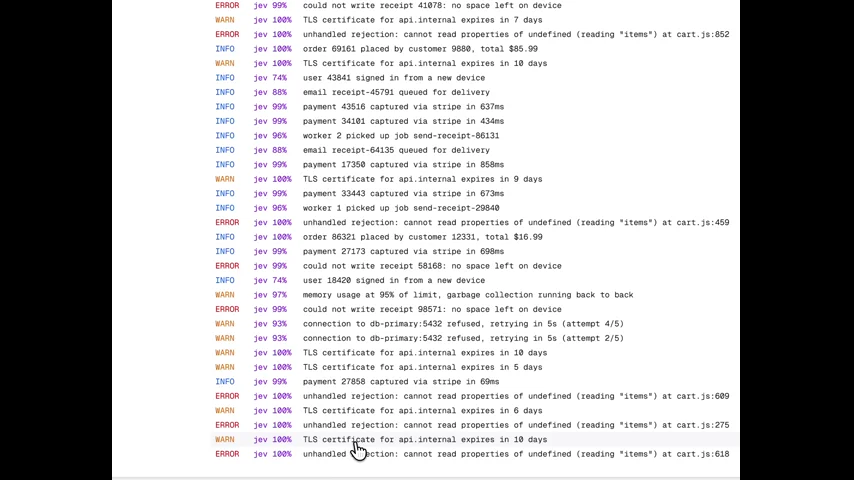
Demo shows Jev re-classifying unstructured log lines and re-scoring them to drop noise before it hits paid storage, cutting log ingestion costs.

A prototype "time-performance mode" for a Twitter/X client scores each timeline post's reading-worthiness (0–100%) and auto-fades noise, complaints, and shallow tweets to 35% opacity, binning them into "worth reading" vs "skip."
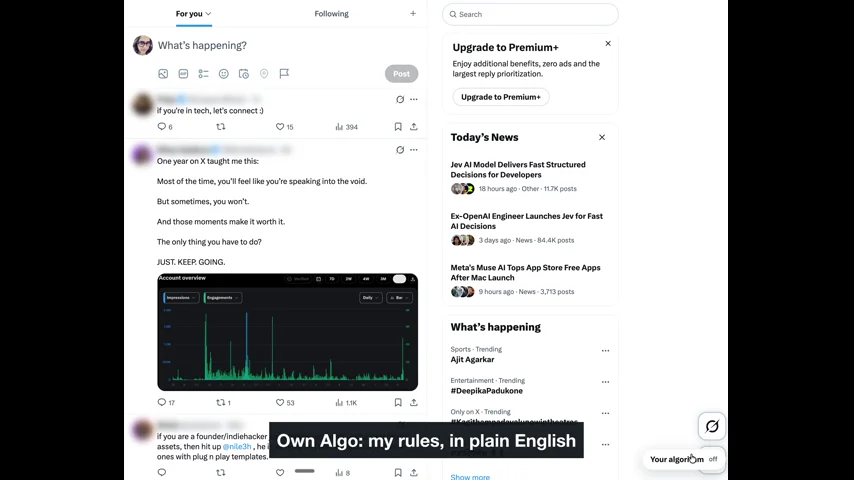
A Chrome extension lets you write your own X feed algorithm in plain English, using the Jev model to hide engagement bait, empty hooks, and ads in ~0.5 seconds per post before they render.

A realtime, typesafe LinkedIn feed filter that classifies every post as cringe or not, auto-hiding cringe, clickbait, and low-value content (it wiped nearly the whole feed), with YouTube/Twitter engagement-bait filtering next.
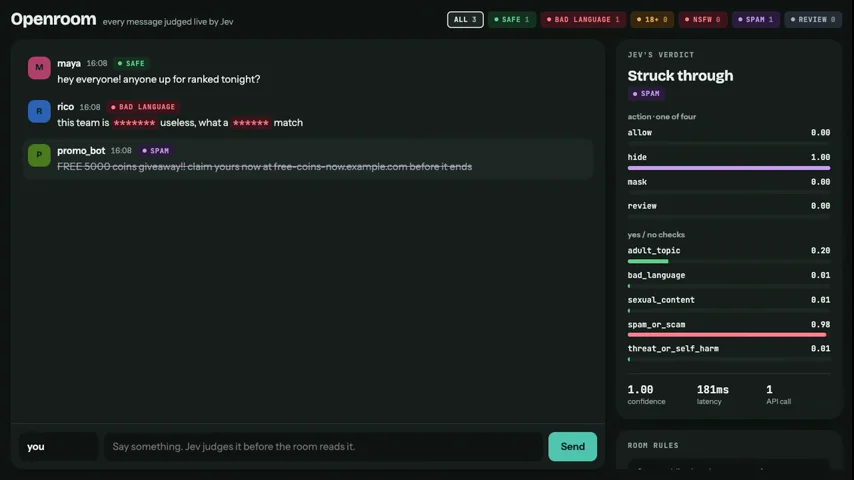
"AI moderation is too slow for real-time chat." Not anymore. @typesafeai Jev judges every message in ~200ms, before anyone else sees it,for a fraction of what an LLM call costs.
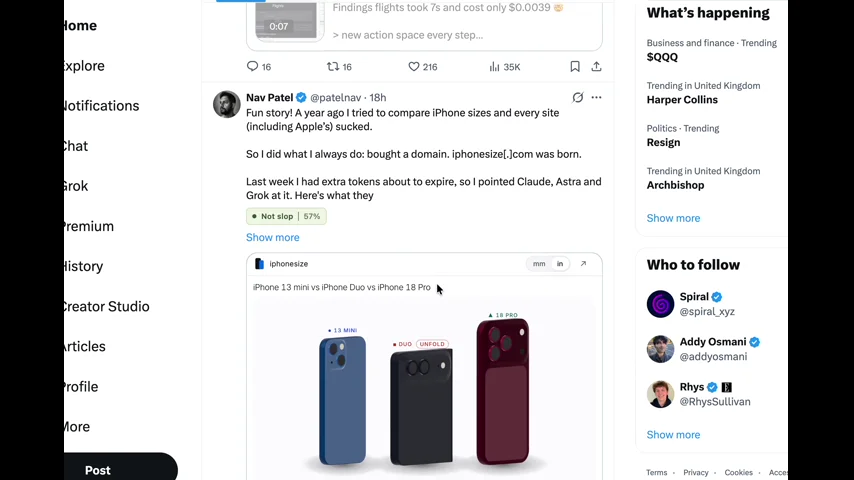
A real-time "slop detector" that flags low-quality/AI-generated content in your feed as you scroll.

Your Signal is an open-source, BYOK browser tool that scores on-screen X posts with an AI model and applies your own local filter rules—reversible, telemetry-free alternative to the algorithmic feed.

Jev is a browser tool that filters AI-generated content out of X and LinkedIn feeds—so aggressive it hid 80% of one LinkedIn feed.

A Chrome extension uses Jev to classify YouTube Shorts on the fly and auto-skip ads and off-topic clips—surfacing only RESCENE videos—with fast, low-cost inference that tolerates occasional misses.
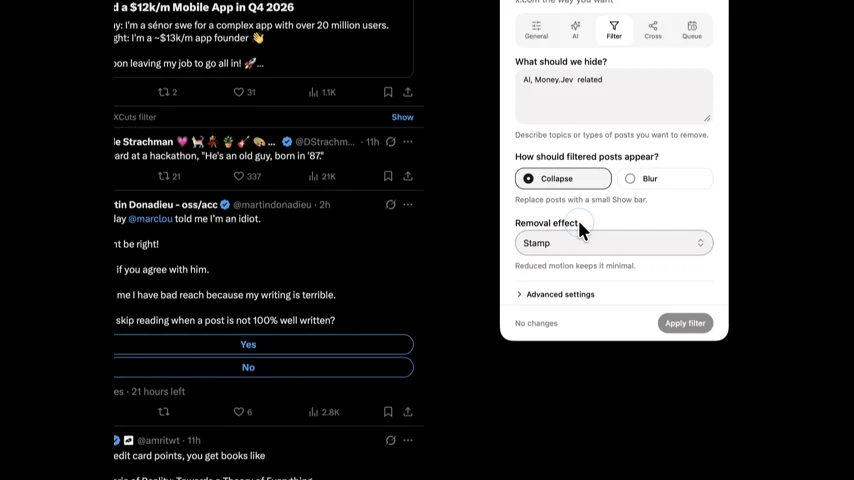
Real-time timeline filtering that cleans up your X feed by automatically removing unwanted content as you scroll.

Jev filters your X timeline to one-click remove ads, abuse, and crypto shilling, adding flow-rate and time-based filters that outpace delayed third-party hot-post monitors for faster AI trend tracking.

A Jev-powered X copilot that scores every post in your feed on niche relevance and audience value, then recommends whether to reply, quote, like, bookmark, or skip — turning scrolling into structured, intentional engagement.

A fully local Chrome extension that uses the Jev model to filter your X feed in real time, hiding everything except genuine, relevant posts worth replying to.
Categorization
57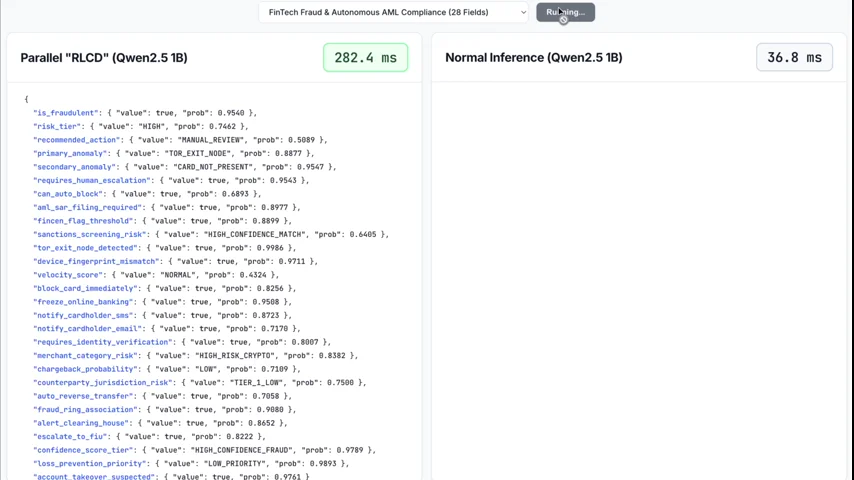
Open-sourced Qwen-2.5-1B-RLCD achieves 5x faster on-device inference for type-safe JSON workloads by batching all JSON keys simultaneously and generating categorical probabilities without new training, demoed on an M4 MacBook and available on Hugging Face.

Drag-and-drop item triage demo that automatically suggests the correct destination for each dropped item — the first inference is slightly slow, then subsequent sorts run snappy.

Jev classified 500 emails in seconds for just 3.5 cents.

Jev turns bookmark-collection decisions into calibrated probabilities—auto-filing above 0.85, dropping below 0.35, escalating the middle to humans—sweeping 500 bookmarks in 13s for $0.017 instead of 1–3s per parsed LLM call.
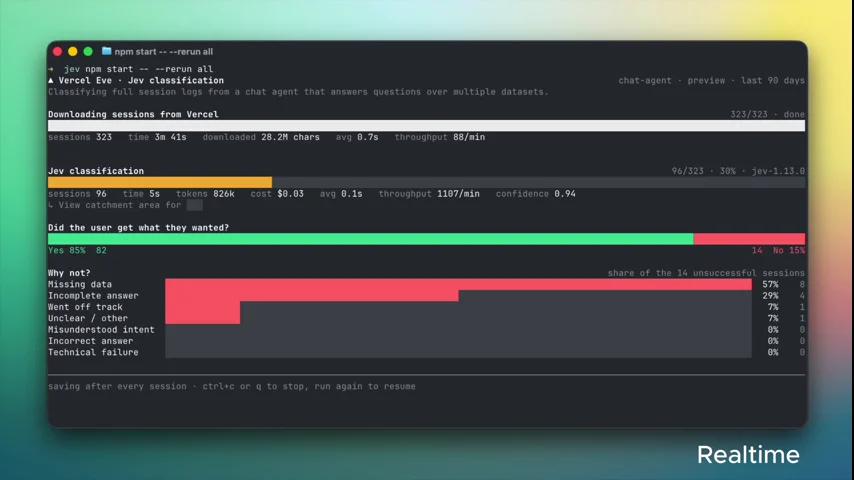
Batch-classifying 323 full chat sessions (2M tokens) from a Vercel AI agent by failure reason in 14 seconds for just $0.08.
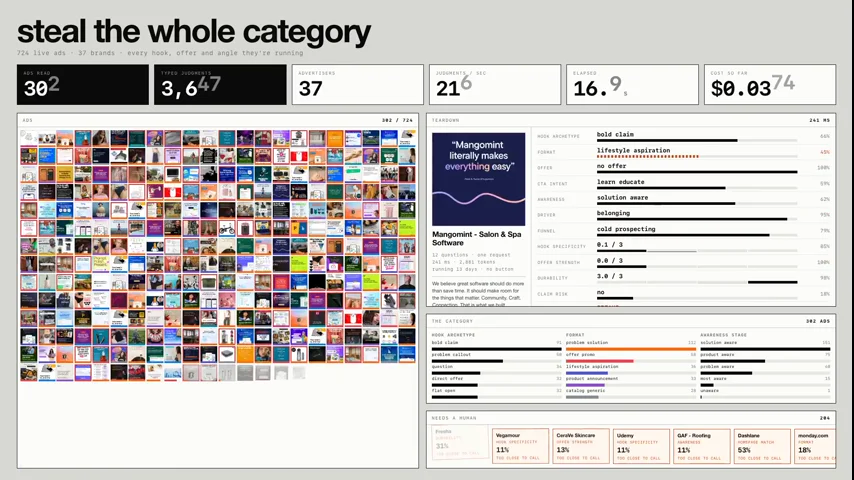
AI agent "jev" dissected 724 live ads from 37 brands in 40 seconds—extracting every hook, format, offer, CTA, awareness stage, and landing-page mismatch—for just $0.09 in tokens, with MCP support coming.

A training-free VLM-based Jev-style assistant running locally on iPhone, demonstrating on-device multimodal inference without any fine-tuning or cloud calls.

A demo pipes OCR of the frontmost window into jev—a single endpoint with three structured judgment types (yes-probability, ordinal score, choice)—to classify work vs. play at ~300ms per call from Japan.
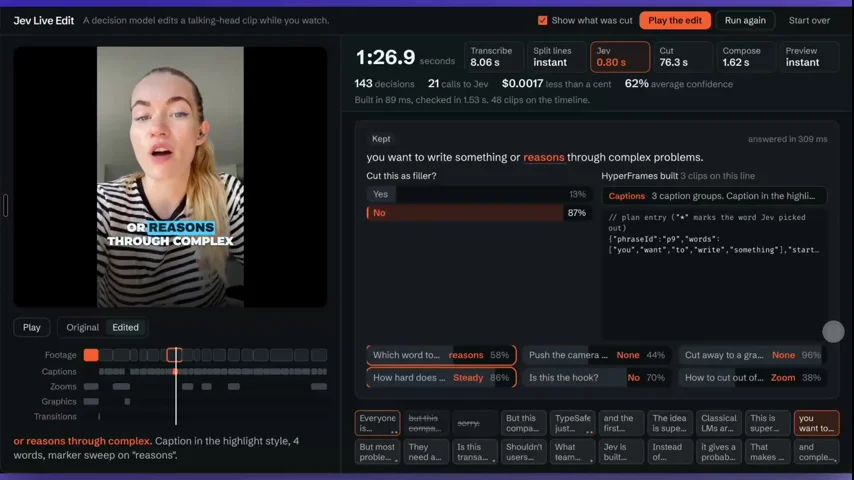
AI agent jev paired with HyperFrames delivers near-instant video editing—automatically cutting bad takes, guiding effects, and handling style work with minimal manual effort.

An AI agent batch-processes messy bank transactions in YNAB—normalizing payees, auto-categorizing each entry, flagging uncertain ones for human review, and writing cleaned results back.

A real-time conversation sensor that updates exploration↔convergence, resolved↔unresolved, and disagreement↔consensus axes on every utterance to visualize meeting state—extensible to live user-interview analysis.

Jevで問い合わせフォームの全送信を営業度/スパム度/カテゴリ/緊急度の4軸で1リクエスト判定。150〜400ms、1件$0.00002。 営業度97%でもカテゴリ=提携ならブロックせず確認待ちへ 組み込みは既存フォームにscriptタグ1行追加するだけです! 判定はhiddenフィールドで既存バックエンドに届くので、管理画面もバックエンド改修も要りませ
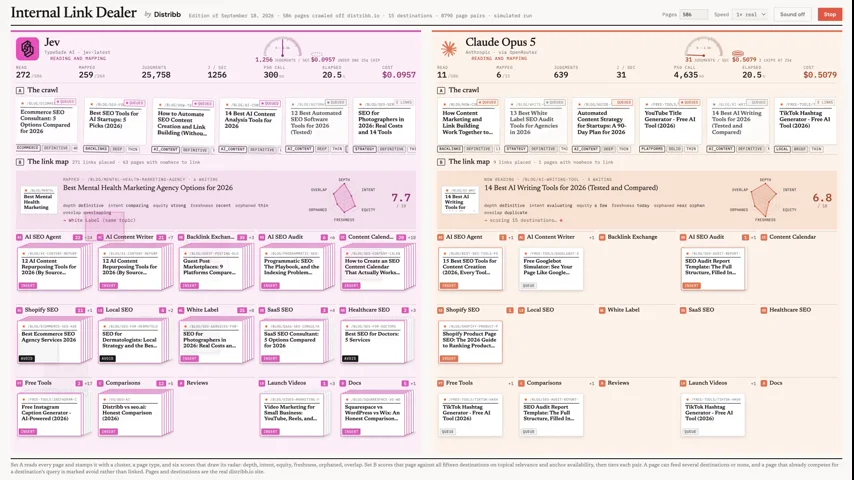
Jev rebuilt a site's internal link map across all 586 pages in 45.1s — placing 584 links and honestly refusing 139 — for $0.21, while Claude Opus 5 processed only 21 pages for $1.43 (~190x cheaper per page, ~$43 for a full pass).
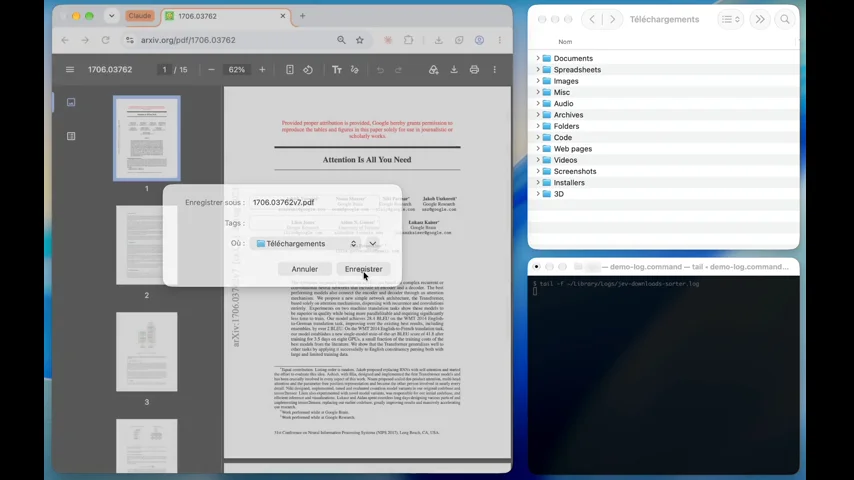
An AI agent called Jev auto-organizes a self-sorting Downloads folder, classifying every incoming file and moving it into the correct folder within about 3 seconds.
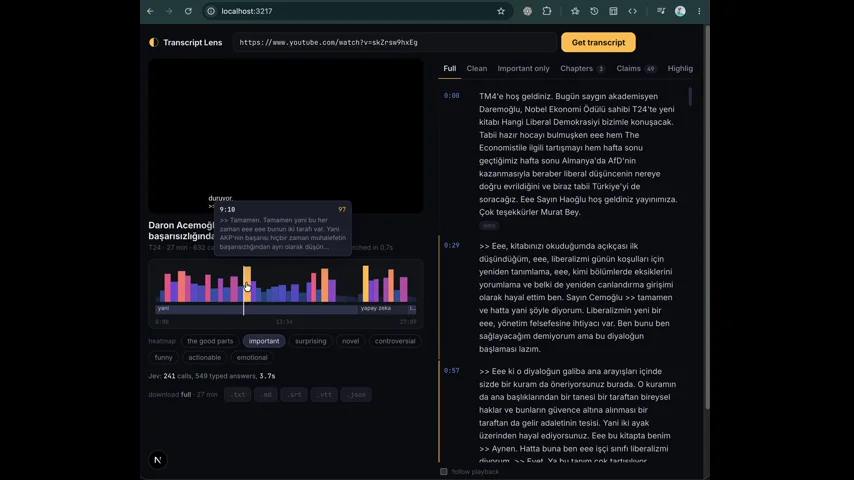
Jev classified a 30-minute Daron Acemoğlu interview in 3.7 seconds, flagging emotional and controversial moments, anecdotes, jokes, and claims.

jev classified 12,000 synthetic diabetes records in seconds with high accuracy, demonstrating its suitability for hallucination-sensitive domains where correctness is critical.
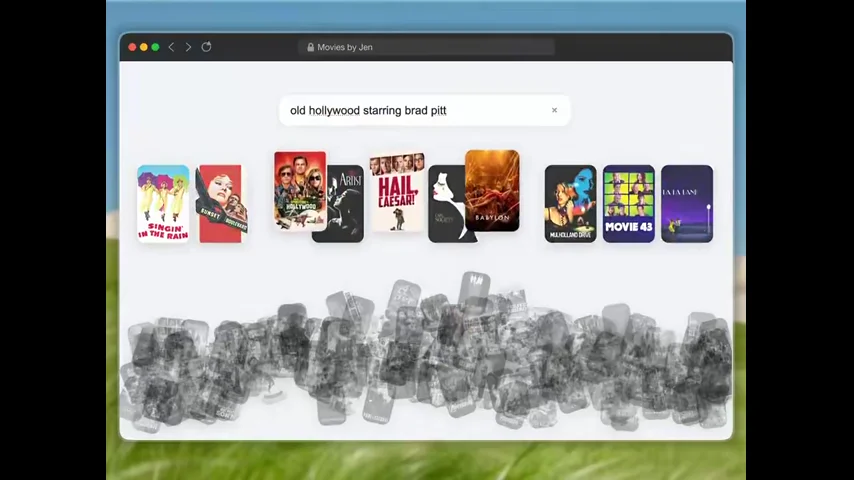
Jev demonstrated lightweight, rapid AI categorization with a smooth workflow and broad potential for practical classification tasks.
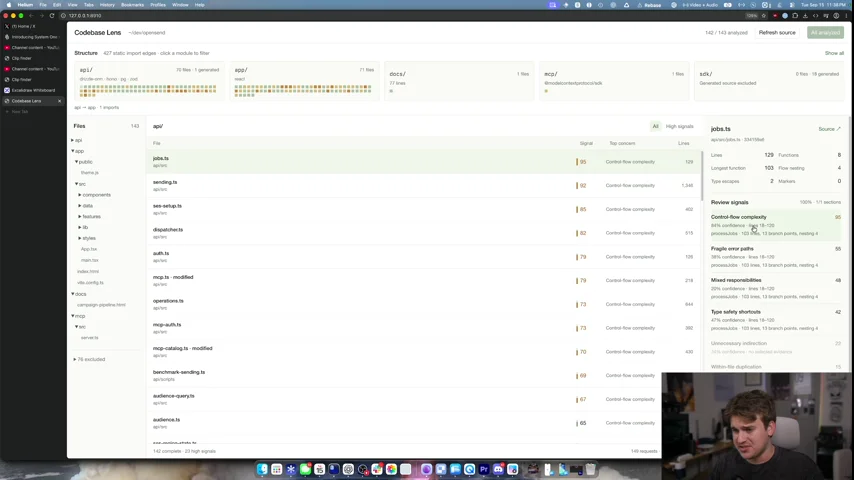
A Jev-powered codebase classifier that detects and flags overengineered, agent-generated code, with an open call for next test targets.
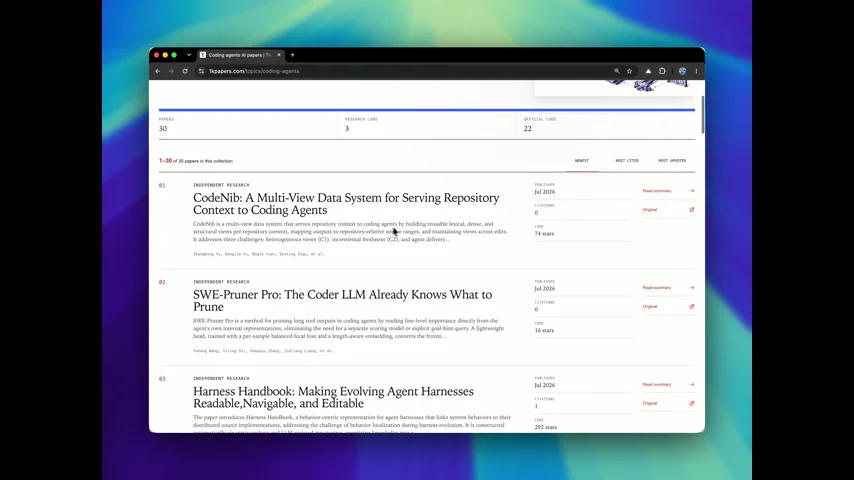
A multi-model pipeline classified 1,018 AI research papers via DeepSeek V4 Flash summaries plus Jev topic classification—about $4 total inference at 256ms median end-to-end latency per paper—powering a live visualization site.
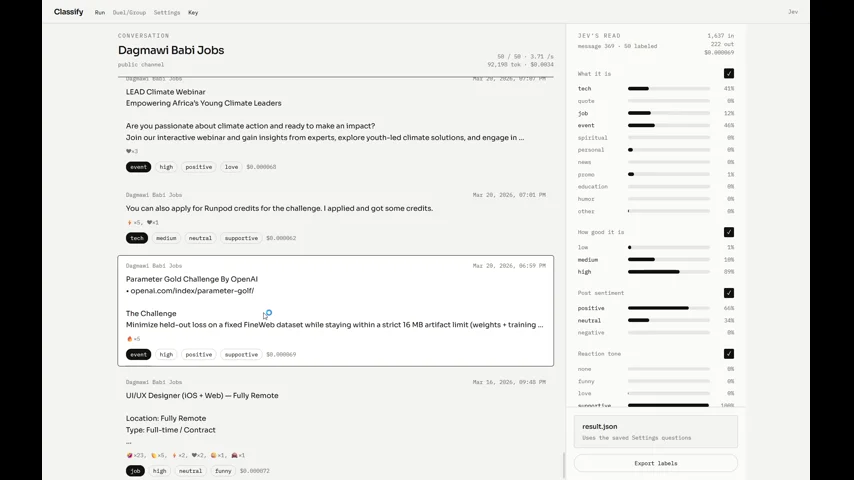
An open-source local Telegram analyzer uses a configurable Jev classifier on exported JSON to score each channel post’s intent, quality, sentiment, and reaction tone, plus DM/group topics, intentions, emotions, and per-speaker tone.

Ground Truth is an open-source browser extension that classifies the news article you're reading — political framing, article type, topic, and language loadedness — using TypeSafe's fast, cheap probabilistic Jev model instead of a big LLM.
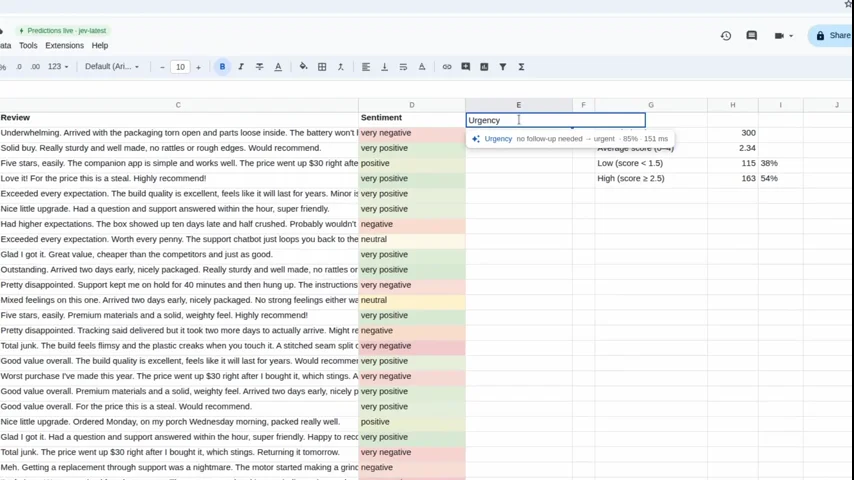
A demo of Jev's predictive spreadsheet that infers column intent as you type — labeling a column "Urgency" auto-rates every row from "no follow-up needed" to "urgent" in ~100 ms.

A tool that batch-classifies your last 200 posts as SLOP or HUMAN and ranks "certified humans" on a global leaderboard.

Jev demo streams a live Bluesky feed with real-time emotion detection, rendering avatars matched to each user's profile.
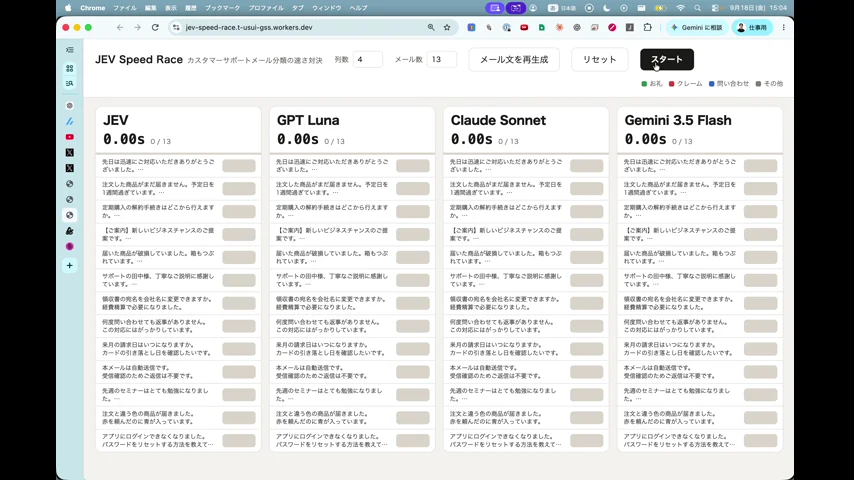
A speed test pitted the fast model "Jev" against rival low-latency models Luna, Sonnet, and Flash on an email-classification task, with Jev winning by a landslide.

A Chrome extension tags X posts in real time with intent labels (persuasion, provocation, promotion, AI-generated, etc.) using Jev, which responds near-instantly — far faster than LLMs — and classifies accurately with zero fine-tuning.

Thirty minutes of news. 2,782 articles. Jev classified every US headline in under 20 seconds for about five cents. Then canon geo sourced evidence for each data center site, with
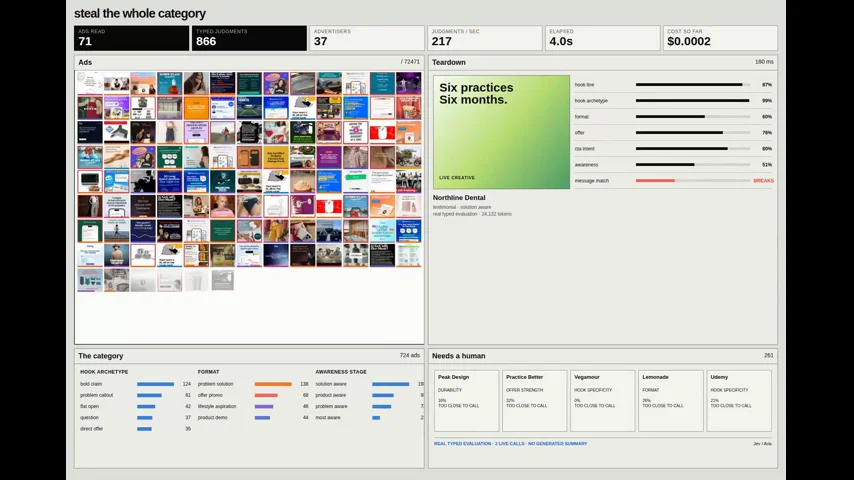
Jev analyzes 724 live ads from 37 brands in seconds—extracting hooks, formats, offers, CTAs, awareness stages, and landing-page mismatches—for a total inference cost of $0.002.
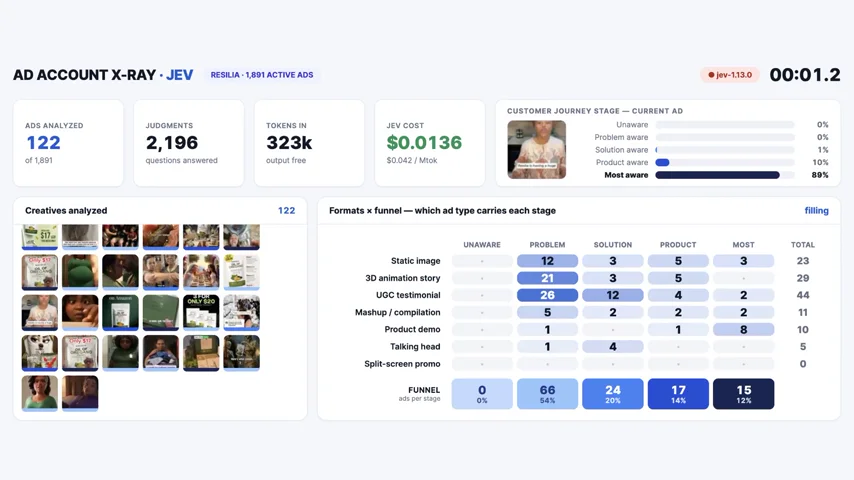
JEV is insane for competitor research! We gave it Resilia's ad library It classified 1,891 ads in 19 seconds for $0.12 costumer journey step + Ad style And a complete deep anal
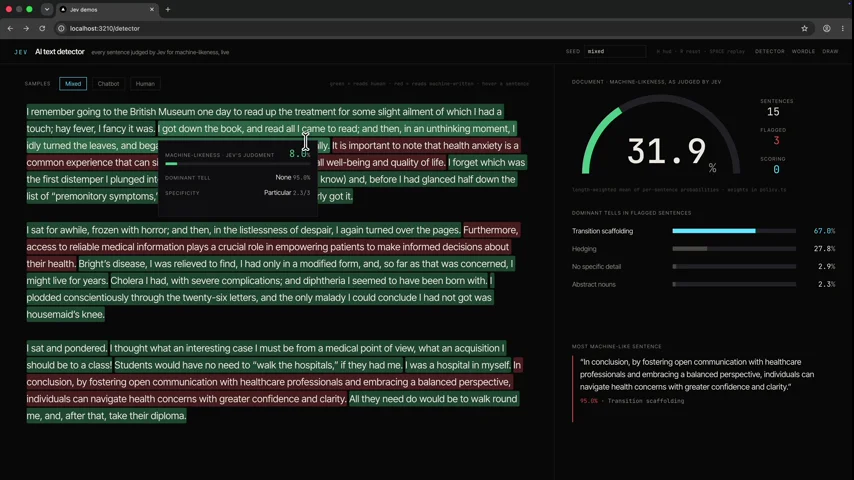
An AI text detector that scans full articles and delivers sentence-by-sentence authenticity breakdowns in near real-time.
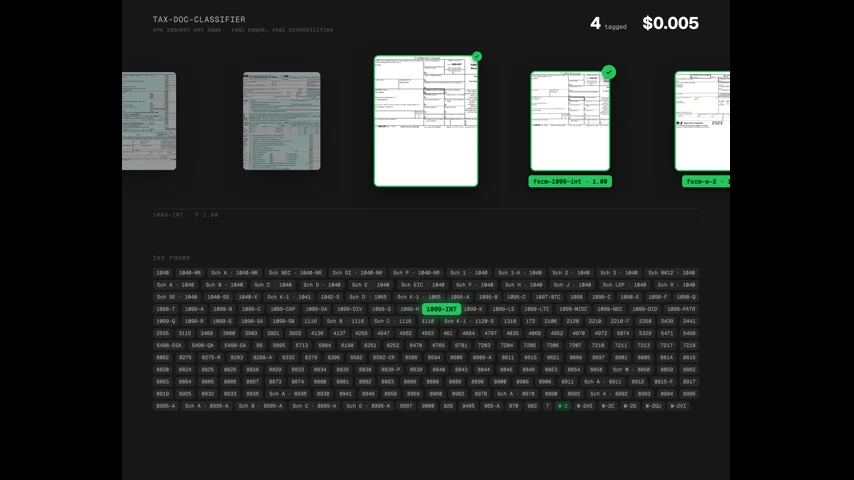
Jev, an open-source tax document classifier, labels 100% of a real-world tax corpus at $0.001/page—34x cheaper and 6x faster than an LLM pipeline.

Jev, a new classifier-focused model on OpenRouter, labels news articles ~10x faster than Gemini Flash Lite (0.35s vs 3s each) with near-equivalent accuracy, costing just $1 for 5K classifications (30M tokens).
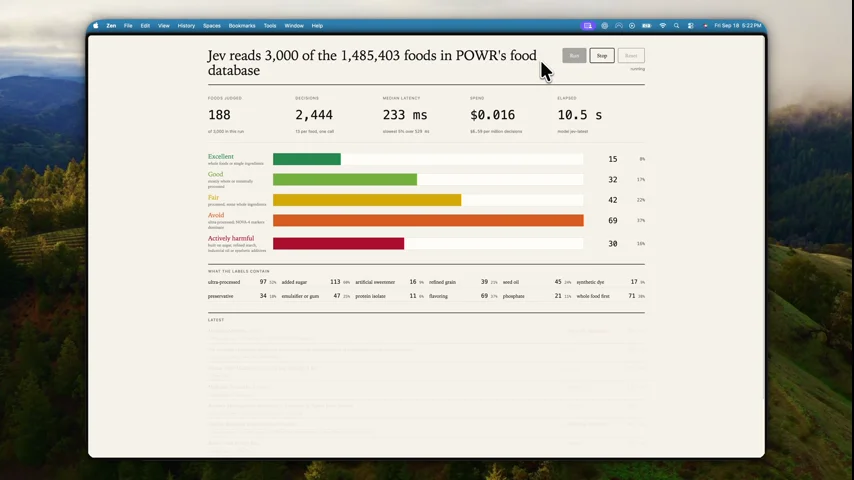
Jev benchmarks against a 1.48M-food database, answering dozens of parallel yes/no questions per item—disambiguating lookalike products, verifying label claims, and flagging ultra-processed ingredients—in ~200 ms for a fraction of a cent per call.
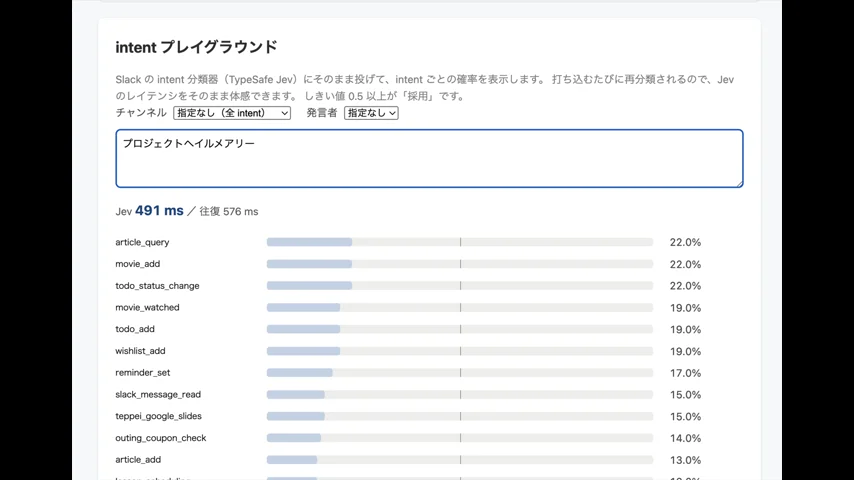
A home AI secretary playground swaps Haiku for Jev as its intent-classification front end routing to Sonnet/Opus/Fable downstream, with predicted intent updating live as you type.

A Jev-powered dashboard classified 1,315 X posts across 8 dimensions (topic, hook, writing style) for ~$0.086, enabling filtering, engagement comparison, and pattern-to-example drill-down for content research.
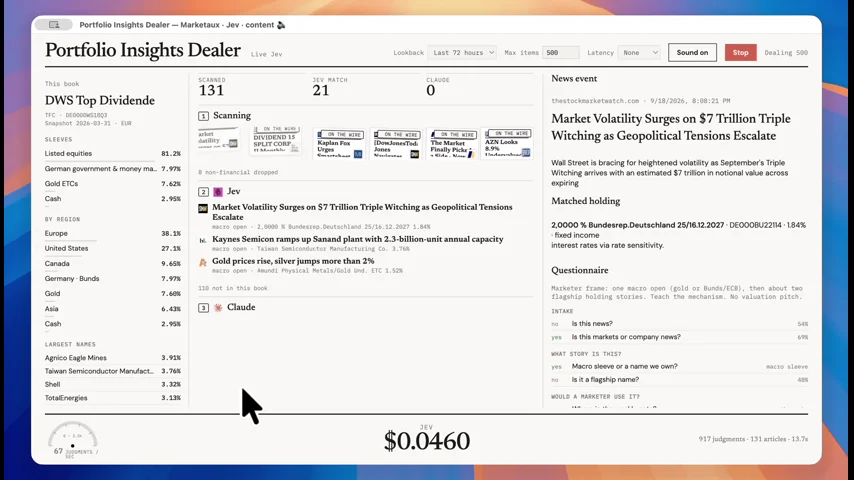
TypeSafe AI's Jev triaged 500 news articles against a 70-holding portfolio—3,500 relevance decisions in 25 seconds for $0.17—then pipes the results into Claude to generate portfolio updates and marketing copy.

Jev Issue Triage uses the Jev AI decision engine to rapidly pull and categorize all open issues from any public GitHub repo with very low token usage.
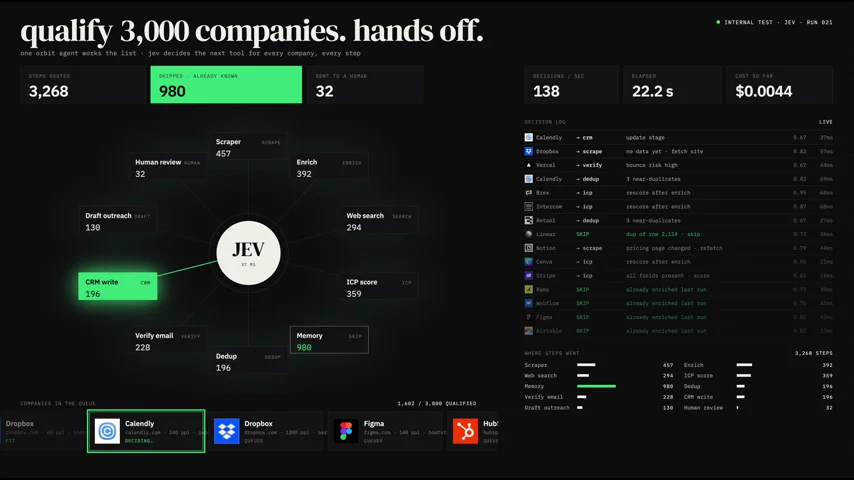
JEV autonomously orchestrates a GTM qualification pipeline — scraping, enriching, ICP-scoring, verifying, CRM-writing, and drafting — classifying 3,000 companies in 41 seconds for $0.008, routing 61 ambiguous cases to humans while flagging 1,260 as fits.
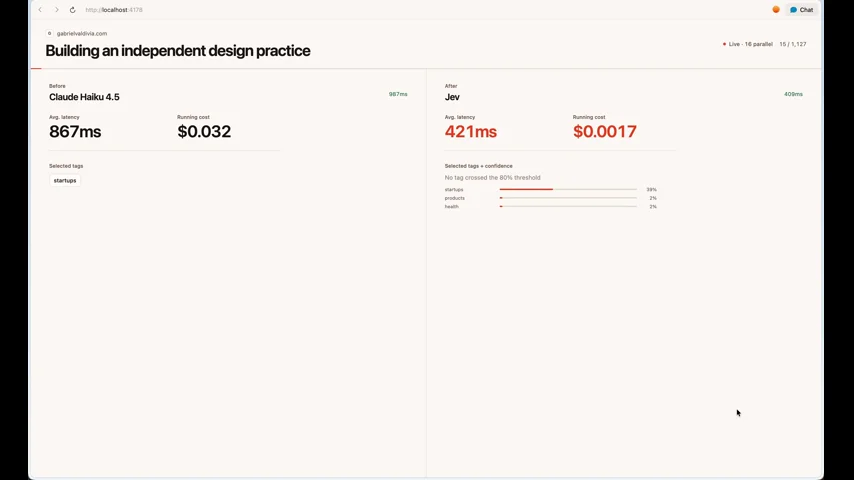
A side-by-side demo pits Jev against Claude Haiku auto-tagging bookmarked links in the Shiori bookmark manager, showcasing tag quality in a live categorization workflow.
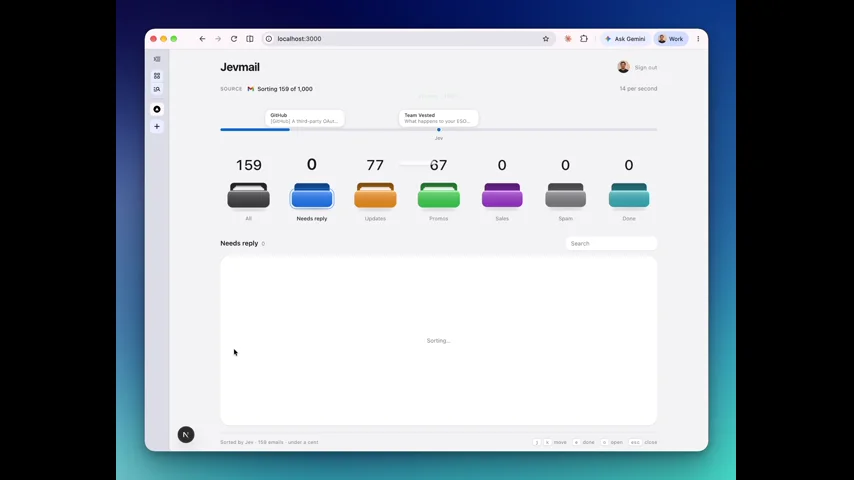
An open-source AI agent sorted and parsed 1,000 Gmail messages into categories (needs reply, updates, promos, sales, spam) in 76 seconds for a total cost of $0.03, positioning it as a potential daily mail client.
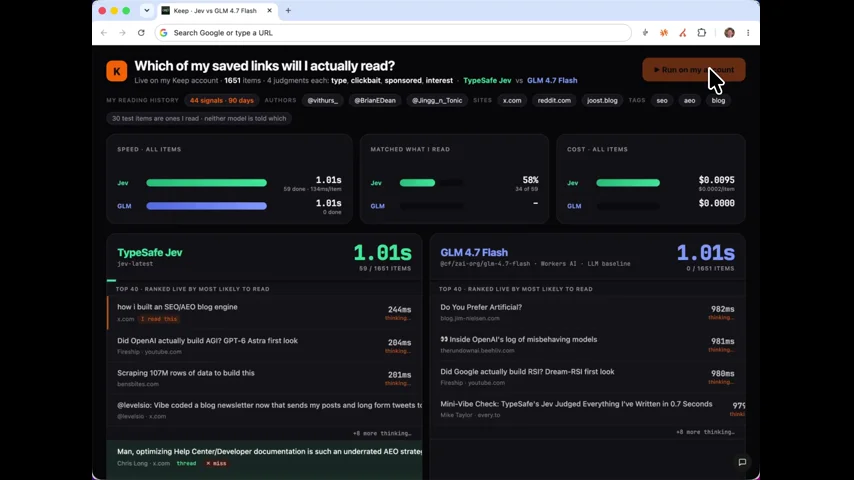
Jev classified 1.6k saved bookmarks by likelihood-to-read in 22s—155x faster than GLM 4.7 Flash at 10x lower cost—to surface the most interesting items in-app and via email.

A Jev-built classroom app that classifies all 35 students' opinions in real time, instantly categorizing every response as the whole class submits at once.

Demo of an AI agent batch-fetching RSS feeds from five news sites and automatically categorizing the aggregated articles.
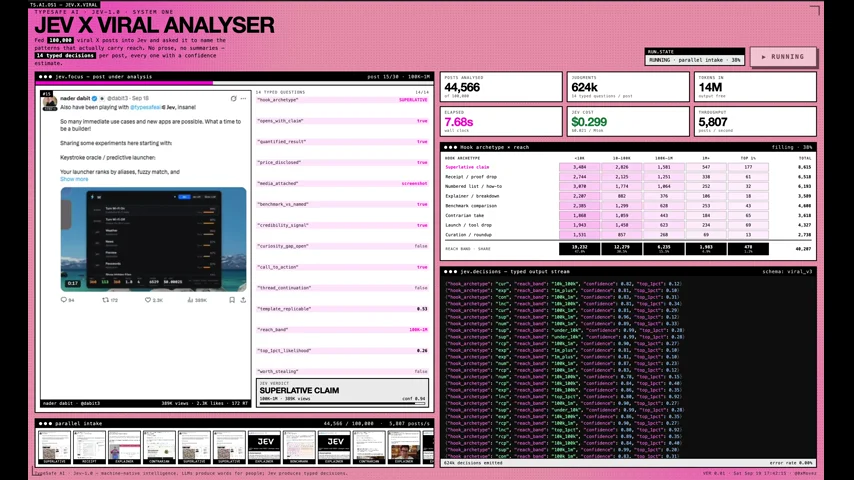
A TypeSafe decision-model pipeline classified 100,000 X posts in 20.4 seconds for $0.67 by decomposing the task into 14 yes/no questions—roughly 680× cheaper than Opus, though numbered-list outputs hurt accuracy.

A 3D demo using TypeSafe's Jev auto-classifies 300 vehicle complaints sampled from NHTSA's 73,999 into 6 categories in ~19.5s with 8-way parallelism for ~$0.01 in API costs.

A demo benchmarks Jev on 300 synthetic emergency-dispatch events: 17.6s total (340ms avg), $0.0124, zero schema errors, 97.2% incident-type accuracy—but 57% fully correct and only 1/24 out-of-scope abstentions, showing label bias.

A Jev-powered system that parses script dialogue in real time to switch a character's facial expressions between speaking and listening states, instantly adapting fine-grained reactions to any new scenario for romance visual-novel-style games.

An AI agent effortlessly triages and categorizes years of hoarded Twitter bookmarks in minutes, turning a cluttered archive into an organized, searchable library.
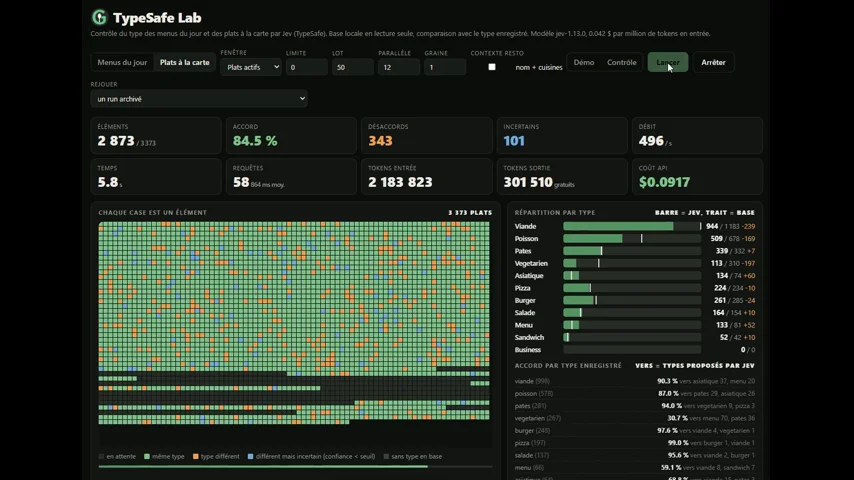
Jev-1.13 classified 3,373 à-la-carte dishes into food types in 9.7s for $0.11 (2.56M input tokens), hitting 84.5% agreement with strictly typed labels—misses came from polysemous dish names, never hallucinated categories.
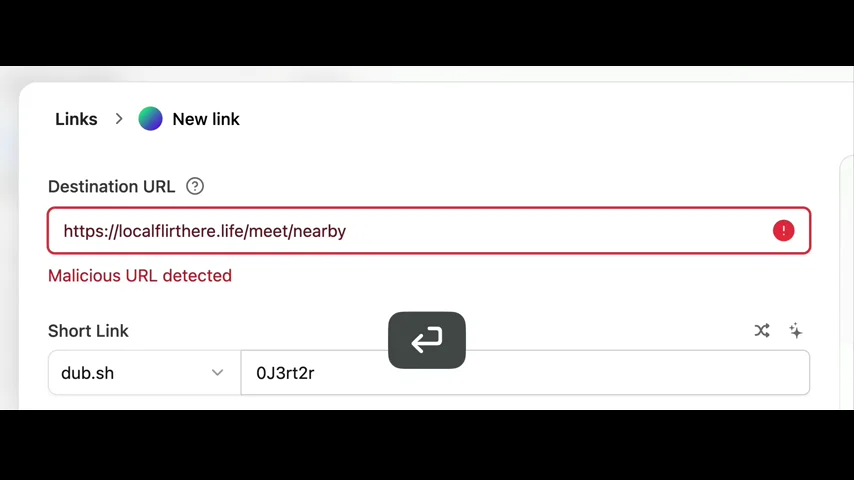
A malicious link scanner for dub.co's link shortener was built in 2 hours using Jev, trained on 10K+ previously caught malicious domains to detect and flag abusive URLs at near-negligible token cost.

A typhoon dashboard pipes Japan Meteorological Agency disaster bulletins into type-safe Jev for relevance classification, answering 50 questions per bulletin in ~400ms including Tokyo-to-US-West-Coast round-trip latency.
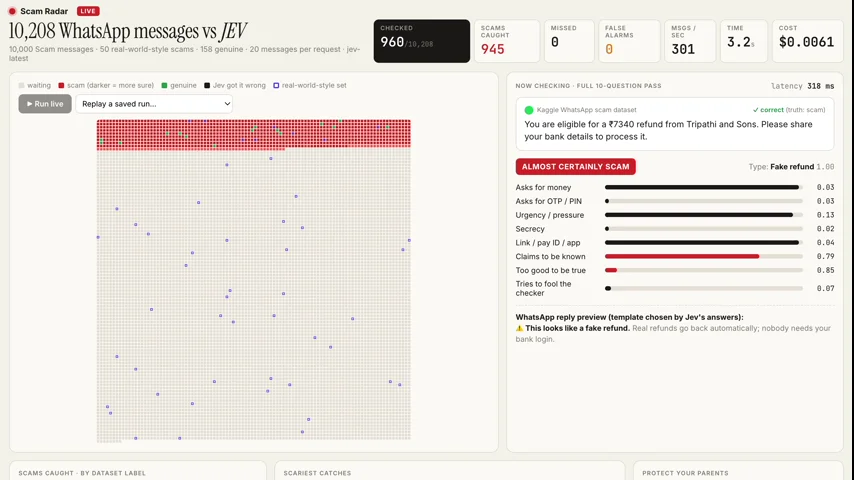
A WhatsApp scam-detection demo that triages 10,208 messages in 32 seconds for $0.065, flagging which ones would defraud the user's mother.

An agent built on TypeSafe's Jev decision-making model scans the Downloads folder, classifies each file, and automatically deletes the unneeded ones.
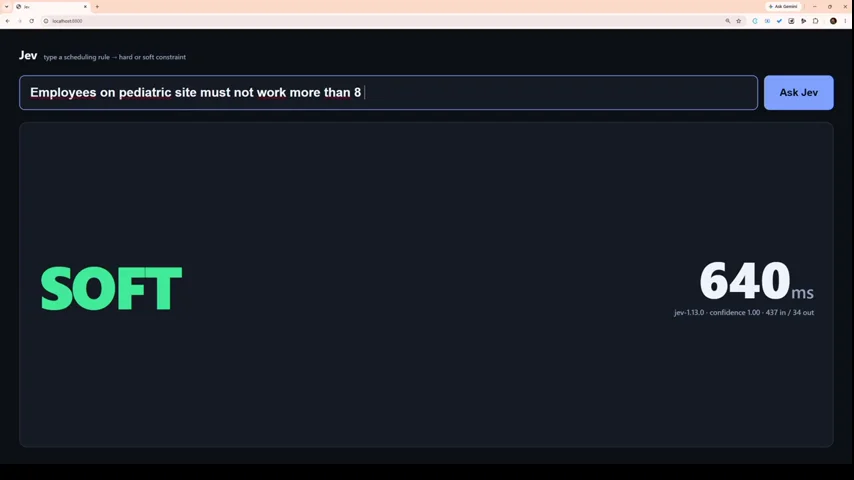
Jev, a fast structured-output model, classifies text demands as HARD or SOFT constraints for routing tasks, returning answers in under a second.
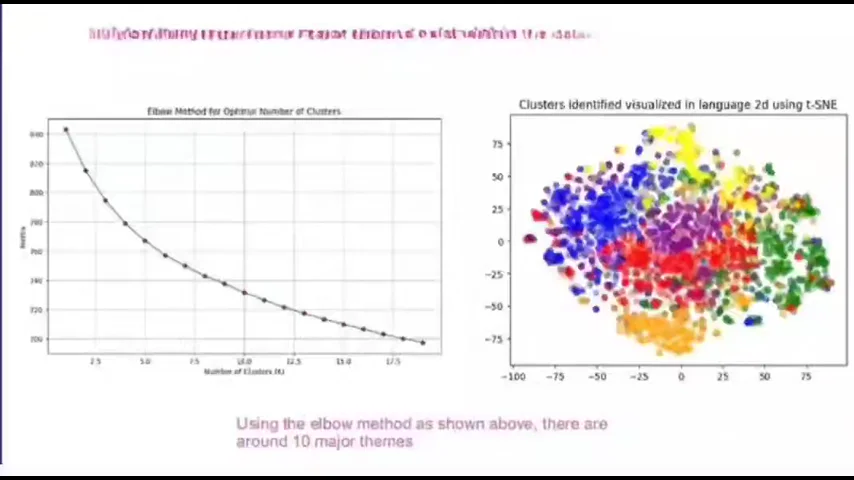
JEV analyzes millions of Reddit comments and posts in seconds, using k-means clustering to automatically discover and group content into topics for large-scale categorization.

A media-art prototype that classifies your own Slack posts and piles them up like an hourglass, letting you compare post types across multiple categorization axes—built in a day, showing how modern tooling lets creators focus on expression immediately.

An AI categorization demo uses Jev to score 2,952 museum objects on whether each one qualifies as architecture.
Ranking & Evaluation
33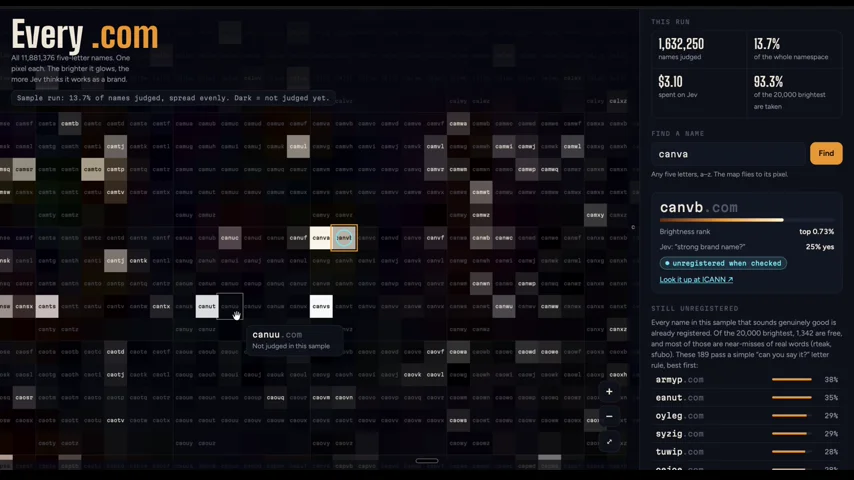
I built a domain name finder with Jev! The brightness of the dot shows how suitable Jev thinks the domain name is for a business. What do you think about this use case? @types

A live BS meter scored every sentence from both Trump–Kamala debate candidates against 5 identical yes/no questions each, running 1,191 calls / 1.18M tokens at 415ms median for $0.0497, with clips selected by one fixed rule.
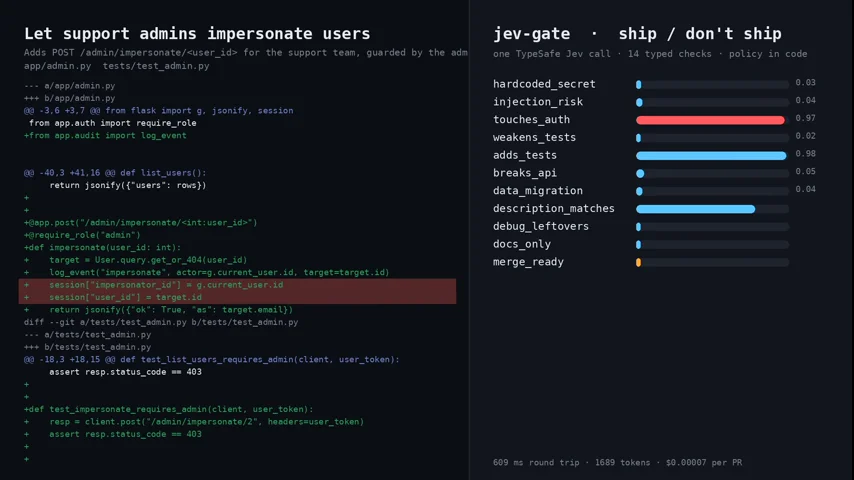
A PR-review API that scores a pasted diff in ~0.5s for $0.00007 per call (~200x cheaper than Claude), returning 14 typed checks as probabilities mapped to a BLOCK/security-review/nits/merge verdict, with ambiguous scores escalated to humans or larger models.

A live viral-post analyzer built with Jev that scores a tweet's viral potential and auto-categorizes it in real time after just 0.5s of typing idle, with planned Twitter-data scraping and similar-tweet surfacing for inspiration.
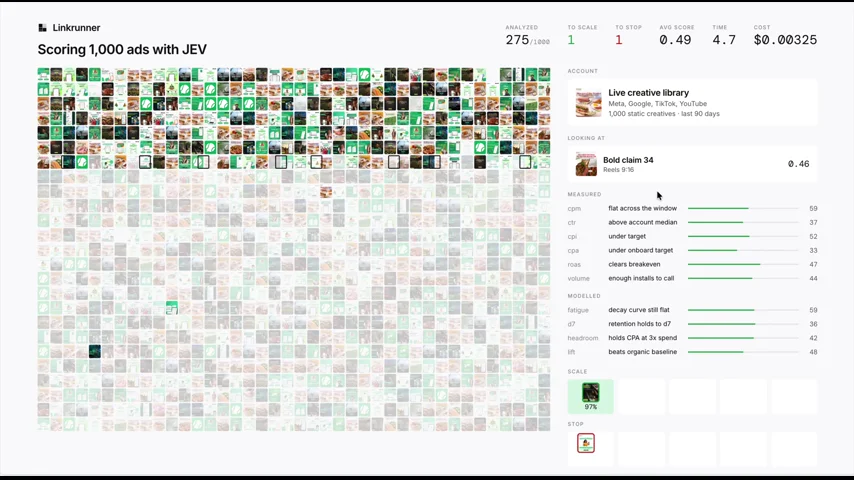
Jev is an AI ad-analysis tool that ranked 1,000 ads and automatically recommended which ones to scale budget on versus pull spend from.
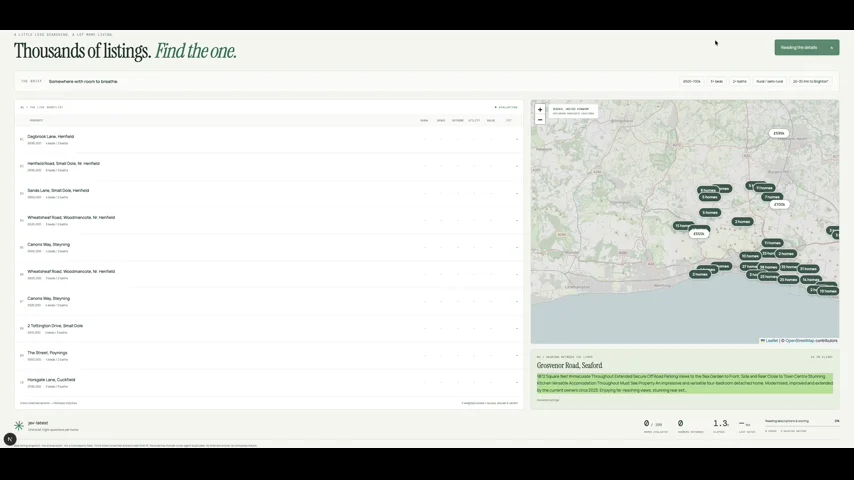
An AI house-hunting agent that searches hundreds of property listings and ranks them by how well each matches your criteria.
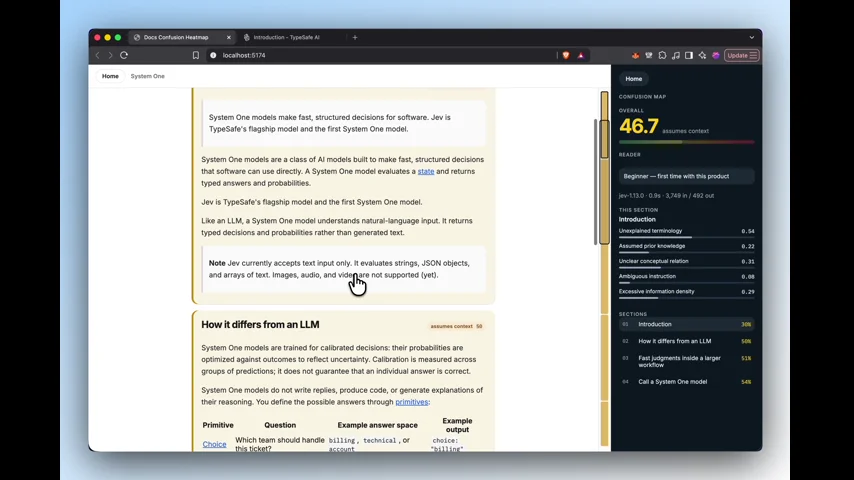
Demo fetches a docs site and has Jev rate each section's beginner difficulty across five confusion factors—jargon, assumed knowledge, ambiguous steps—rendering a confusion heatmap with fast, cheap-per-token inference.

Jev classified 100,000 viral X posts via 14 yes/no questions each in 20.4 seconds for $0.67 — roughly 680× cheaper per post than Claude Opus 5, which processed just 214 posts for $0.98 under the same time limit.
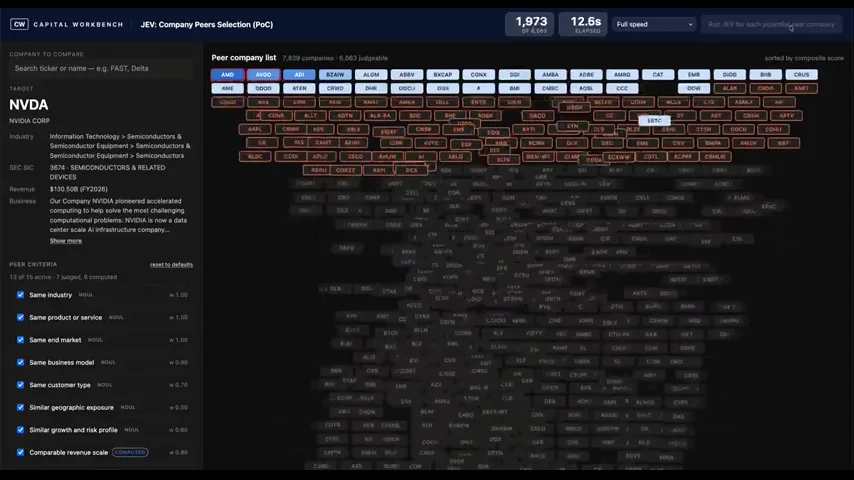
Early finance proof-of-concept demo using brute-force peer selection to rank 6,000+ candidate companies in ~40 seconds, surfacing the detailed scoring criteria behind each ranking.

Demo shows Rolewise pipeline — Metix AI retrieves job descriptions while Jev makes binary suitable/not-suitable fit decisions on resume–JD pairs with 20 concurrent requests, evaluating 838 jobs in 61.3 seconds (~13.7 evals/sec), with accuracy validation against human reviewers still pending.

A landing page audit tool that takes a URL, extracts headings, copy, and CTAs, answers 30 typed evaluation questions in one pass with probability-backed scores — costing $0.00024 and ~1.1s per page (Stripe scored 81).
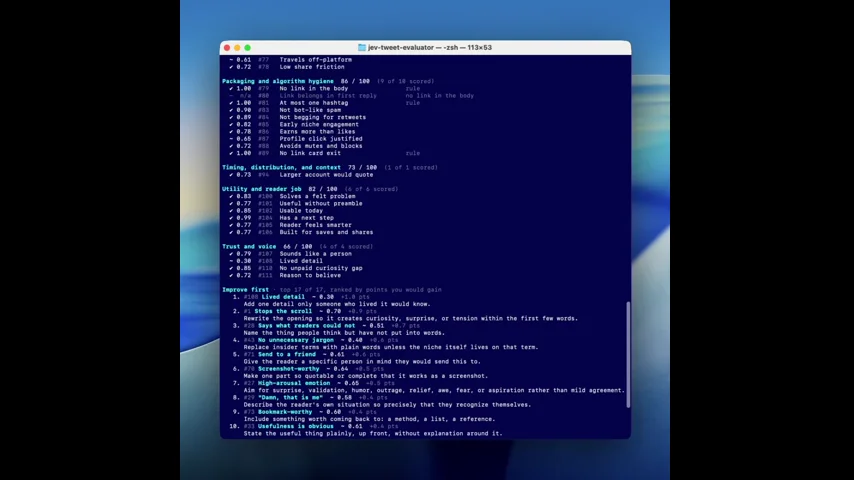
A reusable LLM ranking loop scores tweet drafts against 88 criteria distilled from prior viral posts in 0.92s for $0.00016 per check, then flags the next edits until the score plateaus.
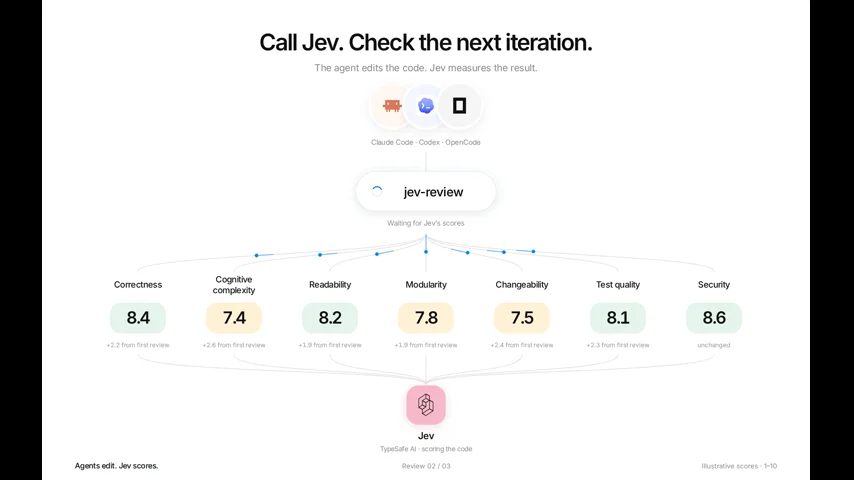
`jev-review` is an experimental, local-first MCP plugin that gives coding agents a quality-scoring feedback loop across multiple metrics — agents call it mid-task, get scored, improve, and repeat.

An AI analyzed 3,282 X posts across 100M views—scoring each on hook, tone, and teaching value in one 8m34s run costing $0.1282 across 4.25M tokens—finding how-to posts earn 150 median likes vs. 44 baseline, AI+coding is a 1.9x topic multiplier, and the optimal formula is AI coding + teach something + provocative.

A real-time browser extension built on jev that scores/judges tweets on every keystroke with near-instant latency at negligible cost — roughly half a cent per hour of continuous use.
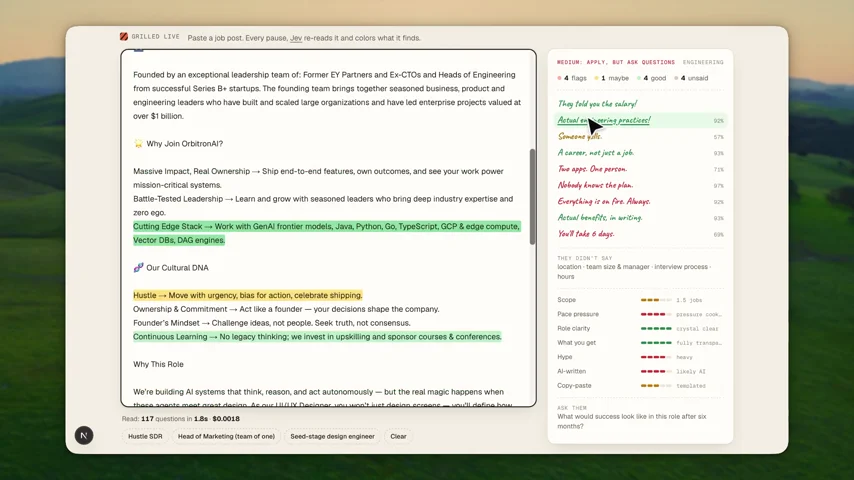
A Jev-powered job-description roaster that translates each JD line into its brutally honest meaning ("wear many hats" → "you are 3 employees"), scoring postings in ~1 second for ~0.1¢ per run.

JEV predicted outreach performance for 700 leads in 40 seconds for $0.09, assigning confidence scores, detecting lead-message mismatches, scoring buying signals, and matching prospects to best-fit messages.
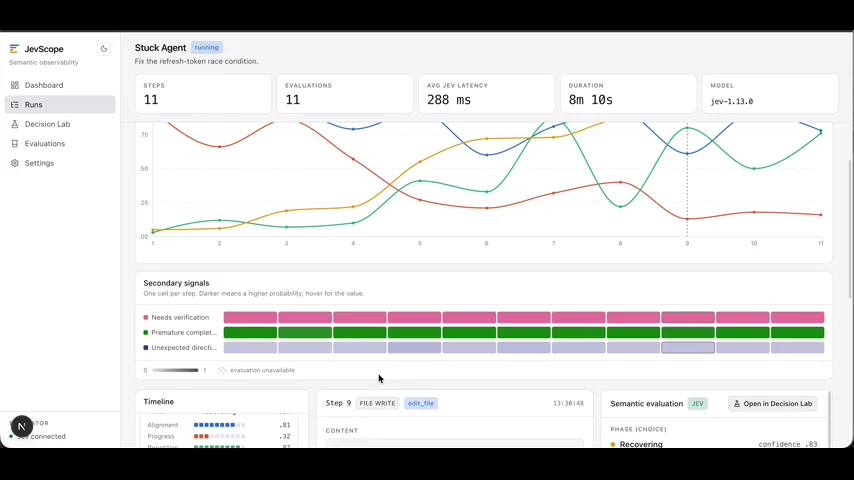
JevScope has Jev semantically score every agent step for alignment, progress, repetition, and stuckness, plotting a live curve that exposes stuck loops—like repeated edit-test-revert cycles on one file—invisible in raw tool traces.
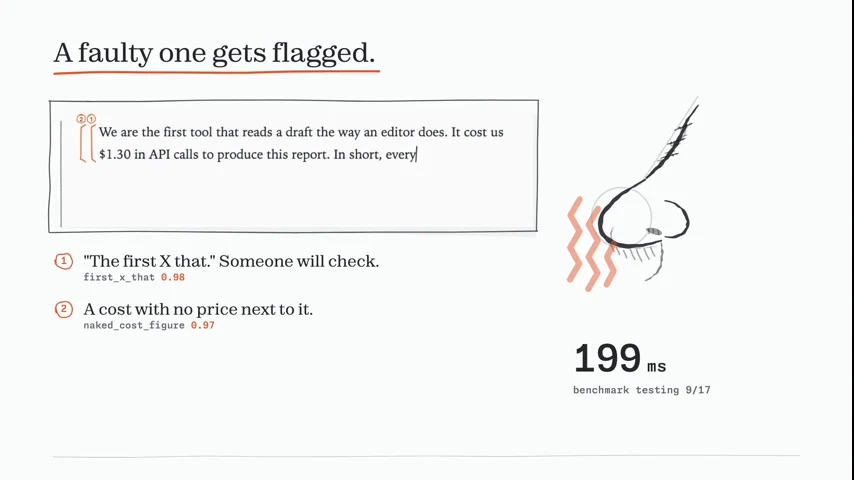
Sniff Test, a prose linter that asks 10 yes/no questions per paragraph at a 182 ms median, raised just 1 false flag on 54 clean paragraphs vs. Haiku's 37, and runs as a commit hook or Claude Code skill.
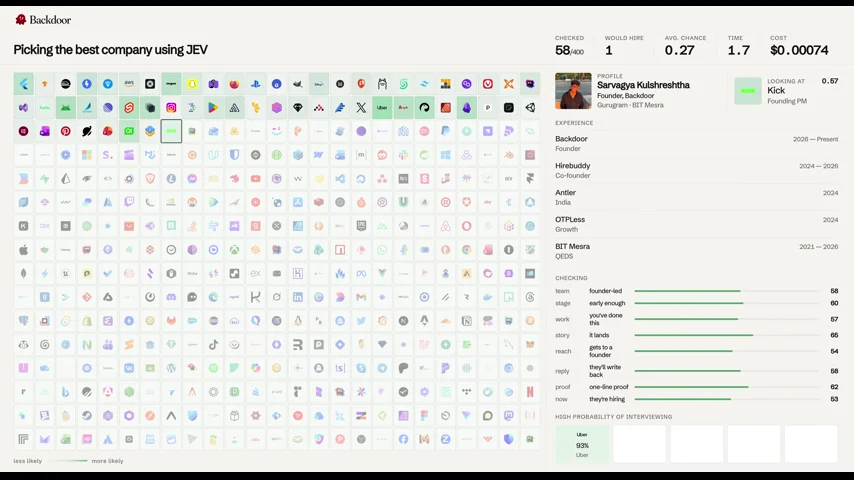
JEV is INSANE. We gave it 400 companies and one candidate profile. In 12 seconds, it predicted which jobs the candidate had the highest chance of getting, assigned a confiden

A demo translates TypeScript diffs into neural stimuli for a simulated fruit-fly brain built from real wiring data, then maps its activity to code-review verdicts.

A real-time scoring model analyzes every word of a Fed Chair press conference in ~150ms — dramatically faster than chat models like Claude Opus 5, GPT-5.6, GLM-5.3, and DeepSeek V4 Flash — with a live side-by-side comparison demo on past conferences.
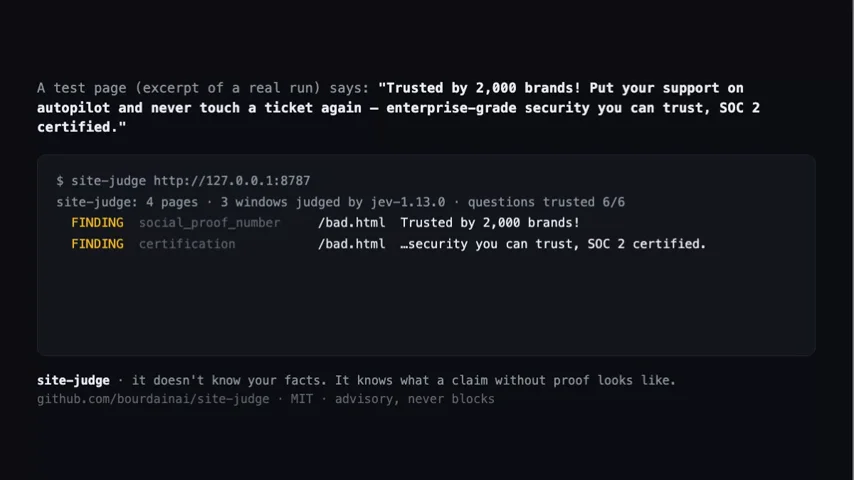
An automated copy reviewer built on Typesafe's Jev scans your marketing site on every PR and flags each sentence making a claim unsupported by evidence, enforcing copy rules that teams typically abandon after launch week.
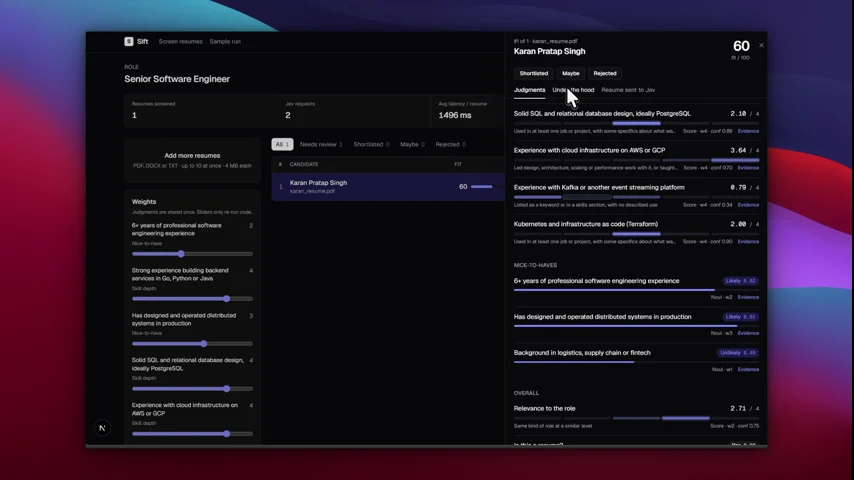
A resume screener built on Jev replaces flaky 1–10 LLM scores with typed per-requirement probabilities, letting code deterministically rank candidates, flag uncertain answers, and yield consistent, traceable scores every run.
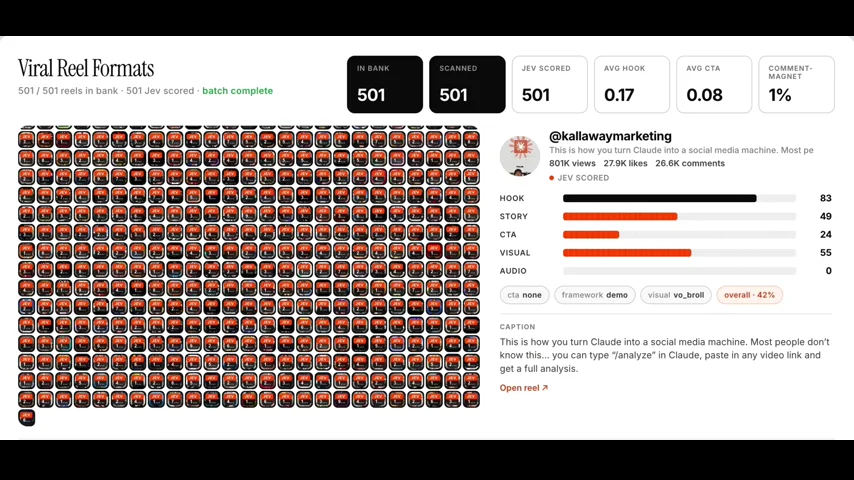
JEV is a content-scoring tool that evaluated 500+ reels across niches in 34.4 seconds for ~$0.025, rating each on hook, script framework, CTA, visual opener, and audio (0–5), flagging retention-drop points, and can pre-score unposted reels—though accuracy vs. hallucination remains untested.

A pre-publish Shorts hook tester that mass-generates "virtual viewers" modeled on your YouTube Analytics audience, has an LLM judge whether each would watch or swipe on candidate hooks, and outputs a pseudo swipe-rate — effectively A/B testing intros in simulation before posting.
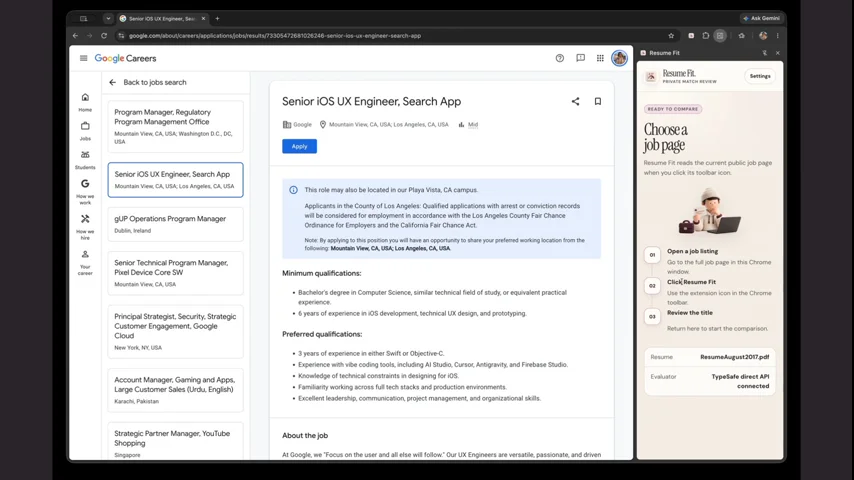
An open-source, BYOK Chrome extension powered by TypeSafe Jev that scores how well your resume matches a job posting, supporting both direct typesafe and Vercel gateway API keys.
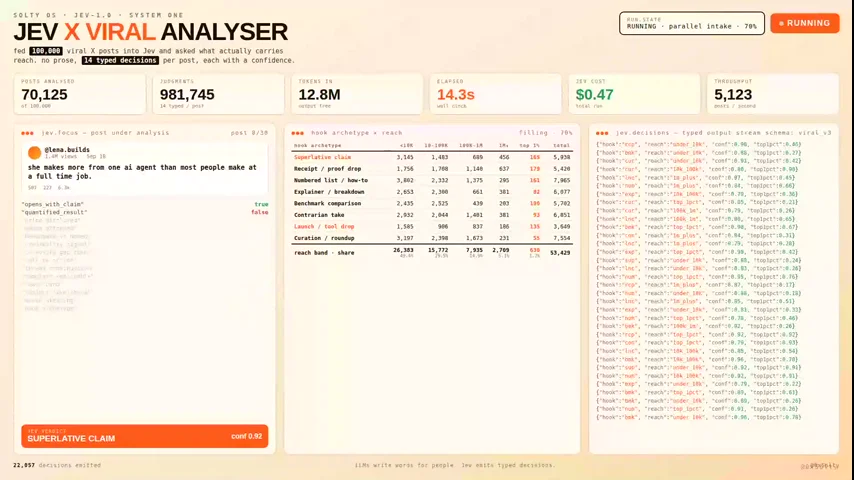
A viral-analysis tool ran 14 yes/no classification checks on each of 18,000 AI-Twitter posts in 31 seconds for $0.71—hundreds of times cheaper per post than an Opus 5 run that crawled a few hundred posts for ~$400.

Demo shows a Jev-based reranker layered on top of Hacker News search results to improve ranking quality.

Scraped 2,000 Meta beauty ads via Apify, read creatives with free-tier Gemini, and graded 302 ads on 9 dimensions with classifier Jev — 2,718 judgments in an afternoon for $0.0167, showing UGC ads (1.63/5) beat catalog ads (0.48) 3x.
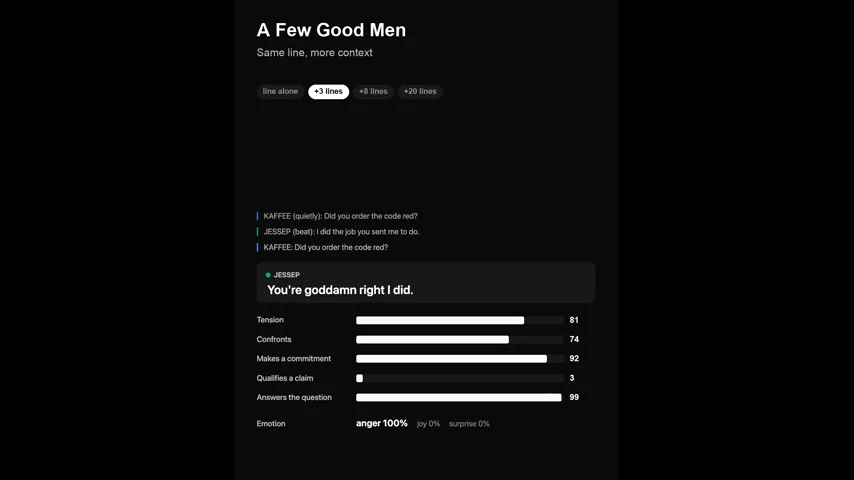
Demo shows an AI dialogue tension evaluator scoring the same *A Few Good Men* line 75/100 in isolation but 95/100 once the preceding dialogue was added as context.
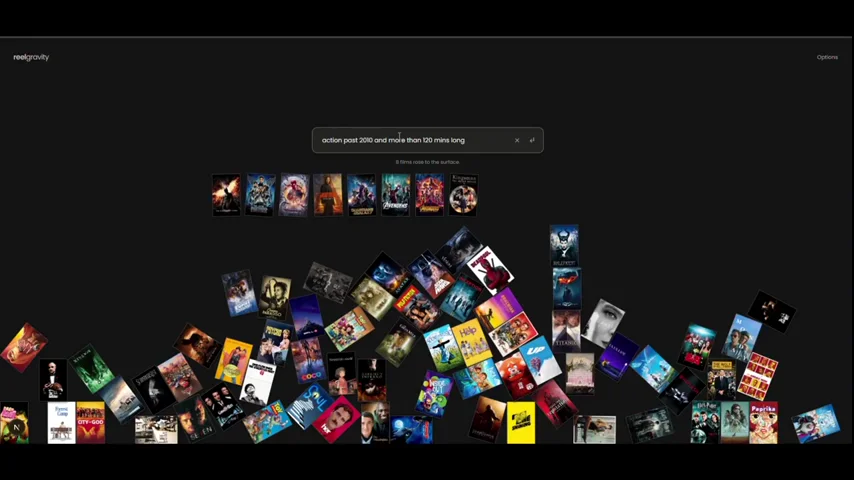
A movie recommendation engine built with jev, experimenting with ranking personalized film suggestions.
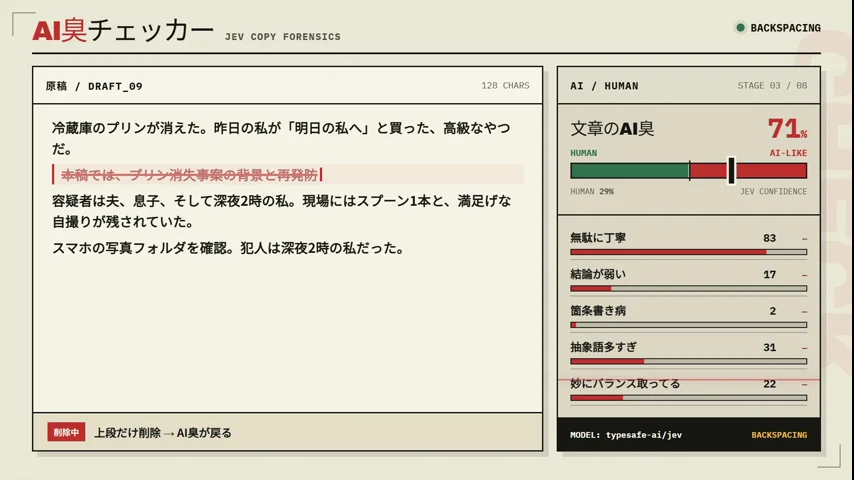
An "AI-smell" checker that numerically scores how AI-generated text sounds using real Jev measurements, built with Codex and rendered into an MP4 demo via HyperFrames and FFmpeg on TypeScript/Node.js.
Search
23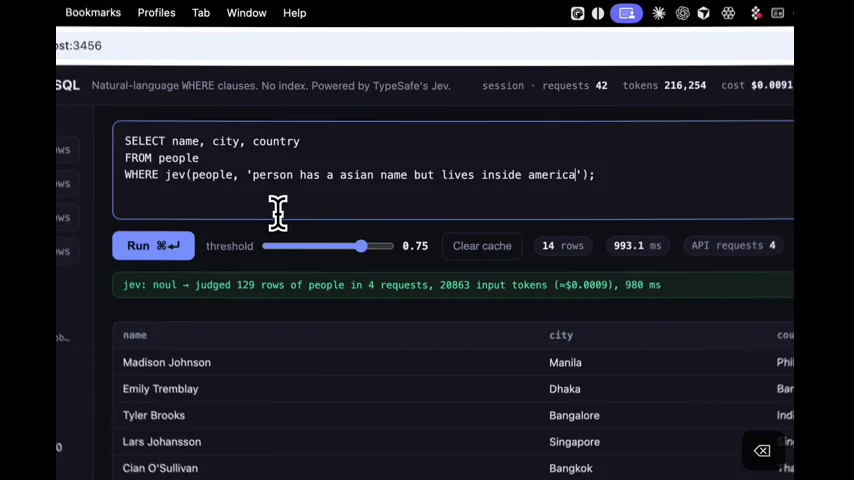
jev(), a PostgreSQL extension, enables natural-language filtering across an entire database—no indexes or embeddings required—judging 129 rows in ~1s for $0.0009, with cached reruns in 6ms.

An experimental "search by intent" prototype built with Jev that can interpret user goals rather than keywords, though deemed too rough to release publicly as-is.

Jev is demoed running semantic search over Mark Rothko's paintings, retrieving matching artworks from just a few descriptive words.
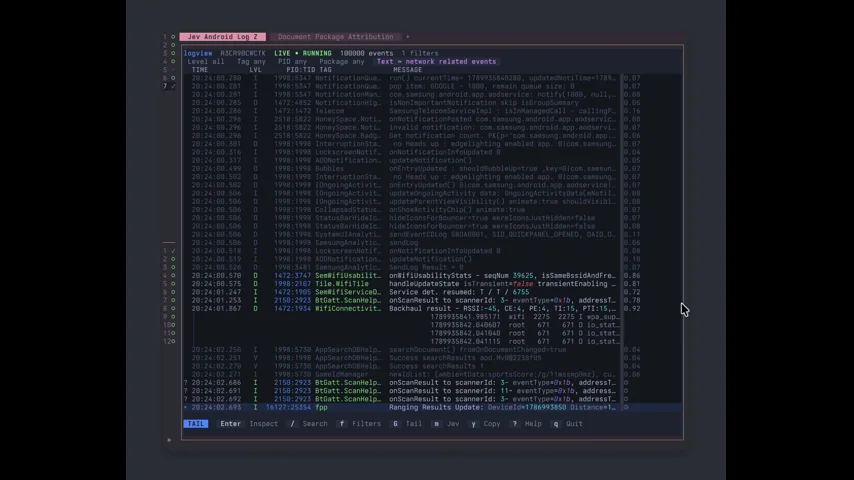
A semantic log filter built on Jev, exposed through a CLI so AI agents can query logs programmatically and wrapped in a custom TUI for interactive searching.
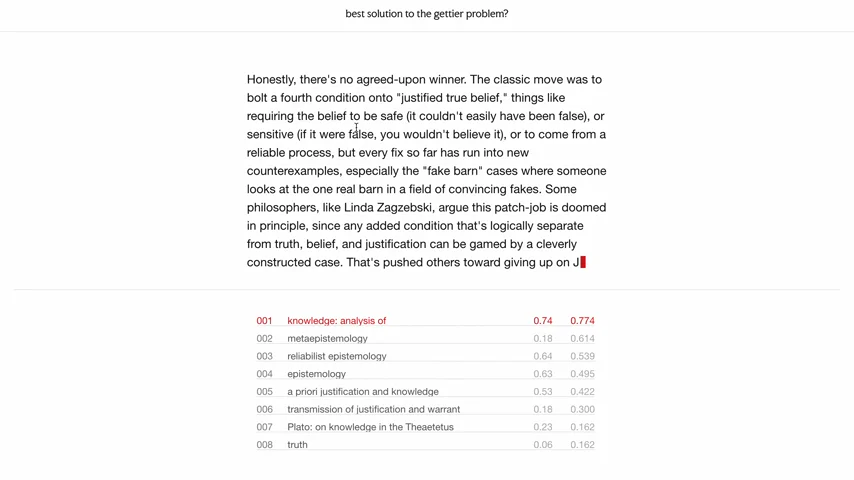
sonnet + jev as grep https://t.co/jsqMzDObjj

Jev searches a physical book's entire index in parallel in 300ms, pinpointing answers like "Who invented photography?" to page 98 under "Niépce, Joseph Nicéphore."
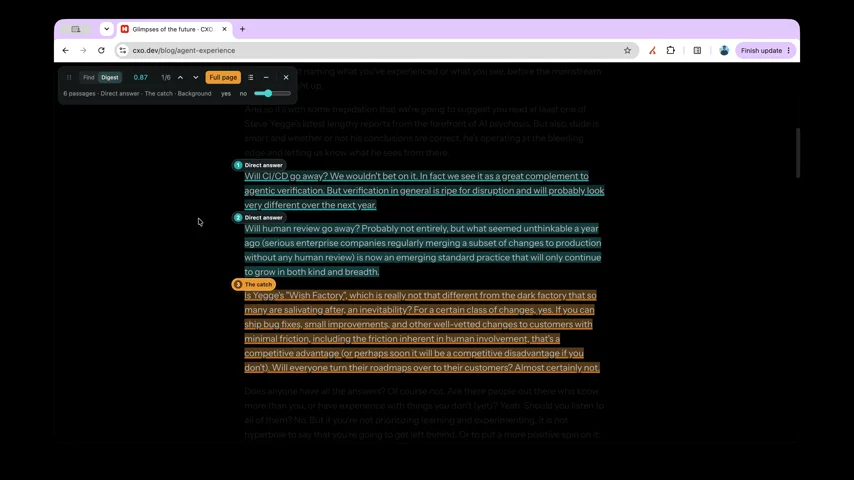
ctrl-f is an AI reading assistant that answers questions over long articles by highlighting the passages that matter, sorted into direct answers, supporting evidence, and caveats.

A semantic search layer over the ACKS2 RPG's Monstrous Manual lets users instantly find any monster by description, with expansion to the full ruleset planned next.

Jev is a tool for rapidly extracting answers from long, complex documents.

TypesafeAI's Jev model powers realtime help-center classification—mapping user queries to the best-matching article—at 2–4x faster and ~25x cheaper than Claude Haiku 4.5.

Jev is a "Ctrl-F for meaning" demo that finds and reranks items by semantic meaning rather than keywords, delivering super-fast, super-cheap semantic search.

A tool that scans Reddit plus Google and ChatGPT rankings in under 5 minutes to surface keyword opportunities where you can promote your product or outrank existing Reddit posts.
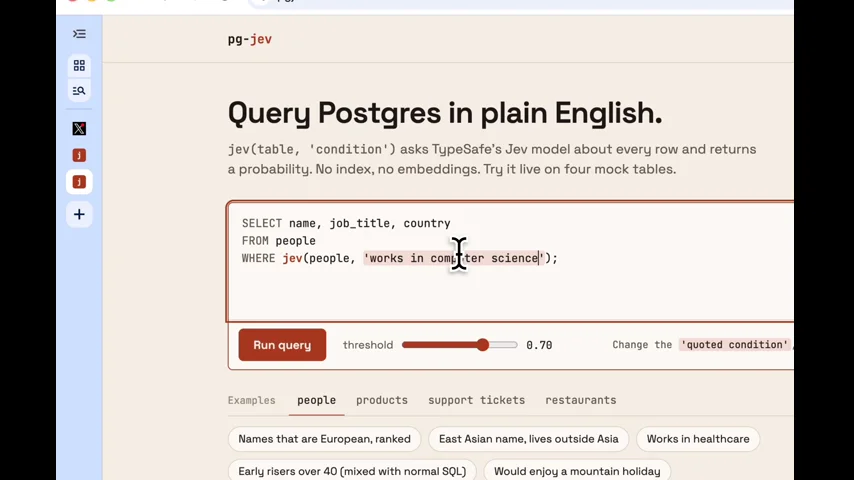
A SQL extension adds a `jev()` natural-language predicate that semantically evaluates every row in a `WHERE` clause—no indexes or embeddings required.
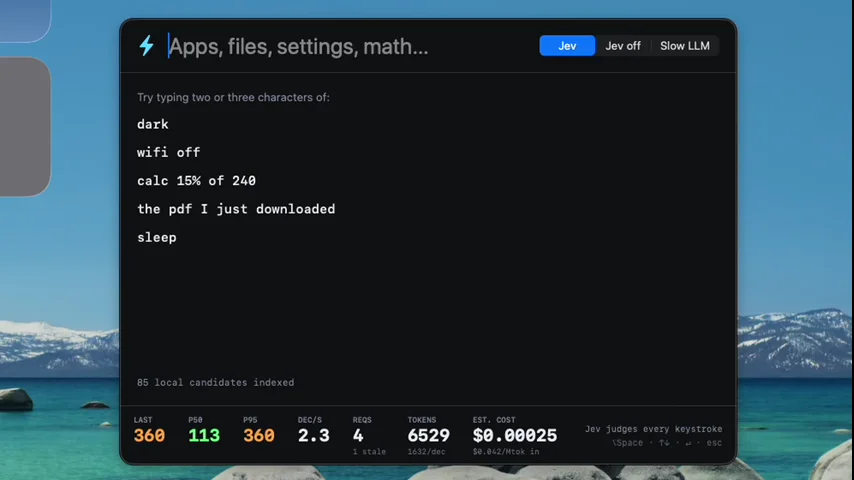
Jev, an intent-aware launcher reranker, turns keystrokes like "the pdf I just downloaded" into correctly ranked results with per-keystroke confidence scores in ~100 ms, instead of relying on aliases, fuzzy match, and habits.

An AI agent demo performs intent-based search inside Gmail, turning natural-language queries into relevant email results—best paired with embedding-based retrieval as the first pass on huge inboxes.

Jev Reviewer is an open-source tool that helps systematic reviewers rapidly locate and extract key information from research articles.
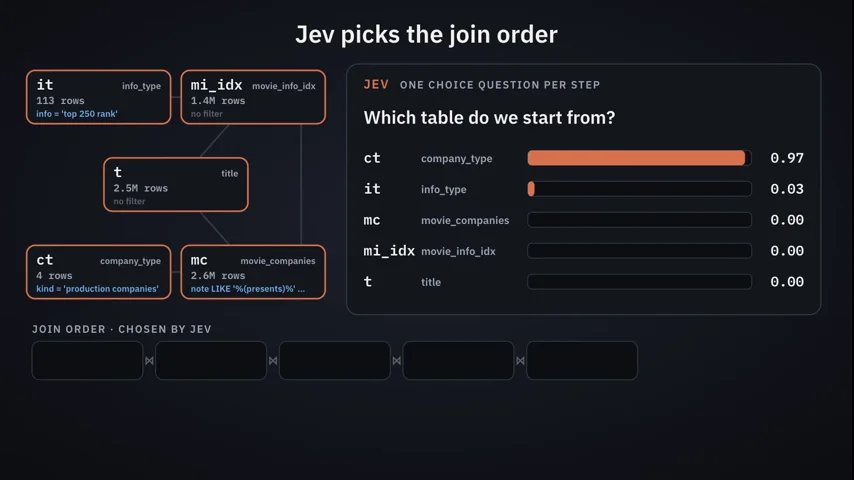
Jev-generated query planner, after tuning, delivers a 12% speedup on Postgres join order benchmark queries.

Jev demos natural-language ecommerce search that understands intent and fades out irrelevant products in real time, eliminating manual filtering after imprecise queries.
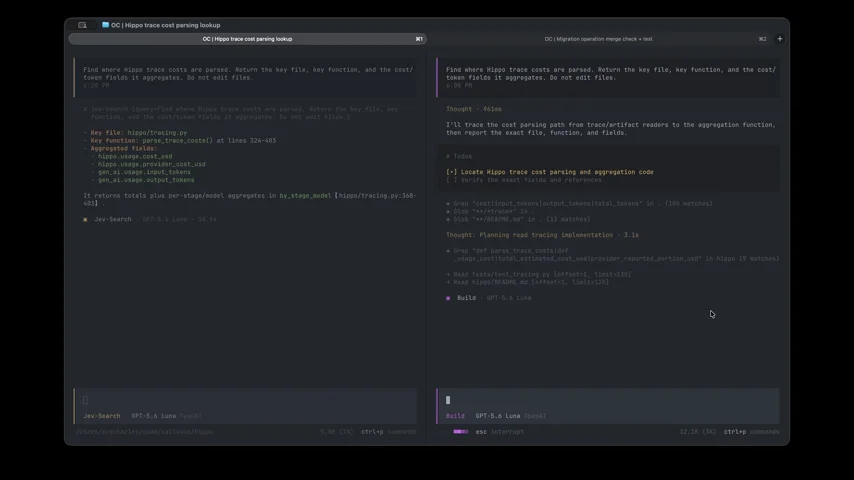
Jev-powered search tool makes OpenCode 3x faster on search tasks while using only 1% of context vs 5% for default agentic search, helping agents stay under the 40% context sweet spot.
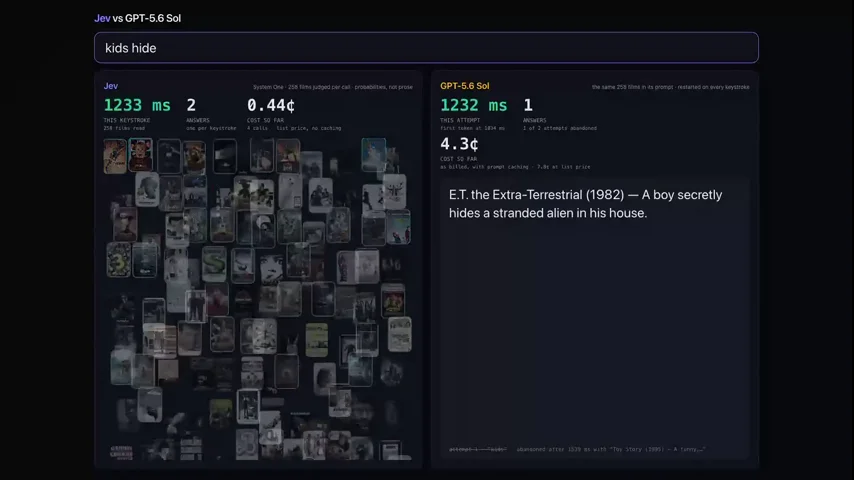
Per-keystroke fuzzy movie search over 258 films: Jev scores the whole list in one ~400 ms call and re-sorts live as you type (13 answers for 2.4¢), while GPT-5.6 rereads the list and gets cut off mid-reply (6 answers for 8.8¢).
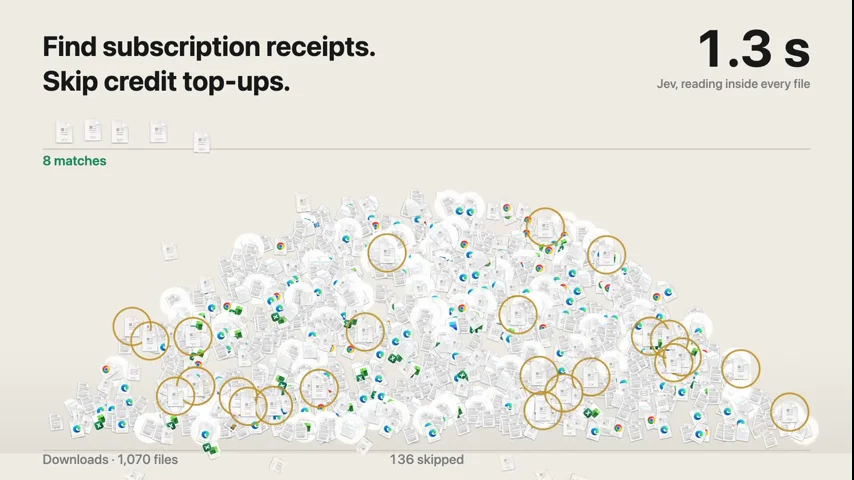
A dirt-cheap file classification model searched 1,070 Downloads files in 7.6 seconds for ~2¢ to surface subscription receipts, adaptively reading deeper into files it wasn't sure about.

Jev Radar, an open-source AI research agent, researched private AI second-brain tools in 47 seconds—inspecting 11 documents, choosing sources and verifying claims live, with every finding linked to evidence.

An AI agent autonomously searched real published telescope data for alien signals and reported its findings.
Input Assistance
22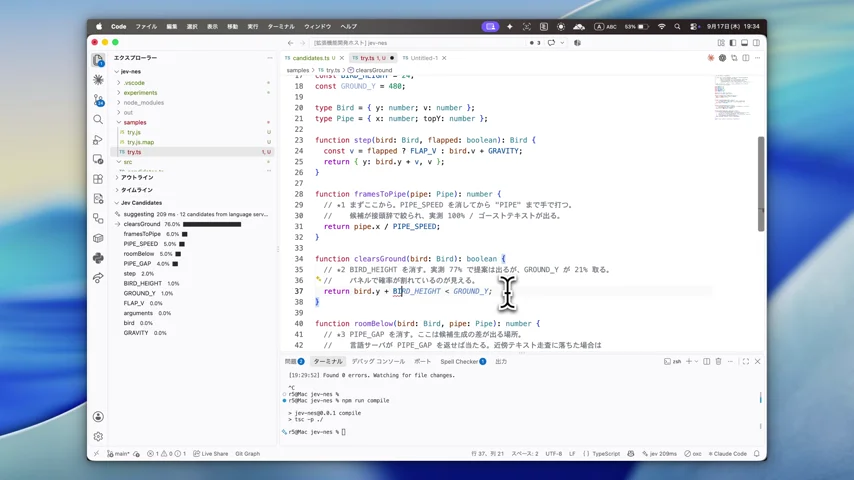
A hacked-together Next Edit Suggestion feature implemented in Jev, resurrecting the Copilot-style predictive editing capability most people forgot existed.
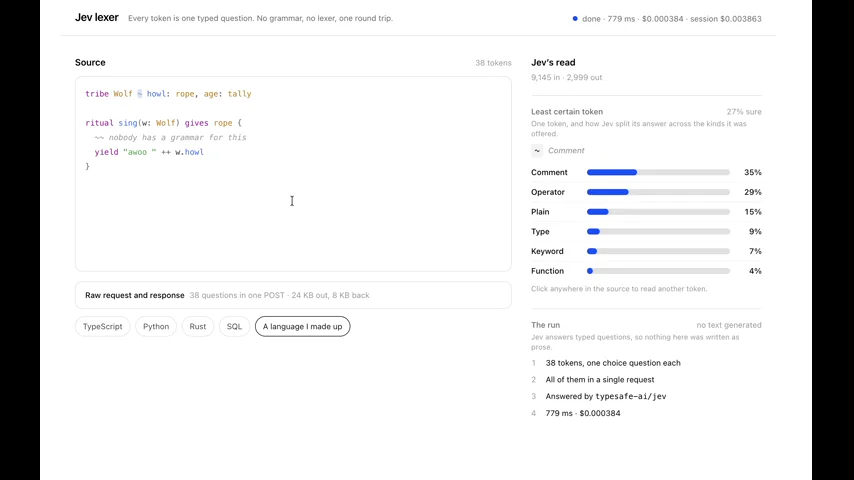
A Jev-powered syntax highlighter that can highlight any programming language — including one invented on the spot.
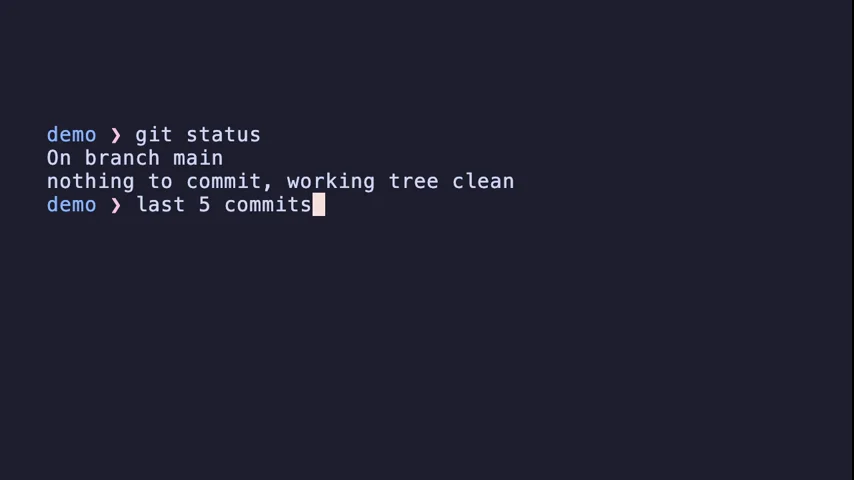
An AI agent that predicts and suggests the next shell command by mining the user's shell history.

A real-time emoji-suggestion demo returns candidates in 100–200ms, with latency staying flat whether choosing from 3 or 200 emoji.

DiffusionGemma-as-Jev (djev) runs near-real-time vision detection directly on a mobile phone using its native vision tower, with no external inference offloading.
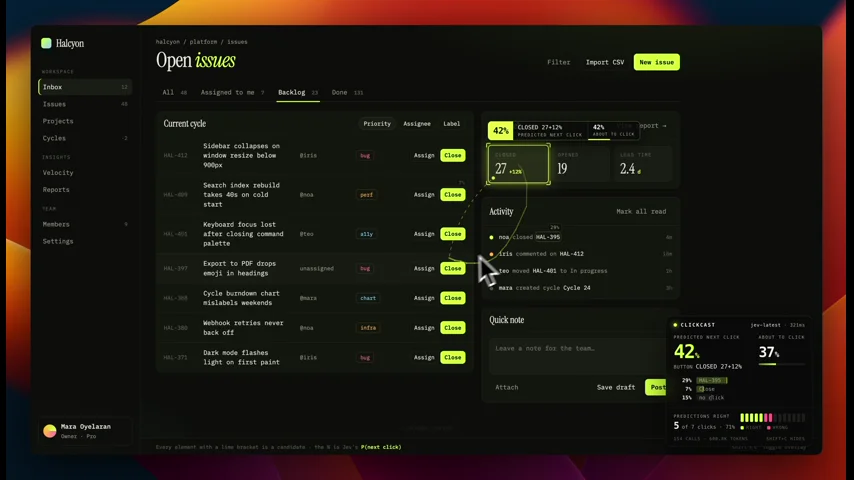
A JEV-powered real-time click predictor that infers the next clickable DOM element and user intent in 345ms per query with 83% accuracy, highlighting candidates on screen for predictive preloading, UX testing, and accessibility.

JEV-powered virtual human guides Premiere Pro users via voice or text, highlighting each next button in yellow and drawing drag arrows, with decisions in hundreds of milliseconds per step — demoed on a recreated UI.

A Swift emoji picker app that predicts and surfaces the top three relevant emojis in real time as the user types.

A hack built with Jev turns a microphone into a BS detector that automatically mutes you the moment you start spouting nonsense.

Voice turn-end detection demo using Jev: 0.5s after speech ends, the model scores whether the turn finished and conditionally adds hold time (e.g., timeout=3.0s vs None), with ~0.22s inference latency—still rough but promising.

Jev board is an experimental GenUI keyboard that uses fast, reliable model inference to embed subtle ambient intelligence directly into typing interactions.

Voice-controlled Figma manipulation demo built with the Jev agent framework, going from first line of code to a working recorded demo for just $0.01 total cost.

A smart calculator notebook built with jev that can compute anything, showcased as a quick hack demo.

Jev replaces the LLM decision step in tool calling, letting voice agents act on partial utterances mid-sentence instead of waiting for turn end—cutting latency and cost versus hybrid thinking/non-thinking LLM plus state-machine pipelines.
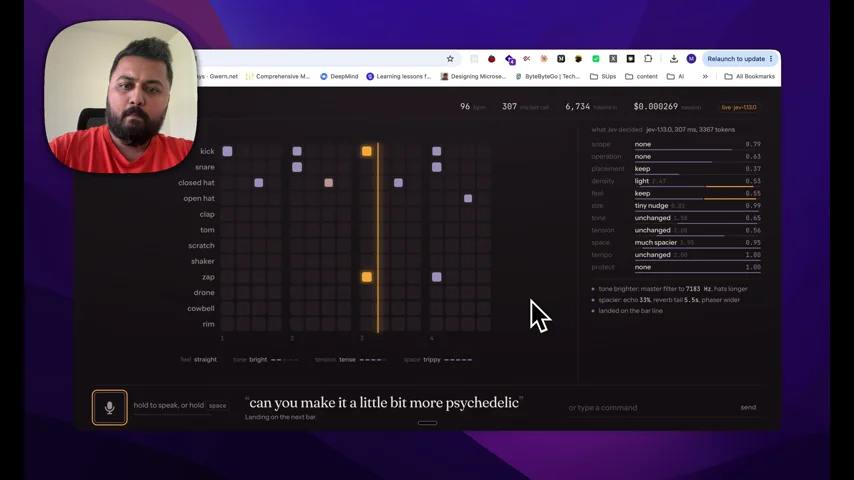
Jev turns plain voice commands like "add a snare on the backbeat" or "make it trippier" into live drum beats, with each sentence generating a new beat in ~200ms—no menus, no step-sequencing, no chatbot, just talk and the drums follow.
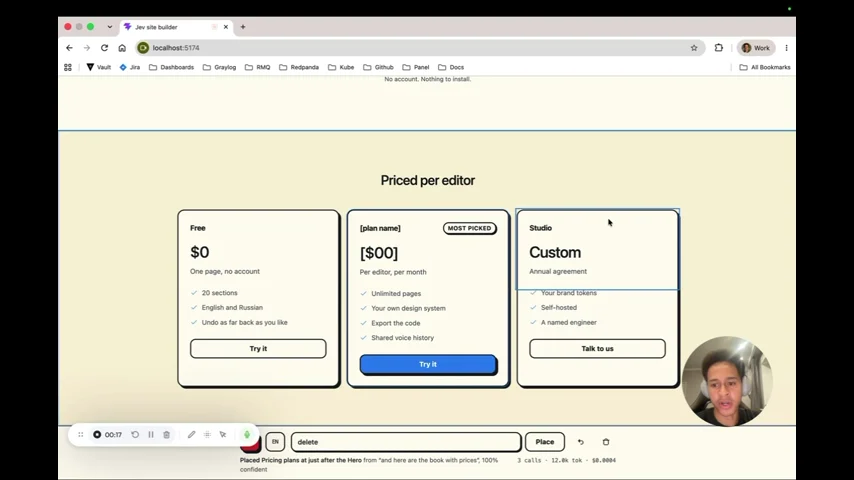
An AI agent fed design-system component context generates webpages in real time from spoken voice commands.
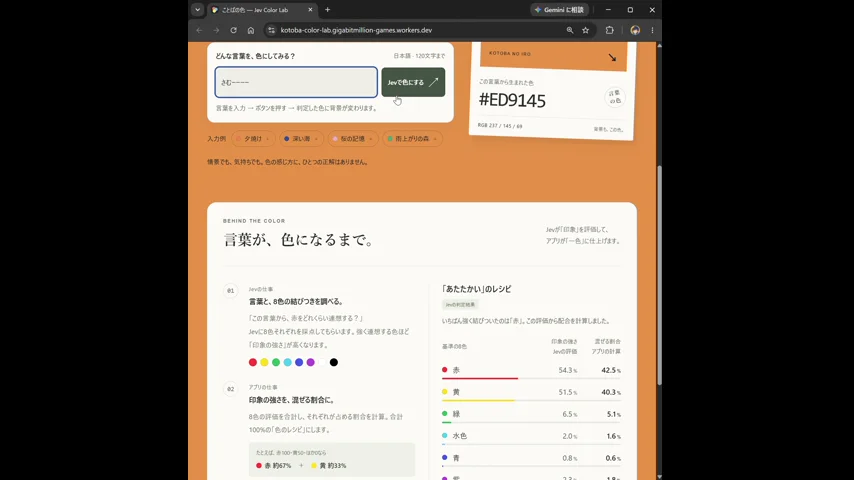
A Cloudflare-hosted demo turns typed words into color-coded image judgments using Jev’s fast, fixed-schema outputs—cheap enough to keep a public AI site free and well-suited to game-development workflows.

A browser agent pairing a local LLM with TypeSafe AI's Jev for fast low-level decisions autonomously navigates Google Maps to fetch a route — showing cheap, quick agents emerge when small specialized models handle micro-actions instead of a frontier model reasoning over every click.

Jev powers realtime AI virtual try-on hauls: it reads your speech transcript plus current outfit, picks items from your closet, and swaps your outfit live at ~620ms and $0.0011 per decision.

A text-driven 3D pocket garden pipeline chaining GPT-6 Astra (scene + interaction), Tripo (generated cottage/bench assets), and Jev (deciding what to move or keep) — with ambience swaps, movable trees/mushrooms, pause, and undo.
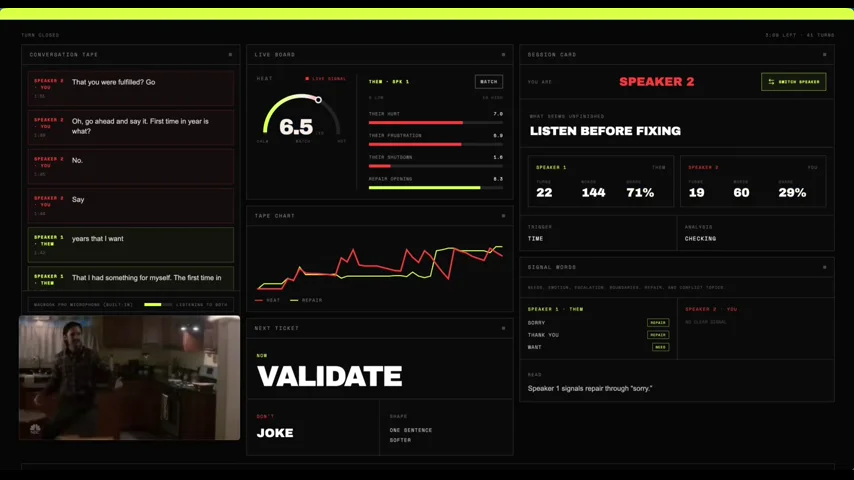
A voice assistant that listens to couples' arguments in real time, scores the partner's anger on a 1–10 scale, and generates de-escalation advice in 374ms.
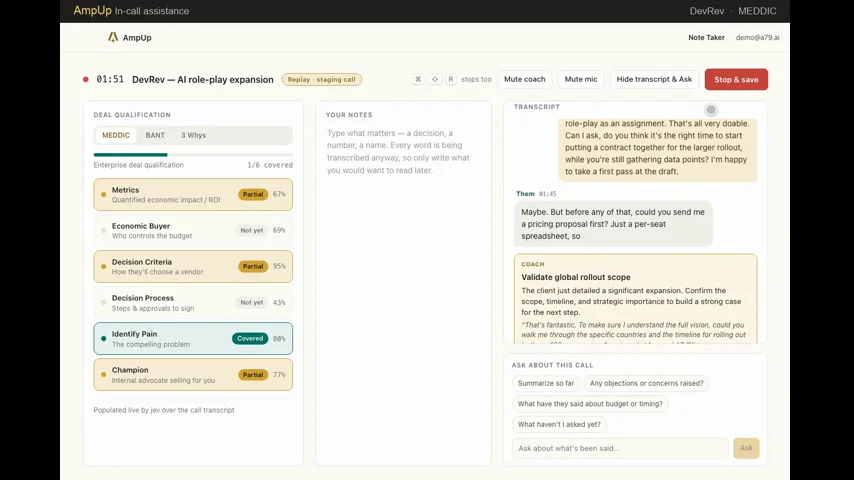
Jev does live deal qualification during sales calls, re-scoring every qualification question with confidence every 2 seconds in a single request—costing ~$0.17 per 30-min call (80% cheaper)—so empty fields surface as the seller's next question while the buyer is still on the line.